1045 Steel Applications — Practical Uses, Material Limits, and Buyer Guidance
Medium‑carbon workhorse: why SAE/AISI 1045 remains a go‑to for shafts, pins, gears and forged components — and what purchasing teams need to verify before the PO.
Introduction — How purchasing intent shapes 1045 steel decisions
When procurement teams search for "1045 steel applications" they usually want more than a material sheet. They want context: can this alloy survive a continuous drive shaft load in a cold-climate production plant? Will machining tolerances hold after quenching? What sort of finish and post‑treatment will minimize downtime down the line?
SAE/AISI 1045 is a medium‑carbon steel widely used because it balances strength, machinability, and cost. It is not exotic. That’s the point. For many OEMs and contract manufacturers the choice is pragmatic: 1045 often performs reliably when higher alloy grades add unnecessary cost or lower‑carbon steels don’t meet wear or fatigue requirements.
But procurement risk is real. Common mistakes include ordering "1045" without specifying heat treatment, surface hardness, or traceable material test reports (MTRs). That leads to parts that crack in service, fail hardness checks, or require rework. If you buy raw bars for turned shafts, you need to specify whether material arrives:
- As‑rolled and annealed
- Normalized
- Quenched and tempered to a target hardness
- Pre‑machined and then stress‑relieved
Each state changes tensile strength, yield, and machinability. Procurement leaders who combine clear technical specification with a tight supplier audit reduce non‑conforming batches and save on hidden costs: scrap, field returns, and rework.
On the production side, 1045 is attractive because it forges and machines well and accepts surface hardening options. That matters for components such as gears, studs, and rotating shafts where a tough core and harder surface are desirable. You will see 1045 across industries — automotive, agricultural equipment, conveyors, and general machine tools — where part geometry and load cycles are understood and material selection follows a cost/benefit discipline.
A final procurement observation: expect lead time variability. Raw bar suppliers and heat‑treat vendors frequently schedule by batch. Always confirm:
- Stock vs. cut‑to‑length availability
- Heat‑treat capacity and seasonal backlog
- Required inspection reports (chemical, tensile, hardness)
- Container loading and packaging for export
This landing page is written from the combined perspective of a manufacturing engineer and export manager: practical, technical, and procurement‑oriented. Read on for composition tables, typical part examples, supplier evaluation checklists and logistics pointers that will shorten RFQ cycles and reduce surprises on arrival.
Technical deep dive — what 1045 is and how it behaves
SAE/AISI 1045 is classified as a medium‑carbon steel (approx. 0.43–0.50% C). It sits between low‑carbon grades used for deep drawing and high‑carbon tool steels. The chemistry makes it amenable to:
- Solid forging and upsetting
- Turning and milling with standard tooling
- Through‑hardening or surface hardening depending on process
Typical chemical composition (informative ranges)
| Element | Typical range |
|---|---|
| Carbon (C) | 0.43 – 0.50% |
| Manganese (Mn) | 0.60 – 0.90% |
| Silicon (Si) | 0.10 – 0.35% |
| Phosphorus (P) | ≤ 0.040% |
| Sulfur (S) | ≤ 0.050% |
astm 4140 steel ams 6265 steel a564 steel
Mechanical behavior & heat treatment notes
Mechanical properties vary by condition. Rather than a single figure, think in ranges:
- Annealed/normalized state: moderate tensile strength with good ductility — easier to machine.
- Quenched & tempered: yield and tensile strength increase substantially; target hardness set to match application.
- Surface treatments (induction hardening, carburizing on compatible grades) provide wear resistance while keeping a tough core.
Practical tip: specify target hardness (HRC or HB) and the exact heat treatment cycle in purchase orders. "1045, quenched & tempered to HRC 28–32" is far better than "1045, heat treatment as required."
Weldability and joining
1045 is weldable with preheat and controlled interpass temperatures due to its carbon content. However, high heat input risks martensite formation and cracking. If your design requires welding, consider:
- Specify preheat (typically 100–200°C) and post‑weld stress relief
- Use consumables that match mechanical properties
- Request weld procedure qualification if safety critical
Where 1045 is used — real components and environment notes
Below are common use cases, followed by operational notes we often share with buyers. These are field‑tested observations from shop floors and assembly lines.
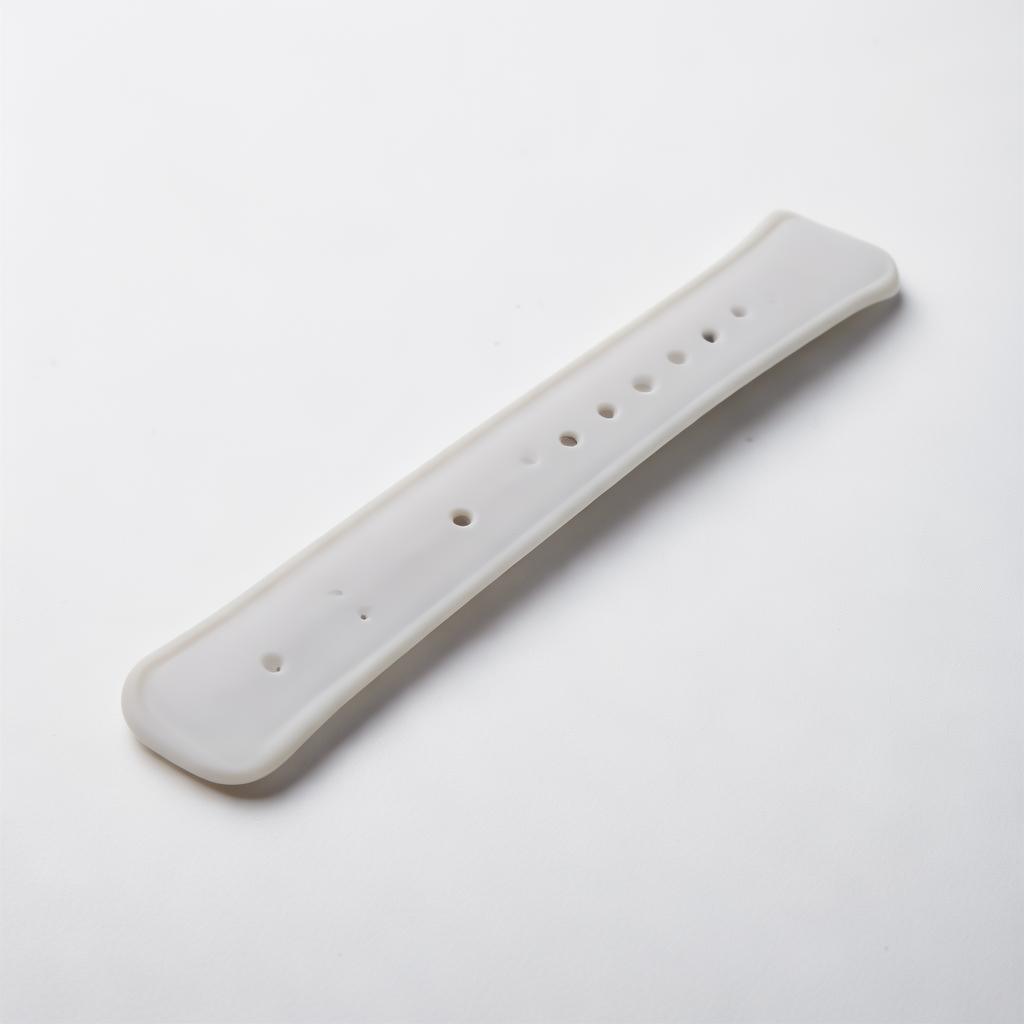
Frequent applications
- Shafts and axles: center distance lengths, moderate torsional loads — often turned from normalized bar stock and then ground.
- Gears and splines (non-high-performance): machined or forged blanks, then relieved and finished; induction hardening used for teeth.
- Pins, studs and bolts: where shear strength matters but stainless corrosion resistance is not required.
- Forged components: connecting rods, couplings and small crankshafts in agricultural or industrial equipment.
- Machine tool parts and fixtures: balancing rigidity and finishability.
Operational observations
- For rotating parts: run a fatigue analysis if cycles exceed millions — 1045 is competent, but surface defects and residual stresses matter.
- For wear surfaces: consider induction hardening or nitriding alternatives; 1045 can be through‑hardened but wear resistance is usually improved by localized surface hardening.
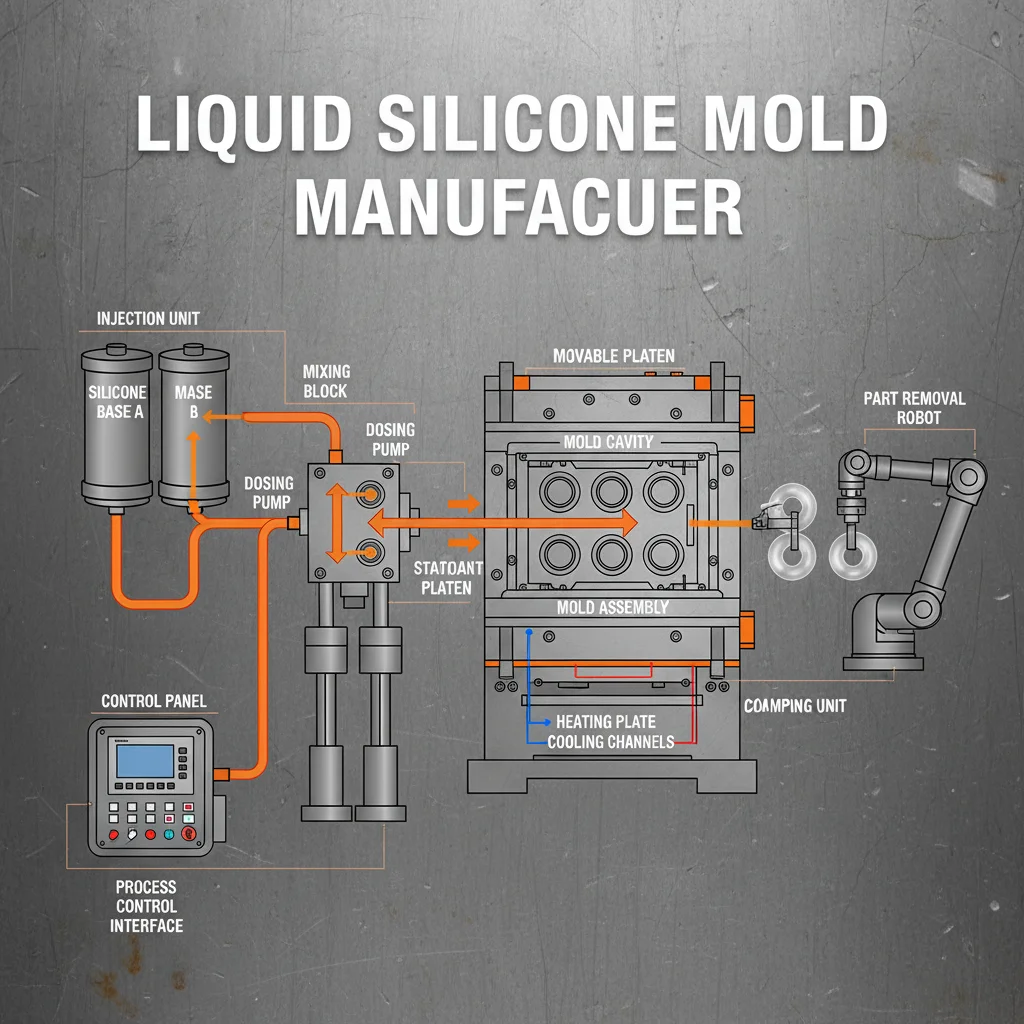
- If your assembly includes overmolding (silicone seals on steel cores), confirm bonding details: a properly prepped 1045 core and adhesion promoter can deliver consistent overmold adhesion. Our shop frequently overmolds seals onto turned 1045 cores — this is where the company's LSR capabilities add value.
Buyer guide — what to specify in RFQs and POs
A short, practical checklist for procurement teams. Use these line items as mandatory fields in your RFQ template.
- Exact material standard: "SAE 1045 / AISI 1045 (J403 reference where applicable)" and include required chemical composition limits.
- Condition on delivery: annealed, normalized, quenched & tempered (specify cycle), or bright bar.
- Hardness target: specify HRC or HB. Example: HB 200–260 (or HRC 28–32) after T&T.
- MTRs and QC: 3.1/3.2 certificates, chemical analysis, tensile report, hardness test and PMI on request.
- Dimensional tolerance: reference ISO 286 or ASME B4.2 for turned diameters and threaded features.
- Surface finish & balancing: Ra values for rotating components; dynamic balancing if shaft assembly requires it.
- Packaging & export: banding, rust inhibitor (VPI or grease), blocking for container shipping; specify if LCL vs FCL.
- Lead time & MOQ: state cut‑to‑length vs full bar preference and acceptable lead time window.
- Weld & heat treat records: if applicable, attach WPS or HT records and non‑destructive test results.
Testing and inspection we recommend
- Full chemical analysis (OES or wet chemistry) for production lots.
- Tensile test per batch and hardness mapping on representative components.
- Visual and dimensional inspection — identify grinding burns and microcracks before assembly.
- Fatigue testing for safety‑critical rotating parts (specify cycles and loading conditions).
Factory capabilities & certifications — how we support 1045 parts
Guangdong Yingtai High Precision Technology Co., Ltd. is a mature contract manufacturer with broad precision equipment and experience in multi‑material assemblies. While our core strengths are liquid silicone molding and injection molding, our end-to-end process accommodates steel cores and machined 1045 components for overmolding and assemblies.
- 35,000 m² modern industrial park in Dongguan (Changan Town)
- 500+ staff including engineers experienced in tool & die, CNC turning, milling, and heat treat coordination
- Integration from mold development to finished assemblies — beneficial for components that combine 1045 steel cores and LSR seals
- Advanced testing instruments and quality control systems; supplier traceability and MTR management

 Certifications: ISO quality systems, factory inspection records, and export compliance. Specific certifications required by buyer (IATF 16949, AWS, etc.) can be supported on request.
Why work with us for 1045 components
- Capability to machine 1045 to tight tolerances and then perform LSR overmolding or sealing in a single supply chain.
- Controlled heat‑treat partnerships with documented processes — we coordinate tempering and hardness verification.
- Export experience: container loading plans, FCL/LCL options, packing for sea and air freight.
Material comparison — 1045 vs common alternatives
| Property | SAE 1045 | 1018 | 4140 (alloy) |
|---|---|---|---|
| Carbon content | 0.43–0.50% | ~0.18% | ~0.38% |
| Strength vs cost | Good compromise | Lower strength, cheaper | Higher strength, higher cost |
| Heat treatment | Yes — responds well | Less responsive | Excellent — alloying elements |
| Best use | Shafts, gears, forgings | Cold‑formed parts, bolts | High stress parts, crankshafts |
Choosing between 1045 and an alternative comes down to real loading conditions, cost targets, and whether you need additional alloying for fatigue resistance. We advise stress and life‑cycle analysis for mission‑critical parts.
Installation, maintenance and common failure modes
Installation practices and maintenance intervals materially impact lifecycle for 1045 components. These are practical notes from field service teams.
- Initial fit: check runout and concentricity on shafts; improper press fits lead to fretting and early fatigue.
- Surface finish: scratches or grinding burns reduce fatigue life — perform a light shot‑peening on stress‑critical surfaces if feasible.
- Lubrication: maintain proper lubricant and contamination control. Corrosion accelerates pitting and crack initiation.
- Inspection intervals: visual and hardness checks annually for industrial gearboxes under steady loads; more frequent inspections for high‑cycle equipment.
- End‑of‑life signs: increasing vibration, audible chatter, or progressive hardness changes during scheduled maintenance.
Customer reviews & case snapshots
"We switched several conveyor shaft orders to 1045 and specified induction hardened teeth. Yingtai coordinated machining and overmolding of the sealing lip. Delivery hit the revised lead time and the MTRs were clean. No surprises on arrival."
"Their team helped define the tempering spec for our small gearbox shafts. Once the heat treat process was locked, component variation dropped and assembly time reduced."
"Good export packaging and container planning. We shipped FCL and the parts arrived without rust. The factory provided MoC and hardness tests pre-shipment."
"Their overmolded assemblies with 1045 cores were a concise supply chain solution. Reduced touch points and fewer vendors to manage."
Recent communications (snapshots)



Related industry references / background reading
These resources shed light on molding, overmolding, and manufacturing trends we reference when pairing 1045 steel cores with liquid silicone or plastic overmolds:
- Liquid Silicone Rubber Market Size Report, 2030 - https://www.grandviewresearch.com/industry-analysis/liquid-silicone-rubber-lsr-market
- Liquid Silicone Rubber Injection Molding - https://www.protolabs.com/services/injection-molding/liquid-silicone-rubber-molding/
- Development of an Injection Mold for Liquid Silicone Rubber - https://www.researchgate.net/publication/332591908_Development_of_an_Injection_Mold_for_Liquid_Silicone_Rubber_Using_Rapid_Tooling_Technology
Note: the above references support our multi-material assembly practice — especially important when 1045 steel cores are combined with LSR seals or overmolded components.
FAQs — quick answers for procurement & engineering
- Is 1045 suitable for through‑hardened shafts?
- Yes, if the design requires higher core hardness and toughness and the part geometry and size are compatible with through‑hardening processes. Otherwise induction or surface hardening may be preferable.
- What hardness should I specify for gears made of 1045?
- It depends on load. Typical induction hardening targets tooth case hardness with a tough core; specify case depth and HRC for the surface. Work with your heat‑treat vendor on a trial run and hardness mapping.
- Can you supply MTRs and batch traceability?
- Yes. We provide chemical and mechanical test reports per batch. For critical orders we can supply full traceability and third‑party inspection on request.
- Typical lead time?
- Stock bars: 1–3 weeks. Cut‑to‑length and machining: 3–6 weeks depending on complexity. Heat treatment cycles and third‑party testing can extend timelines; always confirm before PO.
Risk statements: All chemical and mechanical ranges are indicative and depend on supplier mill tolerances and heat‑treat condition. Always request MTRs and batch tests for safety‑critical applications. This page is informational and intended for B2B procurement and engineering teams.