Understanding 3+2 Machining: Precision Meets Productivity in Modern Manufacturing
Optimizing complex machining operations for industrial components | Guangdong Yingtai High Precision Technology Co., Ltd.
What is 3+2 Machining?
For industry professionals navigating the complexities of modern manufacturing, 3+2 machining — often referred to as five-axis positioning or five-axis simultaneous milling in “3+2 mode” — represents a powerful, hybrid approach blending three-axis machining with a fixed two-axis rotational setup. This method unlocks enhanced access to complex geometries by tilting the part or the cutting head in two rotational axes, while the tool path remains on three linear axes.
This technique is indispensable for components demanding tight tolerances, intricate surfaces, or multi-faceted features that would otherwise require multiple setups and machine repositioning. By decoupling the rotary positioning (the “+2” axes) from the primary three linear directions (X, Y, and Z), 3+2 machining enables faster, more accurate, and cost-effective production, especially in aerospace, automotive, and precision tooling sectors.
Compared with full five-axis simultaneous machining, 3+2 positioning offers reduced programming complexity and less demand on machine kinematics, leading to increased machine uptime and simplified toolpath verification—critical factors in high-mix, medium-volume manufacturing environments.
In the context of OEM/ODM factories and contract manufacturing, adopting 3+2 machining can optimize cycle times and minimize human error by consolidating multi-step fixture reorientations into single, stable setups. From our operations at Guangdong Yingtai High Precision Technology Co., Ltd., we’ve observed that proper integration of 3+2 machining workflows reduces scrap rates and improves surface integrity on complex injection mold components and electronic housing parts.
Below, we’ll explore the operational realities, supply chain implications, and technical details essential to maximizing ROI from 3+2 machining.
Industry Challenges & Pain Points Addressed by 3+2 Machining
- Multiple setups increasing lead times: Traditional machining often demands repositioning parts, causing delays and tolerance stack-up risks.
- Complex fixturing requirements: Achieving accurate machining on multi-faceted workpieces requires specialized fixtures, driving up tooling costs.
- Inconsistent surface finishes and dimensional accuracy: Each setup change introduces opportunities for errors impacting product quality.
- Programming overhead: Full five-axis simultaneous machining can be challenging to program, especially without advanced CAM systems and experienced operators.
- Limited machine availability: Not every shop has high-end simultaneous five-axis mills; 3+2 machining extends capabilities of existing equipment.
- Procurement uncertainty: Sourcing reliable suppliers who clearly communicate capabilities in 3+2 machining remains a challenge for global buyers.
Note: Selecting a machining solution without accounting for these factors often results in overspending on equipment or quality-related fallout. Careful evaluation of 3+2 machining’s fit into your operational workflow is essential.
Technical Overview and Workflow
3+2 machining leverages the fundamental concept of fixing two rotational axes in an indexed position while executing the cutting paths on three linear axes. This contrasts with full simultaneous five-axis machining where all axes move concurrently during cutting.
Here’s a distilled breakdown of the workflow:
- Stage 1 – Part Setup: Position the workpiece on the machine table or rotational pallet; rotate to the desired angle via the two rotary axes. This positioning may align undercuts, angled surfaces, or cavities optimally for machining.
- Stage 2 – Toolpath Execution: With the rotational axes locked, the machine executes precise 3-axis tool movements; the cutting tool operates in orthogonal planes relative to the tilted part.
- Stage 3 – Repositioning (if needed): For parts with multiple complex orientations, the rotary axes increment to a new indexed angle; subsequent 3-axis passes complete the machining of additional features.
Combining stable rotary positioning with linear machining achieves:
- Improved tool engagement and cutting load distribution
- Reduced risk of collisions as rotary axes are fixed during cutting
- Predictable cycle times due to linear axis motion control
- Simplified CAM programming compared with full simultaneous 5-axis
Machine Types Suitable for 3+2 Machining
| Machine Type | Axis Configuration | Typical Usage |
|---|---|---|
| 3-Axis Vertical Mills with Rotary Tables | X, Y, Z + Rotary Table (index around 2 axes) | Low to mid-complexity aerospace parts, molds, fixtures |
| Dedicated 5-Axis Mills in 3+2 Mode | 5 axes, but rotary axes fixed during machining | Precision tooling, pump housings, aerospace brackets |
| Horizontal Mills with Trunnion Tables | X, Y, Z + Tilt + Swivel axes locked | Complex aerospace components, automotive dies |
burrs machining 3 axis cnc machining 5 axis simultaneous machining
Key Advantages of 3+2 Machining
- Improved Geometric Access: Complex parts with angled features can be machined with a single setup, reducing errors from repositioning.
- Cost Efficiency: Less machine time spent on repositioning; fewer custom fixtures needed.
- Simplified Programming: Reduced CAM complexity compared to full simultaneous 5-axis operations.
- Consistency & Repeatability: Locking rotary axes during cutting prevents chatter and promotes stable cutting forces.
- Extended Machine Life: Reduced simultaneous axis load minimizes wear on expensive ball screws and rotary drives.
- Flexibility in Production Volume: Adaptable to both prototyping and medium-run manufacturing.
Operational Insight: In our factory, customers report that transitioning to 3+2 machining workflows has cut average cycle times by approx. 15-20% for complex parts without investing in simultaneous five-axis machining centers. The learning curve is also noticeably gentler for programming teams familiar with standard three-axis programming.
Application Scenarios for 3+2 Machining
The versatility of 3+2 machining suits a broad range of applications, especially when precision and surface quality are paramount:
- Aerospace Components: Turbine blades, structural brackets, landing gear parts — all benefit from precise angled access without multiple setups.
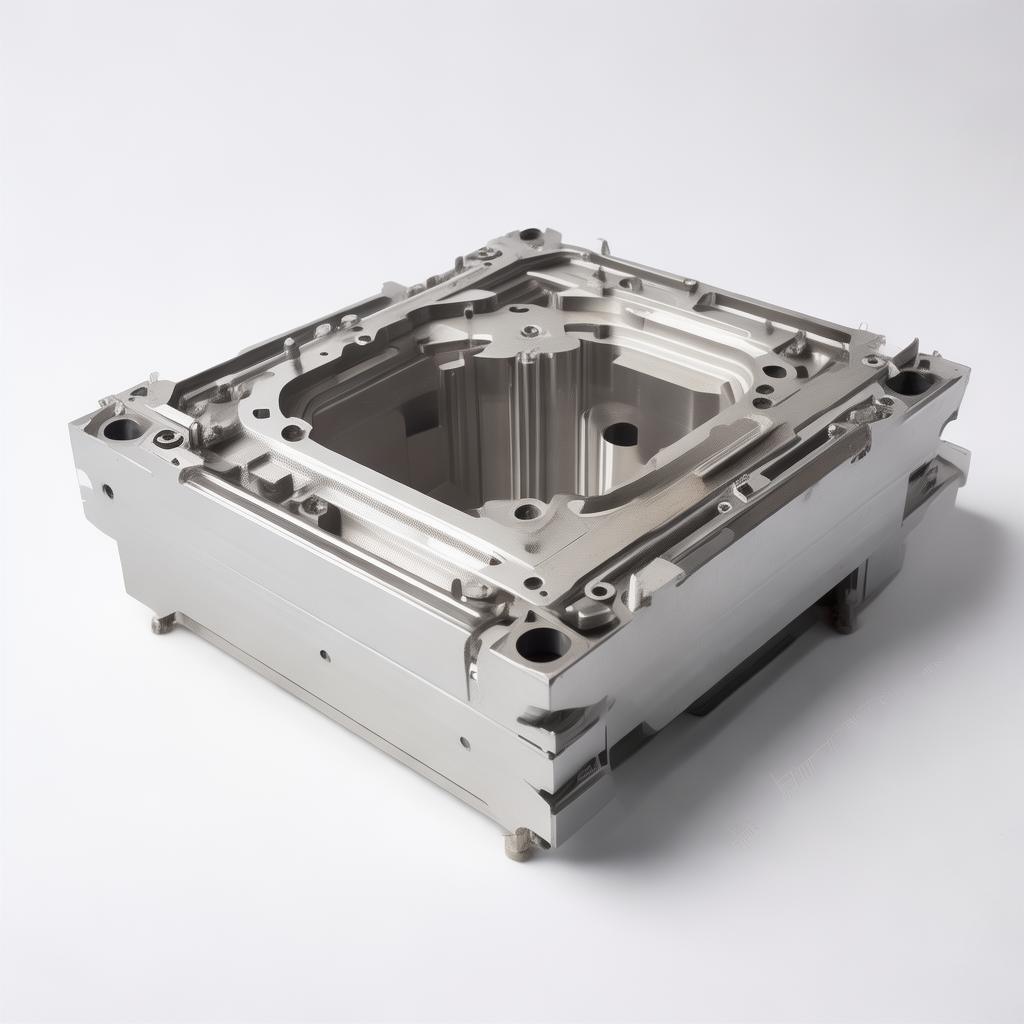
- Injection Molds & Dies: Complex cavity shapes and draft angles get machined efficiently, minimizing rework and reducing SCRAP rates.
- Medical Device Housings & Instruments: Tight tolerances and smooth finishes achieved reliably, essential for FDA-compliant components.
- Automotive Functional Parts: Pump housings, transmission components, and suspension brackets often require multi-surface machining.
- Electronics & Consumer Appliance Housings: Machining complex overmolded parts often uses 3+2 machining to prepare precise tooling.
Procurement & Supplier Evaluation: Navigating 3+2 Machining Partnerships
When sourcing suppliers or manufacturing partners specialized in 3+2 machining, procurement managers and operations directors should consider the following factors carefully to mitigate risks:
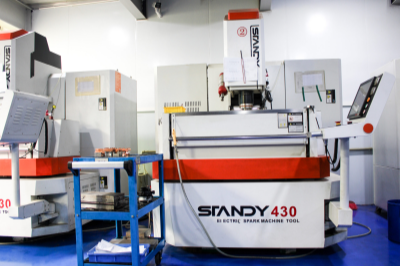
- Verify Machine Capability: Confirm the supplier’s CNC machining centers support multi-axis positioning and indexing with adequate precision (usually ±0.005 mm or better).
- Demand Sample Part Inspection: Request real samples or previously machined parts to assess surface finish, tolerance adherence, and repeatability.
- Assess CAM Software Expertise: Advanced CAM programming is critical for efficient 3+2 machining; verify the supplier’s toolpath optimization capabilities.
- Look for Relevant Certifications: ISO 9001:2015, AS9100 (for aerospace), and customer-specific quality system approvals provide stronger confidence.
- Evaluate Supply Chain Logistics: Factory proximity to major ports, lead times, export experience, and container optimization impact total landed cost.
- OEM/ODM Flexibility: For custom or complex components, ensure the supplier has adequate mold development and prototyping capabilities tied with 3+2 machining options.
- Request Transparency on Tooling & Fixture Design: Proper fixture engineering reduces setup times and improves dimensional accuracy — critical for large-scale batch production.
Important: Avoid suppliers that blur the line between true 3+2 machining and simple 3-axis milling with manual adjustments. Such distinctions often surface in quality issues and inconsistent lead times.
Our recommendation: Engage with Guangdong Yingtai High Precision Technology Co., Ltd. for detailed consultation on 3+2 machining projects, complete with factory tours, process validations, and customized manufacturing solutions.
Frequently Asked Questions
- Q: How does 3+2 machining differ from simultaneous 5-axis machining?
- 3+2 machining fixes the two rotary axes in set positions during the machining pass, effectively performing three-axis machining on tilted planes. In contrast, simultaneous 5-axis machining moves all five axes dynamically during cutting, enabling true multi-directional toolpaths but with higher programming and machine complexity.
- Q: What materials are commonly machined using 3+2 techniques?
- Typically, metals like aluminum, stainless steel, titanium, and tool steels; plastics such as PEEK or Delrin; and even composite materials. The method suits materials requiring high dimensional accuracy and surface finishing, often found in aerospace, medical, and electronics components.
- Q: Are there industry standards governing 3+2 machining precision?
- While no direct ISO standard exists specifically for 3+2 machining, suppliers often align with ISO 9001:2015 quality management systems and aerospace standards such as AS9100, which require validated processes and traceability. Specific tolerance standards like ASME Y14.5 for dimensioning and GD&T apply.
- Q: How does 3+2 machining impact tooling and fixturing costs?
- By reducing the number of setups and machine re-alignments, 3+2 machining can significantly lower fixturing complexity and cost. However, initial fixture design must accommodate multi-angle positioning, which may add upfront engineering time but saves on long-term operational costs.
- Q: What lead times should buyers expect for 3+2 machined parts?
- Lead times depend on complexity, volume, and post-machining processes. Typically, production runs range from 2 to 8 weeks, factoring in CNC setup, programming, and quality inspections. Partnering with experienced suppliers who optimize machine cycles and setup can shorten delivery.
Ready to Optimize Your Production With 3+2 Machining?
Guangdong Yingtai High Precision Technology Co., Ltd. combines over 20 years of machining expertise, advanced CNC setups, and integrated mold-making capabilities to deliver highly precise 3+2 machined components tailored for your supply chain demands.
Guangdong Yingtai High Precision Technology Co., Ltd.No. 359 Chang'an Bubugao Road, Chang'an Town, Dongguan City, Guangdong Province, China
Phone: (Miss Zhang) +86 177 2243 7688 Fax: +86 0769-83666863
Email: zmm@yingtai168.com / lh@yingtai168.com
Whatsapp: +86 177 2243 7688

Authored by Li Hua, Export Director, Guangdong Yingtai High Precision Technology Co., Ltd., bringing 15+ years of industrial machining and global procurement expertise.
Hear From Our Clients
Live Support & Real-Time Responses