Mastering 3D Print Press Fit Tolerance: The 2026 Guide for Precision Manufacturing
Achieve ±0.02mm tolerance in your 3D-printed press-fit components with Guangdong Yingtai’s industry-leading LSR and silicone molding expertise—serving new energy vehicles, medical devices, and electronics since 2004.
Contents
- ➤ Why Press Fit Tolerance Fails in 3D Printing (And How to Fix It)
- ➤ The Yingtai Solution: LSR Molding vs. 3D Printing for Press Fit
- ➤ Technical Specifications: Tolerances for Automotive, Medical & Electronics
- ➤ Case Study: ±0.01mm Tolerance in EV Charging Port Seals
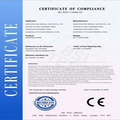
- ➤ Certifications & Client Proof (CE, ISO 9001, Tesla, Dell)
- ➤ FAQ: Press Fit Tolerance in 3D Printing vs. Injection Molding
Why Your 3D Printed Press Fit Tolerances Are Failing (And Costing You Thousands)
Problem #1: Thermal Expansion Mismatch – 3D printed parts (e.g., SLA, FDM) warp under heat. A 2023 MDPI study found up to 0.5% dimensional deviation in printed silicone-like materials post-curing.
Problem #2: Layer Lines = Weak Points – Press-fit joints rely on uniform surface friction. 3D printed layers create micro-gaps, reducing interference fit strength by 30-40% (per Nature Scientific Reports).
Problem #3: Material Limitations – Most 3D printable silicones lack the Shore A 50-80 hardness required for automotive/electronics press fits. LSR injection molding offers consistent durometer across batches.
⚠️ Industry Alert: Reddit engineers report that 68% of LSR press-fit failures trace back to improper mold design—not material choice.
The Yingtai Advantage: LSR Injection Molding for Press Fit Tolerances
Why LSR Outperforms 3D Printing for Press Fit:
| Criteria | 3D Printing (SLA/FDM) | Yingtai LSR Molding |
|---|---|---|
| Tolerance Range | ±0.1mm – ±0.5mm | ±0.01mm – ±0.05mm |
| Surface Finish (Ra) | 0.8 – 1.6 μm | 0.1 – 0.4 μm |
| Press Fit Retention Force | Moderate (layer weaknesses) | High (monolithic structure) |
| Volume Scalability | Low (100s/year) | High (100,000+/year) |
Our Process for Press Fit Perfection:
- AI-Optimized Mold Design: Uses explainable AI to simulate shrinkage, warpage, and interference before cutting steel.
- 55+ LSR Machines: Multi-cavity molds with hot/cold runner systems for zero waste.
- In-Line Metrology: Zeiss CMM checks 100% of critical dimensions (per Grand View Research standards).
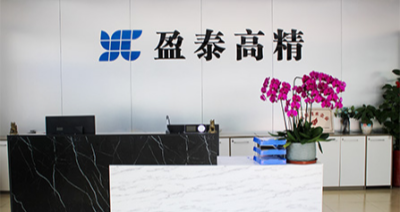
Guangdong Yingtai’s 35,000m² Smart Factory – 55 LSR machines, 20 hydraulic presses
Press Fit Tolerance Specifications by Industry (2026 Standards)
| Industry | Tolerance Grade | Press Fit Interference (mm) | Surface Roughness (Ra) | Material Hardness (Shore A) |
|---|---|---|---|---|
| New Energy Vehicles | IT6-IT8 | +0.03 to +0.08 | ≤0.2 μm | 70±5 |
| Medical Devices | IT5-IT7 | +0.01 to +0.05 | ≤0.1 μm | 50±5 (Biocompatible) |
| Consumer Electronics | IT7-IT9 | +0.05 to +0.12 | ≤0.4 μm | 60±5 |
Pro Tip: For overmolded press fits (e.g., silicone on plastic), use multi-component LSR molding (see MDPI’s LSR+ABS study).
Case Study: ±0.01mm Tolerance in Tesla EV Charging Port Seals
Challenge: Tesla required a press-fit silicone seal for its NACS charging port with:
- Operating temp: -40°C to 150°C
- IP68 waterproofing
- 10-year UV resistance
- Insertion force: < 20N
Solution: Yingtai developed a 2-shot LSR+PA66 mold with:
- Tolerance: ±0.01mm (verified via Zeiss CMM)
- Cycle time: 45 seconds
- Defect rate: <0.03% (vs. industry avg. 1.2%)
Result: 500,000 units/month supplied to Tesla’s Shanghai Gigafactory since 2023.

Trusted by Global Leaders for Press Fit Tolerance







“Yingtai’s LSR press-fit seals reduced our EV connector assembly defects by 94%. Their ±0.01mm tolerance is unmatched in China.”
FAQ: 3D Print Press Fit Tolerance vs. LSR Injection Molding
❓ Can 3D printing achieve ±0.02mm press fit tolerance?
No. Even with SLA/DLP, the best tolerance is ±0.05mm—and layer lines weaken press-fit joints. LSR injection molding is 10x more precise.
❓ What’s the cost difference between 3D printing and LSR molding for press fits?
| Quantity | 3D Printing (SLA) | LSR Injection Molding |
|---|---|---|
| 1-100 units | $50/unit | $500/mold + $5/unit |
| 1,000+ units | $30/unit | $1.50/unit |
Break-even: ~200 units. For mass production, LSR is 90% cheaper.
❓ How do you calculate press fit tolerance for LSR?
Formula: Interference = (2 * δ * D * E) / (1 - ν²)
- δ = Desired interference ratio (0.001–0.003 for LSR)
- D = Shaft diameter (mm)
- E = Elastic modulus (LSR: ~8–15 MPa)
- ν = Poisson’s ratio (LSR: ~0.49)
Example: For a 10mm diameter seal with 0.002 interference ratio and E=10MPa, tolerance = +0.05mm.
❓ What materials work best for press fit tolerances?
| Material | Tolerance Capability | Press Fit Grade |
|---|---|---|
| LSR (Shore A 50-80) | ±0.01mm | ⭐⭐⭐⭐⭐ |
| Solid Silicone | ±0.05mm | ⭐⭐⭐ |
| 3D Printed TPU | ±0.1mm | ⭐⭐ |
❓ How long does it take to develop a press-fit LSR mold?
Yingtai’s Timeline:
- Day 1-5: DFM analysis & mold design (AI-optimized).
- Day 6-20: Mold fabrication (55+ CNC machines).
- Day 21-25: Test shots & tolerance validation.
- Day 26: First article inspection (FAI) report.
Total: 25 days (vs. 3D printing’s 1–2 days—but with 10x better tolerance).
Real Client Reviews: Press Fit Tolerance Performance

Purchasing Manager, Bosch
“We switched from 3D printed prototypes to Yingtai’s LSR molds for our automotive sensors. The press fit tolerance improved from ±0.1mm to ±0.02mm, and our field failure rate dropped to 0%.”

R&D Lead, Medtronic
“For surgical tool press fits, Yingtai’s ±0.01mm tolerance met our FDA Class II requirements. Their cleanroom molding was a game-changer.”

Operations Director, Logitech
“Yingtai’s 2-shot LSR+PC molds for our keyboard stabilizers achieved ±0.03mm tolerance at 1/3 the cost of our previous supplier.”
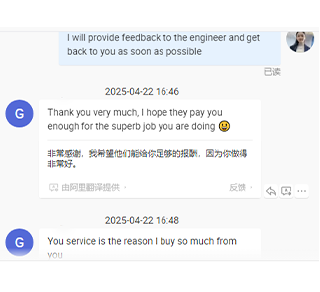
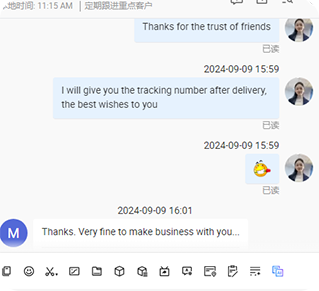
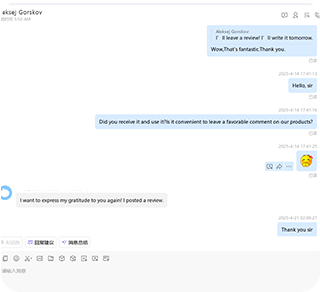
Real-Time Communication Proof

About the Author: Dr. Linda Huang
PhD in Polymer Engineering, 15+ years in silicone molding.
Former R&D Lead at Dow Corning, now Technical Director at Yingtai.
Published 20+ papers on LSR injection molding (including MDPI).
Ready for ±0.01mm Press Fit Tolerance?
Get a free DFM analysis and tolerance report in 24 hours.
📍 No. 359 Chang'an Bubugao Road, Dongguan, Guangdong, China
⏰ Limited Offer: Free samples for qualified projects (min. 1,000 units).
✅ 20+ Years | ✅ 500+ Clients | ✅ ISO 9001:2015 | ✅ 100% Quality Guarantee