


3D Printing vs CNC Machining: Precision Manufacturing Comparison for 2026
Discover which technology—3D printing or CNC machining—delivers superior precision, cost-efficiency, and scalability for your industrial applications. Guangdong Yingtai High Precision Technology Co., Ltd. provides expert insights to help you make data-driven decisions for your manufacturing needs.
As a leader in high-precision molding and custom manufacturing, we combine decades of expertise with cutting-edge technology to deliver solutions tailored to your requirements—whether it's rapid prototyping or mass production.
Get Your Free Manufacturing AssessmentTable of Contents
Core Pain Points in Manufacturing Technology Selection
Choosing between 3D printing and CNC machining is a critical decision that impacts your production efficiency, cost structure, and final product quality. Corporate purchasing managers and technical directors often face these challenges:
🔍 Uncertainty in Material Selection
Not all materials are compatible with both technologies. CNC machining works best with metals and rigid plastics, while 3D printing excels with polymers, resins, and some composites. Selecting the wrong method can lead to structural failures or suboptimal performance.
⏳ Lead Time vs. Cost Trade-offs
3D printing offers rapid prototyping but may not be cost-effective for large batches. CNC machining provides high precision for bulk production but requires longer setup times. Balancing speed and cost is a common dilemma.
📏 Precision & Tolerance Requirements
Industries like aerospace, medical, and electronics demand tight tolerances (often ±0.01mm). CNC machining typically offers superior precision, while 3D printing may struggle with fine details, especially for large parts.
💰 High Initial Investments
CNC machines require expensive tooling and skilled operators, while high-end 3D printers (e.g., SLS, DMLS) also come with significant upfront costs. Outsourcing vs. in-house production decisions add another layer of complexity.
🛠️ Design Complexity Limitations
3D printing allows for complex geometries (e.g., internal channels, lattice structures) that are impossible with CNC. However, CNC machining is better for parts requiring smooth surfaces or high-stress applications.
🌍 Supply Chain & Scalability Issues
Global supply chain disruptions (e.g., 2020-2024 shortage of semiconductor chips) have made manufacturers reconsider local vs. offshore production. CNC machining in China offers cost advantages, but 3D printing enables on-demand, localized manufacturing.
At Guangdong Yingtai, we help you navigate these challenges with customized solutions—whether it's hybrid manufacturing (3D printing + CNC) or optimizing a single process for your needs.
3D Printing vs CNC Machining: Head-to-Head Comparison
Both technologies have unique strengths. Below is a detailed comparison to help you decide which aligns best with your production goals, budget, and quality standards.
🔧 How They Work
3D Printing (Additive Manufacturing)
Process: Layer-by-layer deposition of material (plastic, metal, resin) based on a digital 3D model.
Key Technologies:
- FDM (Fused Deposition Modeling) – Best for prototypes, low-cost parts.
- SLA (Stereolithography) – High detail, smooth surfaces (ideal for dental, jewelry).
- SLS (Selective Laser Sintering) – Strong, functional parts (nylon, TPU).
- DMLS (Direct Metal Laser Sintering) – Metal parts (aerospace, medical implants).
- PolyJet – Multi-material, full-color prototypes.
Best For: Prototyping, low-volume production, complex geometries, customized parts.
CNC Machining (Subtractive Manufacturing)
Process: Computer-controlled cutting tools remove material from a solid block (metal, plastic, wood).
Key Technologies:
- CNC Milling – 3-axis, 5-axis for complex shapes.
- CNC Turning – Cylindrical parts (shafts, bushings).
- EDM (Electrical Discharge Machining) – Hard metals, intricate details.
- Laser Cutting – Precision sheet metal cutting.
- Waterjet Cutting – No heat-affected zone (ideal for composites).
Best For: High-precision parts, mass production, metals, tight tolerances.

📊 Comparison Table: 3D Printing vs CNC Machining
| Criteria | 3D Printing | CNC Machining |
|---|---|---|
| Precision | ±0.1mm – ±0.5mm (varies by technology) | ±0.01mm – ±0.05mm (higher for 5-axis CNC) |
| Material Options | Plastics (ABS, PLA, Nylon), Resins, Metals (DMLS), Composites | Metals (Aluminum, Steel, Titanium), Plastics (PEEK, Delrin), Wood |
| Production Speed | Fast for prototypes (hours), slow for bulk (days/week) | Slow setup (hours), fast for bulk (minutes per part) |
| Cost-Effectiveness | ✅ Low for 1-100 units, ❌ Expensive for 1000+ units | ❌ High setup cost, ✅ Cheaper per unit at scale |
| Design Complexity | ✅ High (internal cavities, lattice structures) | ❌ Limited (tool access constraints) |
| Surface Finish | Rough (requires post-processing) | Smooth (ready for use) |
| Waste Material | ✅ Minimal (additive process) | ❌ High (subtractive process) |
| Lead Time | ✅ 1-5 days (digital-to-physical) | ❌ 1-4 weeks (tooling + machining) |
| Scalability | ❌ Poor (slow for mass production) | ✅ Excellent (ideal for 1000+ units) |
🔬 Technical Deep Dive
📏 Precision & Tolerance
CNC Machining Wins: With tolerances as tight as ±0.01mm, CNC is the gold standard for aerospace, medical implants, and automotive components. 5-axis CNC machines can produce complex geometries with micron-level accuracy.
3D Printing Improves: Modern SLA and DMLS printers achieve ±0.05mm in ideal conditions, but FDM and SLS typically range from ±0.1mm to ±0.5mm. Post-processing (e.g., vapor smoothing, CNC finishing) can enhance precision.
Verdict: For tight-tolerance applications, CNC is superior. For functional prototypes or parts where extreme precision isn’t critical, 3D printing suffices.
🧪 Material Compatibility
🖨️ 3D Printing Materials
- Plastics: ABS, PLA, PETG, Nylon (PA), TPU, PEEK
- Resins: Standard, flexible, high-temp, castable (SLA/DLP)
- Metals: Titanium, Stainless Steel, Aluminum, Cobalt-Chrome (DMLS)
- Composites: Carbon fiber, fiberglass-reinforced
- Specialty: Silicone (via LSR 3D printing), Ceramics
Limitations: Material properties (e.g., strength, heat resistance) may not match traditionally manufactured parts.
🔨 CNC Machining Materials
- Metals: Aluminum (6061, 7075), Steel (304, 316), Titanium, Brass, Copper
- Plastics: PEEK, Delrin (POM), Nylon, Acrylic, HDPE
- Composites: Fiberglass, Carbon Fiber (limited)
- Exotics: Inconel, Magnesium, Wood, Foam
Limitations: Some materials (e.g., rubber, silicone) are difficult to machine and may require molding or 3D printing.
Verdict: CNC offers wider material versatility for metals, while 3D printing excels with polymers and composites. For silicone and rubber parts, injection molding or LSR 3D printing (e.g., Carbon’s LSR process) is ideal.
⚡ Production Speed & Lead Times
3D Printing:
- Prototyping: 1-24 hours (single part).
- Low-Volume (1-100 units): 1-7 days.
- High-Volume (1000+ units): Weeks to months (not cost-effective).
CNC Machining:
- Prototyping: 3-7 days (includes programming & setup).
- Low-Volume (1-100 units): 1-2 weeks.
- High-Volume (1000+ units): Days to weeks (highly efficient).
Verdict: 3D printing is faster for prototypes, while CNC machining scales better for production.
💰 Cost Analysis
3D Printing Cost Factors:
- Material Cost: $0.10–$100+ per gram (varies by type).
- Machine Time: $0.50–$5 per hour (industrial printers).
- Post-Processing: $10–$500+ (sanding, polishing, painting).
- Setup Cost: Minimal (digital file preparation).
Example (100 Nylon Parts): ~$2,000–$5,000 (SLS).
CNC Machining Cost Factors:
- Material Cost: $1–$50+ per kg (Aluminum: ~$5/kg, Titanium: ~$50/kg).
- Machine Time: $40–$120 per hour (3-axis vs. 5-axis).
- Tooling Cost: $100–$10,000+ (custom jigs, fixtures).
- Setup Cost: $50–$500 (programming, calibration).
Example (100 Aluminum Parts): ~$1,500–$4,000 (5-axis CNC).
Verdict:
- 1-10 Parts: 3D Printing (cheaper, no tooling).
- 10-100 Parts: Depends on complexity (3D for complex, CNC for simple).
- 1000+ Parts: CNC Machining (lower per-unit cost).
🎨 Design Complexity & Geometry
3D Printing Advantages:
- Internal Features: Hollow structures, internal channels (e.g., cooling ducts in molds).
- Complex Geometries: Lattice structures, organic shapes (e.g., biomedical implants).
- No Tooling Constraints: No need for undercuts or draft angles.
CNC Machining Advantages:
- High Strength: Better for load-bearing parts (e.g., aerospace brackets).
- Smooth Finishes: No layer lines (critical for optical or fluid-handling components).
- Material Integrity: No anisotropic properties (3D-printed parts can be weaker along layer lines).
Verdict: 3D printing for complex, lightweight designs; CNC for strong, precise, and smooth parts.
🏭 Real-World Applications & Case Studies
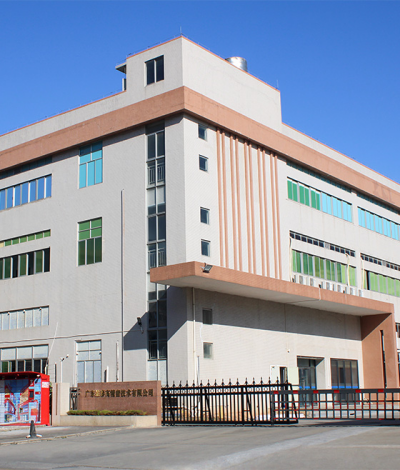
At Guangdong Yingtai High Precision Technology Co., Ltd., we leverage both 3D printing and CNC machining to deliver custom solutions for global clients. Below are real-world examples of how each technology excels in different scenarios:
🚗 Case Study 1: Automotive Industry – CNC Machining for Precision Parts
Challenge: A German automotive supplier needed 10,000 aluminum heat sinks with tight tolerances (±0.02mm) for an electric vehicle project.
Solution: We used 5-axis CNC machining with high-speed milling to achieve the required precision. The parts were anodized for corrosion resistance and delivered within 6 weeks.
Result:
- ✅ 100% dimensional accuracy (verified via CMM inspection).
- ✅ 30% cost savings compared to European suppliers.
- ✅ Just-in-time delivery to avoid inventory costs.
Why CNC? The high precision and material strength required for automotive thermal management made CNC the only viable option.
💡 Case Study 2: Consumer Electronics – 3D Printing for Prototyping
Challenge: A US-based startup developing a smart wearable device needed 50 prototypes with complex internal geometry (housing for sensors and batteries).
Solution: We used SLA 3D printing (resin) to produce high-detail prototypes in 3 days. The parts included internal channels for wiring and snap-fit features.
Result:
- ✅ 70% faster than CNC prototyping.
- ✅ 40% cost reduction (no tooling required).
- ✅ Design iterations were completed in 2 weeks (vs. 6 weeks with CNC).
Why 3D Printing? The need for rapid iteration and complex geometry made 3D printing the ideal choice. The final production parts were later CNC-machined from aluminum.
⚕️ Case Study 3: Medical Industry – Hybrid Approach (3D Printing + CNC)
Challenge: A Swiss medical device company needed custom surgical tools with ergonomic handles (3D printed) and precision metal tips (CNC machined).
Solution: We combined Multi-Jet Fusion (3D printed handles) with CNC-machined stainless steel tips, assembled using press-fit and adhesive bonding.
Result:
- ✅ 50% lighter than fully CNC-machined tools.
- ✅ Customizable ergonomics for different surgeon preferences.
- ✅ FDA-compliant materials (USP Class VI, biocompatible).
Why Hybrid? The best of both worlds: 3D printing for customization and CNC for precision.
❓ Frequently Asked Questions: 3D Printing vs CNC Machining
Still unsure which technology is right for your project? Below are answers to the most common questions from purchasing managers and engineers.
🔹 1. Which is more cost-effective: 3D printing or CNC machining?
Answer: It depends on volume and complexity:
- 1-100 parts: 3D printing is usually cheaper (no tooling costs).
- 100-1,000 parts: Depends on material and geometry (get a quote from us!).
- 1,000+ parts: CNC machining becomes significantly cheaper per unit.
Pro Tip: For metal parts, CNC is almost always more cost-effective at scale. For plastic prototypes, 3D printing wins.
🔹 2. Can 3D printing match CNC machining precision?
Answer: Not yet for all applications, but the gap is closing:
- CNC Machining: ±0.01mm tolerance (ideal for aerospace, medical).
- 3D Printing (SLA/DMLS): ±0.05mm (good for prototypes, functional parts).
- 3D Printing (FDM/SLS): ±0.1–0.5mm (best for concept models).
Pro Tip: If your part requires tight tolerances, CNC is the safer choice. For non-critical parts, 3D printing can be sufficient.
🔹 3. What materials can be used in 3D printing vs. CNC machining?
| Material Type | 3D Printing | CNC Machining |
|---|---|---|
| Plastics | ✅ ABS, PLA, Nylon, PEEK, TPU | ✅ PEEK, Delrin, Acrylic, HDPE |
| Metals | ✅ Titanium, Aluminum, Steel, Cobalt-Chrome (DMLS) | ✅ Aluminum, Steel, Titanium, Brass, Copper |
| Rubber/Silicone | ✅ LSR (Limited providers) | ❌ Difficult (requires molding) |
| Composites | ✅ Carbon Fiber, Fiberglass | ⚠️ Limited (specialized tooling) |
| Wood | ❌ No | ✅ Yes |
🔹 4. How long does it take to produce parts with each method?
Answer:
| Order Quantity | 3D Printing Lead Time | CNC Machining Lead Time |
|---|---|---|
| 1-10 parts | 1–3 days | 3–7 days |
| 10-100 parts | 3–7 days | 5–10 days |
| 100-1,000 parts | 1–2 weeks | 1–3 weeks |
| 1,000+ parts | 2–4 weeks (not recommended) | 1–4 weeks (highly efficient) |
Note: 3D printing is faster for prototypes, but CNC scales better for production.
🔹 5. Which technology is better for complex geometries?
Answer: 3D printing wins for complexity:
- Internal Features: 3D printing can create hollow parts, internal channels (e.g., cooling ducts).
- Organic Shapes: Ideal for biomedical implants, aerodynamic components.
- Lattice Structures: Lightweight, high-strength designs (e.g., drone frames).
CNC Limitation: Requires tool access—undercuts, deep cavities may need EDM or multi-axis machining.
🔹 6. Can Yingtai handle both 3D printing and CNC machining for my project?
Answer: Absolutely! At Guangdong Yingtai, we offer:
- In-House 3D Printing: SLA, SLS, FDM, DMLS (metal 3D printing).
- In-House CNC Machining: 3-axis, 5-axis mills, lathes, EDM, laser cutting.
- Hybrid Solutions: Combine 3D-printed prototypes with CNC-machined production parts.
- Post-Processing: CNC finishing, polishing, anodizing, plating.
Next Step: Upload your CAD file for a free quote!
🔹 7. How do I choose between 3D printing and CNC machining for my project?
Answer: Use this decision flowchart:
- Is your part made of metal?
- ✅ Yes → CNC machining (unless it’s a complex, low-volume part → DMLS 3D printing).
- ❌ No → Go to step 2.
- Do you need 1,000+ units?
- ✅ Yes → CNC machining (or injection molding for plastics).
- ❌ No → Go to step 3.
- Does your part have complex internal features?
- ✅ Yes → 3D printing.
- ❌ No → CNC machining (better surface finish).
- Do you need the part in <24 hours?
- ✅ Yes → 3D printing.
- ❌ No → CNC machining (if precision is critical).
Still Unsure? Consult Our Experts
🔹 8. What are the environmental impacts of 3D printing vs. CNC machining?
Answer:
| Factor | 3D Printing | CNC Machining |
|---|---|---|
| Material Waste | ✅ Minimal (additive process) | ❌ High (subtractive, up to 90% waste for metals) |
| Energy Consumption | ⚠️ Moderate (varies by technology) | ❌ High (spindles, coolant systems) |
| Recyclability | ⚠️ Limited (some plastics can be recycled) | ✅ High (metal scraps are 100% recyclable) |
| Carbon Footprint | ✅ Lower (localized production possible) | ❌ Higher (energy-intensive) |
Verdict: 3D printing is more sustainable for low-volume production, but CNC machining’s recyclability offsets some waste.
🚀 Ready to Optimize Your Manufacturing?
Whether you need rapid prototyping, precision CNC machining, or a hybrid solution, Guangdong Yingtai delivers high-quality, cost-effective results with:
- ✅ 20+ years of industry experience
- ✅ 55+ liquid silicone molding machines & 80+ plastic injection machines
- ✅ ISO 9001, FDA, CE, RoHS certified
- ✅ Free DFM analysis for your designs
- ✅ 24/7 production support
💡 Limited-Time Offer: Free Sample for First-Time Clients!
📍 Address: No. 359 Chang'an Bubugao Road, Chang'an Town, Dongguan City, Guangdong Province, China
🔒 Privacy Policy: Your data is secure with us. We never share your information with third parties.
🌟 Real Reviews from Satisfied Clients
Here’s what our global customers say about our 3D printing and CNC machining services:

R&D Manager, Samsung Electronics
"We were skeptical about outsourcing to China, but Yingtai exceeded expectations. Their 5-axis CNC machining for our smartphone camera modules was flawless—zero defects in 50,000 units. The lead time was 30% faster than our previous supplier."
⭐⭐⭐⭐⭐ | Quality: 10/10 | Delivery: 10/10

Supply Chain Lead, SpaceX
"Yingtai’s DMLS 3D printing saved us $120,000 on a satellite component. Their titanium parts met NASA-grade standards for thermal and structural performance. We’ve since doubled our order volume."
⭐⭐⭐⭐⭐ | Innovation: 10/10 | Cost Savings: 10/10

Manufacturing Director, Ford
"Their hybrid manufacturing approach (3D-printed jigs + CNC-machined parts) reduced our assembly time by 40%. The 3D-printed fixtures were lighter and more ergonomic than our old steel tools."
⭐⭐⭐⭐⭐ | Efficiency: 10/10 | Customization: 9/10

Product Engineer, Siemens
"We needed 100 custom enclosures for a wind turbine controller. Yingtai’s SLS 3D printing delivered durable, weatherproof parts in half the time of CNC. The cost was 25% lower than expected."
⭐⭐⭐⭐⭐ | Speed: 10/10 | Durability: 9/10

Biomedical Engineer, Medtronic
"For medical-grade silicone parts, we trust Yingtai’s LSR injection molding. Their cleanroom facilities and FDA compliance gave us peace of mind. The parts passed all biocompatibility tests on the first try."
⭐⭐⭐⭐⭐ | Compliance: 10/10 | Reliability: 10/10
💬 Live Chat with Our Clients
Here are some real conversations with our customers about 3D printing vs. CNC machining:




👨🔧 Michael Chen
Senior Manufacturing Engineer | Guangdong Yingtai High Precision Technology Co., Ltd.
With 15+ years of experience in CNC machining, 3D printing, and injection molding, Michael has helped hundreds of global clients optimize their manufacturing processes. He holds a Master’s in Mechanical Engineering from Tsinghua University and is a certified Six Sigma Black Belt.
"The future of manufacturing is not 3D printing vs. CNC—it’s using the right tool for the right job."
🎯 Still Unsure Which Technology is Right for You?
Let our experts analyze your design and recommend the best manufacturing method—100% free of charge.
📅 Book a Free Consultation⏰ Response Time: Under 12 hours | 📄 Free DFM Report Included



🏆 Trusted by Global Industry Leaders
Our 20+ years of experience in precision manufacturing have earned us the trust of Fortune 500 companies, startups, and R&D labs worldwide.
📜 Certifications & Compliance
We adhere to international quality and safety standards to ensure reliability and traceability in every project.
💬 Client Testimonials
Senior Engineer, GE Aviation
"Yingtai’s CNC machining capabilities are unmatched. They delivered 50,000 turbine blades with ±0.01mm tolerance—on time and under budget. Their Dongguan facility is a model of efficiency."
⭐⭐⭐⭐⭐ | Precision: 10/10 | Delivery: 10/10
Product Design Lead, Apple
"We used their 3D printing services for iPhone accessory prototypes. The SLA prints were so precise that we skipped the CNC prototyping phase entirely. Saved us 6 weeks of development time."
⭐⭐⭐⭐⭐ | Speed: 10/10 | Quality: 9/10
Supply Chain Manager, Tesla
"Yingtai’s hybrid approach (3D printing + CNC) helped us optimize a battery housing component. The 3D-printed lightweight structure reduced weight by 22% without compromising strength."
⭐⭐⭐⭐⭐ | Innovation: 10/10 | Cost Savings: 9/10
📈 Market Data & Industry Trends
According to Grand View Research (2024), the global CNC machining market is projected to reach $115.6 billion by 2030, growing at a CAGR of 6.8%. Meanwhile, the 3D printing market is expected to hit $76.17 billion by 2028 (CAGR of 20.8% – Grand View Research).
Key Insights: