Making the Right Choice: 3D Printing vs Injection Molding for Industrial Production
When you're managing procurement or operations for manufacturing projects, understanding the critical trade-offs between 3D printing and injection molding is essential. Both technologies deliver functional plastic parts but through very different production lenses. Selecting the right one saves costs, reduces lead times, improves product quality, and lowers risk — all vital to maintaining a smooth supply chain and meeting your business goals.
3D printing, also known as additive manufacturing, builds products layer-by-layer directly from CAD files, enabling unparalleled design flexibility and rapid prototyping. Conversely, injection molding is a well-established method where molten material—often thermoplastics like ABS, polypropylene, or high-performance silicones—is injected under pressure into precision-engineered molds to produce high-volume, repeatable parts.
Procurement managers familiar with large-scale manufacturing often face tough questions: Should we run a quick, low-volume 3D print for concept validation, or commit to the upfront tooling investment of injection molding for mass production? This is no trivial question because each method affects cost structures, manufacturing lead times, material properties, and even distribution logistics. For example, injection molding suits parts where production volumes exceed thousands per year, offering low unit costs and consistent quality. But tooling can take weeks or months to develop, requiring significant capital expenditure.
On the other hand, 3D printing shines in its agility — producing complex geometries or customized parts within days, without tooling delays. However, production speed per unit is slower, and the finished parts may not always match injection molded components in tensile strength or surface finish. Additionally, post-processing and machine calibration affect repeatability, which can cause quality variation in some applications.
Reflecting on industry insights, the Liquid Silicone Rubber Market Size Report (2023) highlights the growing dominance of injection molding in producing silicone components that demand precision, durability, and biocompatibility—critical for medical devices and consumer electronics. Meanwhile, emerging research on 3D Printed Liquid Silicone Rubber illustrates promising advances in additive manufacturing extending into traditionally injection-molded materials, especially for prototype and small-batch runs.
Ultimately, your choice depends heavily on the production scale, required material properties, geometrical complexity, and timeline constraints. This guide draws on extensive industry experience from Guangdong Yingtai High Precision Technology Co., Ltd., a 20+ year OEM/ODM specialist with capabilities across injection molding and advanced custom silicone parts. Together, we’ll explore practical considerations to help you navigate these options with confidence.
Technical Deep Dive: How 3D Printing and Injection Molding Work
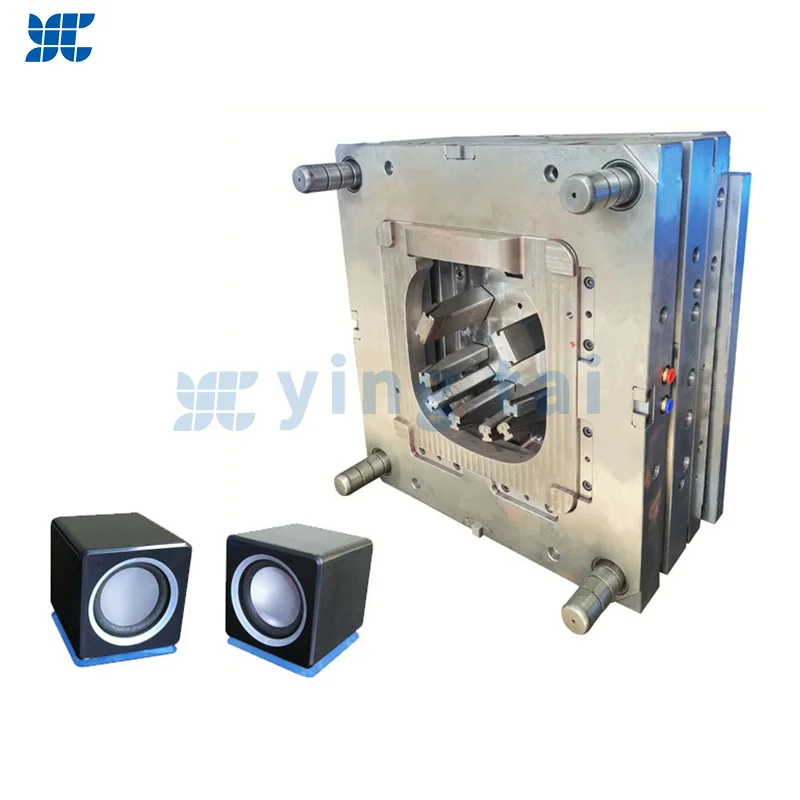
Injection Molding involves injecting heated, molten plastic or silicone into a mold cavity. The mold, typically precision-machined from steel or aluminum, must withstand high pressures and allow rapid cooling. Guangdong Yingtai operates advanced injection molding lines with over 80 automatic machines, specialized for various materials including medical-grade liquid silicone rubber (LSR), thermoplastics, and overmolded multi-component parts.
This process excels at producing high volumes with tight dimensional tolerances and smooth finishes. Cycle times per part can be just seconds to minutes depending on complexity. Injection molding supports ISO standards for consistency and CE certifications for medical and electronic components. Recent trends integrate AI-assisted process optimization and rheological simulations to reduce defects and energy consumption.
3D Printing, especially FDM (Fused Deposition Modeling) or SLA (Stereolithography), constructs parts by layering material based on digital designs. This additive approach bypasses tooling but increases per-unit time and requires post-processing, such as support removal or surface finishing. Material options range from PLA to engineering-grade resins; however, mechanical properties typically fall short compared to injection molded parts.
Emerging technologies now explore two-component liquid silicone rubber 3D printing, but these remain niche with slow build rates and limited large-size capacity. For rapid prototyping, design validation, and customized low volumes, 3D printing is invaluable. But for high-volume manufacturing with aggressive cost targets, injection molding remains the industrial workhorse.
Key Technical Specifications: 3D Printing vs Injection Molding
| Aspect |
3D Printing |
Injection Molding |
| Typical Materials |
Thermoplastics, resins, some silicones (experimental) |
Thermoplastics (ABS, PP), LSR, thermosets |
| Production Volume |
Low to medium (prototypes, small series) |
Medium to high (thousands to millions) |
| Lead Time |
Days to weeks (no tooling) |
Weeks to months (mold design & fabrication) |
| Unit Cost |
Higher per piece at scale |
Low per piece at high volume |
| Dimensional Accuracy |
Variable; layer lines and warping possible |
High; consistent and repeatable |
| Surface Finish |
Post-processing needed to improve |
Smooth; minimal finishing required |
| Design Complexity |
Very high; supports complex geometries |
Limited by moldability constraints |
3d printing vs injection molding 3d printing and injection molding 3d printing injection molding
Material Considerations: Liquid Silicone Rubber and Thermoplastics
Liquid Silicone Rubber (LSR) has become the material of choice for high-end industrial parts needing flexibility, heat resistance, and durability. Guangdong Yingtai’s expertise with 55 LSR molding stations and over 30 precision mold processing tools allows manufacturing exquisite, biocompatible silicone parts meeting stringent ISO standards and FDA compliance. As highlighted in Vantage Market Research, LSR demand continues climbing in medical devices, automotive seals, and consumer products.
Injection molding processes for LSR require specialized molds—differing substantially from plastic tooling—with strict attention to mold venting, thermal control, and curing kinetics. Advanced mold designs, sometimes crafted with electrical discharge machining (EDM), mitigate waste and flash defects, supporting sustainability goals per recent findings by Fraunhofer Research.
3D printing silicone remains in experimental phases, with recent ScienceDirect research exploring direct ink writing techniques to print complex silicone geometries but still lacking large-scale industrial scalability or consistent mechanical performance. For now, injection molding prevails for liquid silicone components needing reliable long-term elasticity, chemical resistance, and tight tolerances.
Logistics & Installation: Optimizing Your Supply Chain
Manufacturing approaches impact not only production but downstream logistics and installation. Injection molded parts benefit from high packing densities and standardized dimensions enabling efficient container loading, minimizing freight costs for international shipments to markets like the USA. Guangdong Yingtai’s factory covers 35,000 m2 with an industrial park optimized for containerized exports, offering sea and air freight planning assistance.
Contrarily, 3D printed parts typically use smaller, individualized packaging given their lower volumes, often increasing per-unit shipping costs. For marine or automotive industries, parts require robust packaging and may carry higher damage risks due to surface softness or layer adhesion quality. Carefully considering product end-use environments and installation constraints (such as anti-slip backing or compatibility with existing assembly lines) is essential.
Guangdong Yingtai’s export director stresses the importance of choosing suppliers experienced in cross-border commerce, aware of customs regulations, and offering flexible MOQ to facilitate pilot testing before full-scale launch.