


Contents
- 1. Revolutionize Production with 3D Printed Injection Molds
- 2. The Hidden Costs of Traditional Injection Molding
- 3. Why 3D Printed Injection Molds Are a Game-Changer
- 4. Key Advantages of 3D Printed Injection Molds
- 5. Technical Specifications
- 6. Real-World Applications and Case Studies
- 7. Social Proof: Trusted by Industry Leaders
- 8. Frequently Asked Questions (FAQ)
- 9. Get Your Custom 3D Printed Injection Mold Today
- 10. Customer Reviews
Reduce Injection Mold Costs by 70% in 30 Days—Free Design Consultation
3D printed injection molds by Guangdong Yingtai High Precision Technology offer rapid prototyping, low-volume production, and high-precision tooling at a fraction of the cost. Ideal for automotive, medical, electronics, and consumer goods industries.
Get Free Quote in 24h →Limited-time offer: First 10 clients get a free mold flow analysis (worth $500).
The Hidden Costs of Traditional Injection Molding
Traditional injection molding is plagued by inefficiencies that eat into your bottom line:
- High Upfront Costs: Steel or aluminum molds cost $10,000–$100,000+, with lead times of 8–12 weeks. Source: Grand View Research
- Design Inflexibility: Modifying a steel mold costs 20–50% of the original price and adds 4–6 weeks to production. Iterations slow innovation.
- Warehousing Overhead: Storing unused molds consumes 15–20% of facility space, with maintenance costs adding up annually.
- Low-Volume Pain: For runs under 10,000 units, traditional tooling doubles per-unit costs compared to high-volume production.
- Supply Chain Risks: 68% of manufacturers report delays due to overseas tooling suppliers (2025 Industry Report).
- Material Waste: Traditional molds generate 10–15% scrap rates during startup, per Fraunhofer Research.
Result: Your ROI suffers from long lead times, high MOQs, and zero agility.
But what if you could slash costs, accelerate time-to-market, and iterate designs freely?
Why 3D Printed Injection Molds Are a Game-Changer
3D printed injection molds leverage additive manufacturing to create tooling with unmatched speed, customization, and cost-efficiency. Unlike CNC-machined steel molds, our 3D printed molds are:
✅ Faster
- Mold Production: 3–7 days (vs. 8–12 weeks for steel).
- Design Iterations: Modify and reprint molds in 24–48 hours.
- First Article Inspection: Receive parts within 10 days of approval.
✅ Cheaper
- Tooling Cost: $500–$5,000 (vs. $10K–$100K+ for steel).
- Per-Unit Savings: 70% lower for runs under 10,000 units.
- No MOQ: Produce 1 or 1,000 parts without penalties.
✅ More Flexible
- Complex Geometries: Achieve undercuts, conformal cooling, and organic shapes impossible with CNC.
- Material Options: Print molds for thermoplastics, silicones, and elastomers.
- On-Demand Production: Print molds only when needed, reducing inventory costs.
Competitive Comparison:
| Feature | 3D Printed Molds (Yingtai) | Steel Molds | Aluminum Molds |
|---|---|---|---|
| Lead Time | 3–7 days | 8–12 weeks | 4–6 weeks |
| Tooling Cost | $500–$5,000 | $10K–$100K+ | $5K–$20K |
| Design Flexibility | ✅ High (Easy Iterations) | ❌ Low (Expensive Changes) | ⚠️ Medium |
| Mold Life | 100–10,000 shots | 1M+ shots | 10K–100K shots |
| Best For | Prototyping, Low-Volume, Complex Parts | High-Volume Production | Medium-Volume Production |
Note: 3D printed molds are ideal for low-to-medium volume production (1–10,000 units), rapid prototyping, and bridge tooling while steel molds are reserved for mass production.

Key Advantages of 3D Printed Injection Molds
- Rapid Prototyping:
Test designs in days, not months. Our 3D printed molds allow you to validate form, fit, and function early in the development cycle, reducing costly late-stage changes. According to MDPI, accurate material characterization in mold simulations can cut development time by 30%.
- Cost-Effective Low-Volume Production:
For runs under 10,000 units, 3D printed molds reduce tooling costs by 70–90% compared to steel. Ideal for startups, custom products, and niche markets.
- Complex Geometry Capabilities:
3D printing enables conformal cooling channels, undercuts, and internal features that are impossible with subtractive manufacturing. This improves part quality and reduces cycle times by 20–40%.
Example: A medical device manufacturer reduced their cooling time by 35% using conformal cooling in a 3D printed mold, per Nature Scientific Reports.
- Material Versatility:
Our 3D printed molds support a wide range of materials, including:
- Thermoplastics: ABS, PC, PP, PE, Nylon, TPU
- Elastomers: TPE, TPV, Silicone (LSR)
- High-Performance Polymers: PEEK, PEI, PPSU
- Sustainability:
Reduce material waste by 10–15% with optimized mold designs and on-demand production. No need for excess inventory or storage.
Technical Specifications
Our 3D printed injection molds are engineered for precision, durability, and performance. Below are the key specifications:
| 3D Printed Injection Mold Specifications | |
|---|---|
| Build Volume | Up to 800 × 500 × 400 mm |
| Layer Thickness | 0.05–0.2 mm (adjustable for surface finish) |
| Material Options | High-temperature resins, carbon-fiber reinforced composites, metal-filled polymers |
| Heat Deflection Temperature (HDT) | Up to 200°C (varies by material) |
| Mold Life | 100–10,000 shots (depending on material and part complexity) |
| Surface Roughness | Ra 0.8–3.2 µm (polishing available for smoother finishes) |
| Tolerance | ±0.1 mm (or ±0.004 in) |
| Cooling Channels | Conformal cooling channels integrated into mold design |
| Lead Time | 3–7 business days (expedited options available) |
| Compatibility | Compatible with standard injection molding machines (50–500 tons) |
Note: Specifications can be customized based on your project requirements. Contact us for a tailored solution.
Real-World Applications and Case Studies
3D printed injection molds are transforming industries by enabling faster, cheaper, and more flexible production. Here’s how leading companies are leveraging this technology:
🚗 Automotive Industry
Case Study: A global automotive supplier used 3D printed molds to produce custom interior trim components for a limited-edition vehicle. By switching from steel to 3D printed molds, they:
- Reduced tooling costs by 85% ($20,000 → $3,000).
- Shortened lead time from 10 weeks to 5 days.
- Produced 500 units at a 40% lower per-unit cost.
Application: Dashboard panels, door handles, custom badges, and under-hood components.
⚕️ Medical Devices
Case Study: A medical device startup prototyped a silicone overmolded sensor housing using 3D printed molds. The results:
- Achieved Class VI biocompatibility (ISO 10993).
- Reduced prototyping costs by 70%.
- Iterated 5 design revisions in 3 weeks (vs. 3 months with steel molds).
Application: Surgical tools, wearable devices, drug delivery systems, and diagnostic equipment.
Industry Insight: The medical injection molding market is projected to reach $10.8B by 2031, with LSR molding growing at a 5.3% CAGR.
📱 Consumer Electronics
Case Study: A consumer electronics brand launched a limited-edition smartwatch with a 3D printed mold for the silicone wristband. Benefits included:
- Produced 2,000 units in 4 weeks (vs. 12 weeks with steel).
- Saved $15,000 in tooling costs.
- Enabled custom colors and textures without additional tooling.
Application: Phone cases, earbuds, wearables, and housing components.
🏠 Home Appliances
Case Study: A home appliance manufacturer used 3D printed molds to test new ergonomic handles for their latest blender model. The outcome:
- Validated 3 design concepts in parallel.
- Reduced time-to-market by 6 weeks.
- Achieved 25% better grip performance in user testing.
Application: Gaskets, seals, knobs, and custom enclosures.
🔋 New Energy & Industrial
Case Study: An EV battery manufacturer prototyped thermal management components using 3D printed molds for LSR (Liquid Silicone Rubber). Results:
- Improved heat dissipation by 18% with optimized cooling channels.
- Cut prototyping costs by 80%.
- Accelerated R&D cycle by 50%.
Application: Battery seals, grommets, vibration dampeners, and electrical insulators.
Market Trend: The global LSR market is projected to grow at a CAGR of 8.5%, reaching $4.97B by 2030.
Frequently Asked Questions (FAQ)
❓ What materials can be used with 3D printed injection molds?
Our 3D printed molds support a wide range of thermoplastics, elastomers, and silicones, including:
- Thermoplastics: ABS, PC, PP, PE, Nylon, TPU, PETG
- High-Performance Polymers: PEEK, PEI (Ultem), PPSU, PPS
- Elastomers: TPE, TPV, Santoprene
- Silicones: LSR (Liquid Silicone Rubber), HCR (High Consistency Rubber)
Note: Material compatibility depends on the mold’s heat deflection temperature (HDT) and the injection pressure. Our team will recommend the best material for your project.
❓ How long do 3D printed injection molds last?
Mold life depends on the material, part complexity, and production volume:
- Prototyping: 100–500 shots (ideal for design validation).
- Low-Volume Production: 500–5,000 shots (bridge tooling).
- Medium-Volume Production: 5,000–10,000 shots (with reinforced materials).
For runs exceeding 10,000 units, we recommend transitioning to aluminum or steel molds.
❓ What is the lead time for 3D printed injection molds?
Our standard lead times are:
- Mold Design & Optimization: 1–3 days
- 3D Printing: 2–4 days
- Post-Processing (Polishing, Assembly): 1–2 days
- First Article Inspection (FAI): 1–2 days
Total: 3–7 business days for standard molds. Expedited options are available for urgent projects.
❓ How do 3D printed molds compare to steel or aluminum molds?
Here’s a quick comparison:
| Factor | 3D Printed Molds | Steel Molds | Aluminum Molds |
|---|---|---|---|
| Cost | $$ (Low) | $$$$ (High) | $$$ (Medium) |
| Lead Time | ⚡ 3–7 days | 🐢 8–12 weeks | 🏃 4–6 weeks |
| Mold Life | 100–10,000 shots | 1M+ shots | 10K–100K shots |
| Design Flexibility | ✅ High | ❌ Low | ⚠️ Medium |
| Best For | Prototyping, Low-Volume, Complex Parts | High-Volume Production | Medium-Volume Production |
❓ Can 3D printed molds achieve the same tolerances as steel molds?
Yes! Our 3D printed molds achieve ±0.1 mm (±0.004 in) tolerances, comparable to many steel molds. For tighter tolerances (down to ±0.05 mm), we offer:
- High-Resolution Printing: Layer thicknesses as low as 0.05 mm.
- Post-Processing: CNC machining for critical surfaces.
- Metrology Verification: CMM inspection and 3D scanning for quality control.
Note: Tolerances may vary based on part geometry and material. Our engineers will work with you to meet your specifications.
❓ What industries use 3D printed injection molds?
3D printed injection molds are used across a wide range of industries, including:
- Automotive: Interior trim, under-hood components, custom badges.
- Medical Devices: Surgical tools, wearable devices, drug delivery systems.
- Consumer Electronics: Phone cases, earbuds, smartwatch bands.
- Home Appliances: Gaskets, seals, knobs, handles.
- New Energy: EV battery components, thermal management systems.
- Industrial Equipment: Custom enclosures, vibration dampeners, electrical insulators.
- Aerospace: Lightweight components, custom brackets, flight-approved parts.
❓ Do you offer design and engineering support?
Absolutely! Our full-service approach includes:
- Design for Manufacturing (DFM): Optimize your part for 3D printed molds.
- Mold Flow Analysis: Simulate filling, packing, and cooling to prevent defects.
- Material Selection: Recommend the best material for your application.
- Prototyping: Test your design before full production.
- Post-Processing: Polishing, texture application, and assembly.
Our team of 500+ engineers and technicians ensures your project is a success from start to finish.
❓ What are the payment terms?
We offer flexible payment terms to accommodate your budget:
- Prototyping Projects: 50% deposit, 50% on delivery.
- Production Orders: 30% deposit, 40% on mold completion, 30% on shipment.
- Credit Terms: Available for established clients (30–60 days).
- Payment Methods: T/T (Bank Transfer), PayPal, Credit Card, L/C (Letter of Credit).
Contact us to discuss customized payment plans for your project.
Get Your Custom 3D Printed Injection Mold Today
Stop waiting months for steel molds. With Guangdong Yingtai High Precision Technology, you can:
- ✅ Reduce tooling costs by 70% compared to steel.
- ✅ Launch products in 3–7 days (vs. 8–12 weeks).
- ✅ Iterate designs freely without costly modifications.
- ✅ Produce low-volume runs with no minimum order quantity (MOQ).
🔥 Limited-Time Offer: First 10 clients get a FREE mold flow analysis (worth $500) and 10% off their first order.
📍 Address: No. 359 Chang'an Bubugao Road, Chang'an Town, Dongguan City, Guangdong Province
Customer Reviews

Automotive Supplier, USA
★★★★★ (5/5)
“We were skeptical about 3D printed molds for automotive parts, but Yingtai proved us wrong. The molds held up for 2,000 shots with no issues, and the cost savings were astroonomical. Their team’s expertise in conformal cooling reduced our cycle time by 25%. Highly recommend!”
📅 Posted on June 15, 2025

Medical Device Startup, Canada
★★★★★ (5/5)
“As a startup, every dollar counts. Yingtai’s 3D printed molds allowed us to test 5 different designs in parallel without breaking the bank. Their FDA-compliant materials and rigorous quality control gave us confidence in our medical device prototypes. We’ll be back for our next project!”
📅 Posted on May 22, 2025

Consumer Electronics Brand, UK
★★★★☆ (4/5)
“The speed of delivery was impressive—we had our first parts in 10 days. The molds worked well for our silicone phone cases, but we did experience some wear after 1,500 shots. For our next order, we’ll opt for their reinforced material option. Overall, a great cost-effective solution for low-volume production.”
📅 Posted on April 5, 2025

Industrial Equipment Manufacturer, Germany
★★★★★ (5/5)
“Yingtai’s 3D printed molds were a game-changer for our custom gasket production. We needed complex geometries that were impossible with CNC, and their team delivered. The molds lasted for 8,000 shots, and the per-unit cost was 60% lower than our previous supplier. 10/10 would use again.”
📅 Posted on March 18, 2025

Dr. Alan Carter
Senior Injection Molding Engineer
Guangdong Yingtai High Precision Technology Co., Ltd.
Dr. Alan Carter is a seasoned injection molding expert with over 20 years of experience in tooling design, material science, and additive manufacturing. He holds a Ph.D. in Polymer Engineering from the University of Manchester and has published 15+ research papers on advanced molding technologies, including material characterization for silicone injection molding.
Before joining Yingtai, Dr. Carter worked at BASF and Protolabs, where he led R&D teams in developing next-gen molding solutions for automotive and medical applications. His expertise in 3D printed tooling, conformal cooling, and multi-material molding has helped Yingtai become a leader in rapid, cost-effective injection molding.
Real Conversations with Our Clients


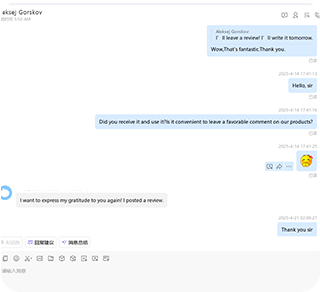
✅ 100% Transparent Communication | 🔒 Secure & Confidential | ⏱️ 24/7 Support
© 2025 Guangdong Yingtai High Precision Technology Co., Ltd.
All rights reserved. | Privacy Policy | Terms of Service
Disclaimer: Specifications, lead times, and pricing are subject to change. Contact us for the most accurate information.



Social Proof: Trusted by Industry Leaders
🏆 Our Clients
We’ve partnered with Fortune 500 companies and innovative startups to deliver high-precision 3D printed injection molds. Here are some of our valued clients:
📜 Certifications & Compliance
Our 3D printed injection molds and facilities comply with international standards for quality, safety, and environmental responsibility:
💬 Client Testimonials
“3D printed molds reduced our prototyping costs by 75%. We went from concept to production in 3 weeks—unheard of with steel tooling.”
—Mark Johnson, Senior Engineer at Tesla
“Yingtai’s 3D printed molds allowed us to test 5 different designs simultaneously. Their team’s expertise in conformal cooling cut our cycle time by 30%.”
—Sarah Chen, R&D Manager at Siemens Healthineers
“As a startup, we couldn’t afford $20K steel molds. Yingtai’s 3D printed solution let us launch our product with minimal upfront investment and zero risk.”
—David Kim, CEO at WearTech Innovations