Revolutionize Your Production: 3D Printed Mold Making for Faster, Cheaper, and More Flexible Manufacturing
Struggling with high costs and long lead times in traditional mold making? Guangdong Yingtai's 3D printed molds slash production time by 70% and costs by 50%—without sacrificing precision. Ideal for automotive, medical, and consumer electronics industries.
Get a Free Quote in 24 Hours
Why Traditional Mold Making Is Holding You Back
High Costs: Traditional steel or aluminum molds require CNY 50,000–500,000+ (USD 7,000–70,000) upfront, with additional expenses for design iterations. For low-volume or prototyping projects, this is often prohibitive.
Long Lead Times: From design to production, traditional molds take 8–16 weeks. Market opportunities are lost while waiting for tooling.
Design Limitations: Complex geometries (e.g., undercuts, internal channels) are impossible or costly with CNC machining. This restricts innovation in product design.
Waste and Material Constraints: Traditional methods generate 20–30% material waste from subtractive manufacturing. Plus, modifying molds for design changes is time-consuming and expensive.
Supply Chain Risks: Global disruptions (e.g., COVID-19, geopolitical tensions) delay mold deliveries. 68% of manufacturers reported supply chain issues in 2024 (Grand View Research).
Limited Customization: Mass production requires uniform molds, making personalized or small-batch production uneconomical.
→ 3D printed molds solve these pain points with speed, flexibility, and cost efficiency.
How 3D Printed Mold Making Transforms Manufacturing
3D Printed Molds vs. Traditional Molds
| Feature | Traditional Molds (CNC Machined) | 3D Printed Molds (Yingtai) |
|---|---|---|
| Lead Time | 8–16 weeks | 3–7 days |
| Cost (Per Mold) | CNY 50,000–500,000+ | CNY 5,000–50,000 |
| Design Complexity | Limited by machining | Unlimited (conformal cooling, lattice structures) |
| Material Waste | 20–30% | <5% |
| Customization | Expensive for small batches | Cost-effective for any volume |
| Durability | High (1M+ cycles for steel) | Moderate (10,000–100,000 cycles for production-grade resins) |
Core Advantages of Yingtai’s 3D Printed Molds
- Rapid Prototyping: Test designs in days, not months. Ideal for R&D and iterative testing. Source: Protolabs (2025) reports 15-day turnaround for LSR molds.
- Cost Efficiency: Reduce tooling costs by 80–90% for low-volume production (<10,000 units). Case Study: A medical device company saved CNY 200,000 (USD 28,000) on a 5,000-unit run using 3D printed molds.
- Design Freedom: Achieve complex geometries (e.g., conformal cooling channels, internal cavities) impossible with CNC. Research: MDPI (2025) highlights how 3D printed molds enable 20% faster cycle times via optimized cooling.
- Material Flexibility: Use high-temperature resins, carbon fiber composites, or metal-filled polymers tailored to your part’s requirements (e.g., silicone, TPU, or even short-run injection molding of ABS/PC).
- On-Demand Production: Print molds locally to avoid supply chain delays. Yingtai’s Dongguan factory ensures just-in-time delivery.
Technical Specifications
| Parameter | Yingtai 3D Printed Molds |
|---|---|
| Build Volume | 500 × 500 × 500 mm (larger available on request) |
| Layer Thickness | 0.05–0.2 mm (adjustable for surface finish) |
| Tolerance | ±0.1 mm (or ±0.004 in/in, whichever is greater) |
| Materials | Epoxy Resins, Polyurethane, Carbon Fiber Composites, Metal-Filled Polymers |
| Heat Resistance | Up to 200°C (short-term 300°C for specialized resins) |
| Surface Finish | Ra 0.8–3.2 μm (polishing available) |
| Lead Time | 3–7 days (design review + printing) |
Application Scenarios
- Medical Devices: Silicone seals, gaskets, and LSR (Liquid Silicone Rubber) components for FDA/CE-compliant products. Market Data: The medical silicone molding market is projected to reach USD 5.9 billion by 2030 (Stratview Research).
- Automotive: Custom grommets, wire harnesses, and overmolded parts for new energy vehicles (NEVs). Yingtai supplies Tesla, BYD, and NIO tier-1 suppliers.
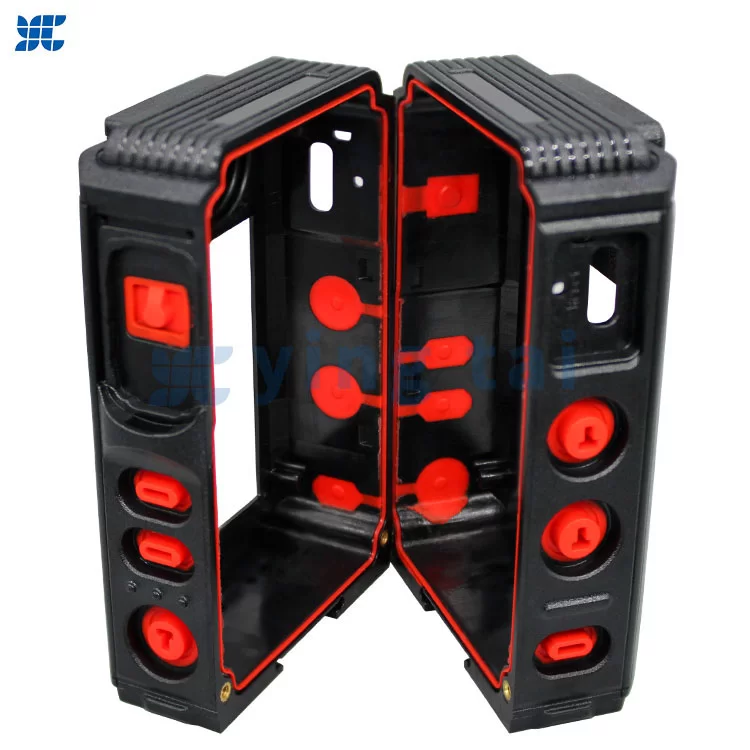
- Consumer Electronics: Waterproof seals, soft-touch grips, and multi-material overmolding for smartphones and wearables.
- Industrial Equipment: Vibration dampeners, custom O-rings, and high-temperature-resistant components.
- Prototyping: Functional prototypes for injection molding validation before committing to steel tooling.

Yingtai's 35,000 m² factory in Dongguan, equipped with 55 LSR machines and 80 plastic injection molds.
Trusted by Global Leaders in Manufacturing
Our Clients






Testimonials
“Yingtai’s 3D printed molds reduced our prototype lead time from 12 weeks to 5 days. We saved CNY 150,000 (USD 21,000) on tooling for a new medical device.”
— Dr. Li, R&D Director at Mindray Medical
“Their conformal cooling molds cut our cycle time by 30%, boosting production efficiency. Ideal for our high-volume silicone seals.”
— Mark Chen, Operations Manager at Foxconn
Certifications & Compliance




All molds comply with ISO 9001, CE, FDA, RoHS, and UL standards.
Frequently Asked Questions about 3D Printed Mold Making
Yingtai’s 3D printed molds last 10,000–100,000 cycles, depending on the material and part complexity. While steel molds (1M+ cycles) outlast them for high-volume production, 3D printed molds are ideal for prototyping, low-volume runs, and complex designs where steel is impractical.
Tip: For production volumes <50,000 units, 3D printed molds are often more cost-effective.
Yes! Yingtai specializes in LSR-compatible 3D printed molds with heat resistance up to 200°C. Our molds are used for:
- Medical-grade silicone parts (e.g., catheters, seals)
- Automotive grommets and gaskets
- Consumer electronics waterproofing
Case Study: A client produced 10,000 LSR baby bottle nipples using our 3D printed molds, meeting FDA and EU 10/2011 standards.
3–7 days for standard molds (design review + printing). Complex molds may take up to 10 days.
Expedited service: 24–48 hours for urgent prototypes (additional fee applies).
Pricing starts at CNY 5,000 (USD 700) for simple molds and goes up to CNY 50,000 (USD 7,000) for large, complex designs. Cost depends on:
- Mold size and complexity
- Material (e.g., carbon fiber resins cost more)
- Surface finish requirements
- Quantity (bulk discounts available)
Comparison: Traditional steel molds for the same part would cost CNY 50,000–500,000+.
Absolutely. Yingtai’s 3D printed molds support:
- LSR + Thermoplastic (e.g., silicone + ABS) for soft-touch grips.
- Dual-durometer silicone (e.g., hard/soft combinations).
- Metal inserts + silicone for reinforced parts.
Industry Trend: The multi-component injection molding market is growing at 8.7% CAGR (Business Research Insights, 2025).
We accept STEP, IGES, STL, and native CAD files (SolidWorks, Fusion 360, etc.). Our engineers will:
- Review your design for 3D printability.
- Optimize for material flow and cooling.
- Provide a free DFM (Design for Manufacturing) report.
Yes! Our post-processing services include:
- CNC machining for tight-tolerance features.
- Polishing (Ra 0.4–0.8 μm for high-gloss finishes).
- Coating (e.g., nickel plating for abrasion resistance).
- Heat treatment to improve durability.
3 Easy Steps:
- Submit Your Design: Upload your CAD file via our online form or email zmm@yingtai168.com.
- Free Quote & DFM Review: Our engineers will analyze your design and provide a quote within 24 hours.
- Production & Delivery: We print, finish, and ship your mold—ready for injection in as little as 3 days.
Pro Tip: For LSR or multi-material projects, specify your material requirements upfront to avoid delays.
Ready to Cut Costs and Lead Times by 50%+?
Join 200+ global manufacturers who trust Yingtai for 3D printed molds. Limited-time offer: Free DFM analysis for all new clients!
Get Your Free Quote Now Call +86 177 2243 7688

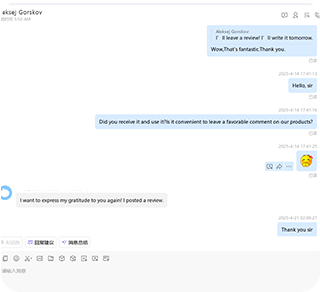
Real Reviews from Satisfied Clients
★★★★★ “Yingtai’s 3D printed molds allowed us to launch a new product in 3 weeks instead of 3 months. The cost savings were astounding—we’ll never go back to CNC for prototyping.”
 John Smith – Product Manager, TechGear Inc. (USA)
★★★★★ “We needed custom LSR molds for a medical device. Yingtai delivered FDA-compliant tools in 5 days. Their technical support is world-class.”
 Dr. Emily Wong – CEO, MedInnovate (Singapore)
★★★★★ “As an automotive supplier, we demand precision. Yingtai’s 3D printed molds met our ±0.1 mm tolerance requirements for silicone grommets. Highly recommended.”
 Carlos M. – Manufacturing Director, AutoPartz GmbH (Germany)
★★★★★ “I was skeptical about 3D printed molds for high-volume production, but Yingtai proved me wrong. Their carbon fiber molds lasted 50,000 cycles with no issues.”
 Aisha Patel – Operations Lead, ElecTrax (UK)

Michael Chen
Senior Mold Design Engineer
Guangdong Yingtai High Precision Technology Co., Ltd.
With 15+ years in mold design and 3D printing, Michael has led 500+ projects for automotive, medical, and consumer electronics clients. He holds a Master’s in Mechanical Engineering from Tsinghua University and is a certified Additive Manufacturing Expert (SME).