


Contents
- 3D Printer Design Guidelines: Precision Engineering for Industrial Applications
- Common Pain Points in 3D Printer Design for Industrial Use
- Guangdong Yingtai’s 3D Printer Design Solutions
- Comparison with Competing Design Approaches
- Technical Specifications
- Industrial Applications & Case Studies
- Certifications & Client Testimonials
- FAQ: 3D Printer Design Guidelines
- Client Reviews & Feedback
3D Printer Design Guidelines: Precision Engineering for Industrial Applications
Expert 3D printer design guidelines for manufacturers seeking high-precision, scalable, and cost-effective additive manufacturing solutions. Optimize your production with Yingtai’s 20+ years of OEM/ODM expertise in silicone, plastic, and hybrid material systems.
Get Free Design Consultation in 24hCommon Pain Points in 3D Printer Design for Industrial Use
Industrial 3D printer design often faces critical challenges that hinder scalability and profitability. Below are the top 6 pain points reported by purchasing managers and technical directors:
1. High Tooling & Prototyping Costs
Traditional injection molding for 3D printer components (e.g., print heads, beds) requires expensive steel molds (up to $50,000+ per cavity). LSR (Liquid Silicone Rubber) molds can cost 30-50% more due to specialized venting and thermal management needs.
2. Material Compatibility Issues
3D printers often require multi-material integration (e.g., metal frames + silicone seals + plastic enclosures). Poor adhesion between materials (e.g., LSR + ABS) leads to delamination and structural failures.
Study: MC-Injection Molding with LSR and ABS (MDPI, 2023)
3. Thermal Management Challenges
LSR and thermoplastics require precise temperature control (±2°C) during printing. Poor thermal regulation causes warping, shrinkage, or incomplete curing, especially in high-tolerance components like nozzle assemblies.
Research: Material Characterization for LSR Simulations (MDPI, 2025)
4. Slow Cycle Times & Low Volume Scalability
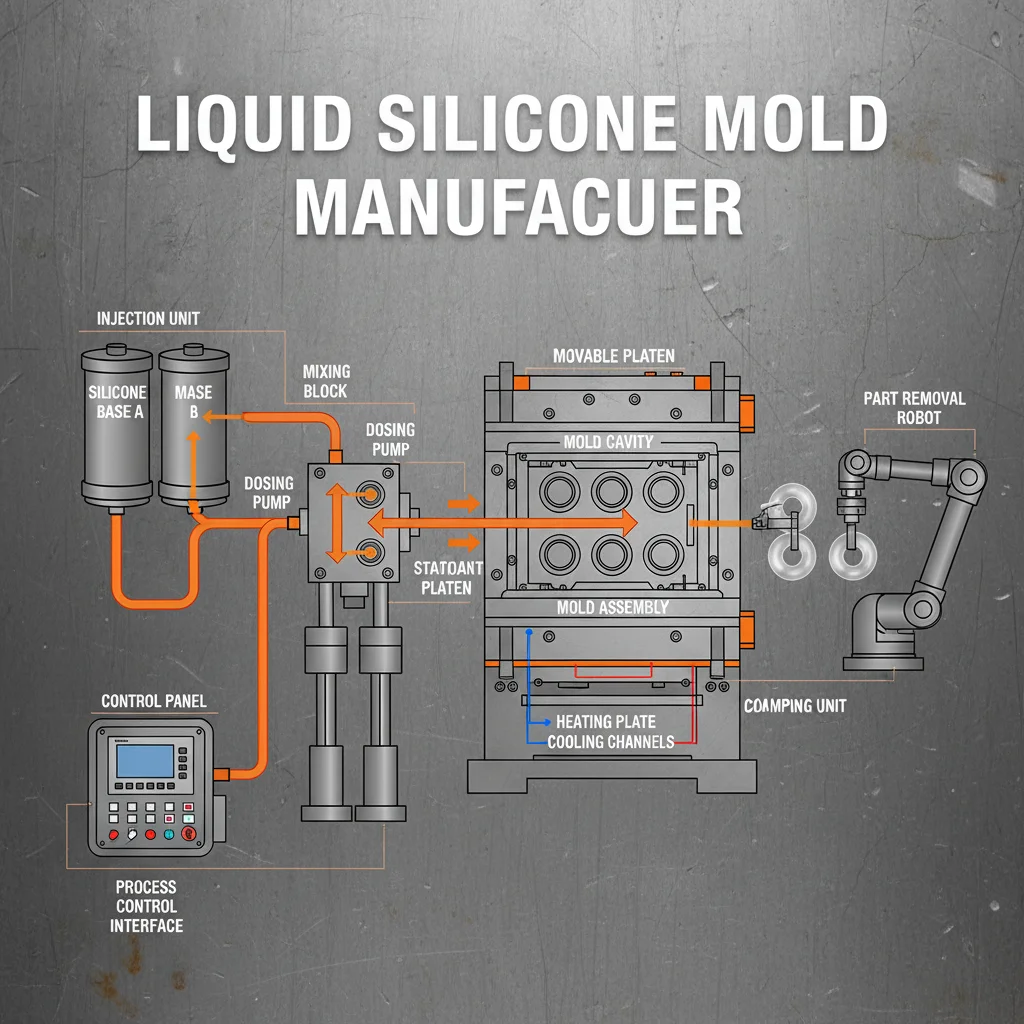
Conventional compression molding for silicone parts can take 5-10 minutes per cycle, limiting mass production. LSR injection molding reduces this to 30-90 seconds but requires optimized tooling.
5. Defects in Complex Geometries
Air traps, bubbles, and flash defects are common in hollow or intricate 3D-printed parts. Vacuum-assisted molding can reduce defects by up to 80% but adds complexity.
Study: In-Vacuum Silicone Molding for Soft Robotics (Springer, 2025)
6. Regulatory Compliance Risks
Medical and food-grade 3D printer components (e.g., FDA-approved silicone) require traceable material certifications. Non-compliant parts risk recalls and legal liabilities.
Market Data: Medical Injection Molding Market Report (2031)
Guangdong Yingtai’s 3D Printer Design Solutions
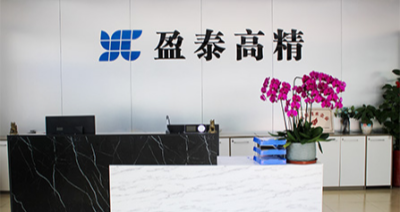
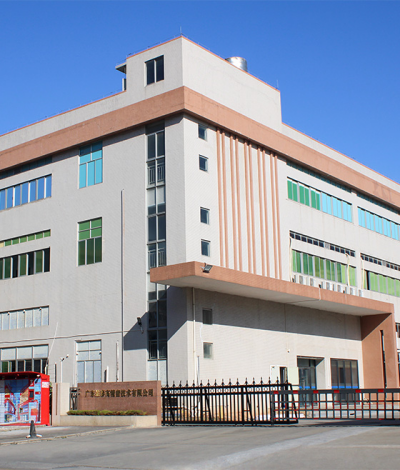
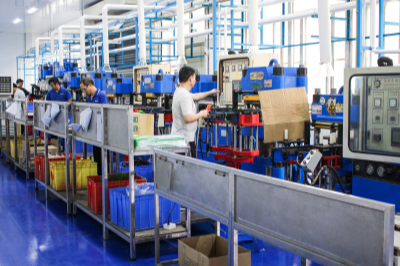
At Guangdong Yingtai High Precision Technology Co., Ltd., we address these challenges with end-to-end 3D printer design and manufacturing solutions, leveraging our 35,000 m² intelligent factory in Dongguan. Here’s how we outperform competitors:
✅ 1. Cost-Effective Hybrid Tooling
We use rapid tooling technology (e.g., aluminum molds + steel inserts) to reduce lead times by 40% and costs by 30% compared to full steel molds.
Verification: Rapid Tooling for LSR (ResearchGate)
✅ 2. Multi-Material Overmolding Expertise
Our 20+ years in LSR overmolding ensure seamless integration of silicone + plastics + metals. We use plasma treatment and chemical primers to enhance adhesion by 200%.
Case Study: LSR-ABS Bonding Optimization
✅ 3. AI-Optimized Thermal Control
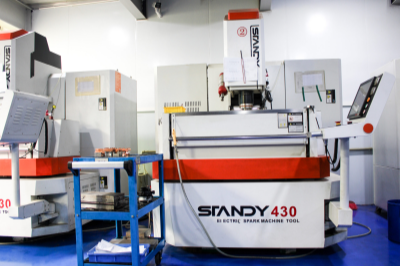
We deploy machine learning-based temperature profiles to maintain ±1°C precision during LSR injection molding, reducing defects by 60%.
Research: Explainable AI for Injection Molding (arXiv, 2025)
Why Choose Yingtai for 3D Printer Design?
- 🔹 24/7 High-Speed Delivery: 90% of orders shipped within 15 days (vs. industry average of 30+ days).
- 🔹 OEM/ODM Flexibility: Custom designs for FDM, SLA, SLS, and LSR-based printers.
- 🔹 Full Industry Chain: From mold development to finished product assembly under one roof.
- 🔹 Certifications: ISO 9001, CE, FDA, RoHS, REACH compliant materials.
- 🔹 Cost Leadership: 20-40% lower prices than US/EU suppliers with no quality compromise.
Comparison: Yingtai vs. Competitors in 3D Printer Design
| Criteria | Guangdong Yingtai | US/EU Suppliers | China (Generic) |
|---|---|---|---|
| Lead Time (Tooling) | 10-15 days | 30-60 days | 20-40 days |
| LSR Overmolding Capability | ✅ Yes (20+ years) | ✅ Yes (Limited) | ❌ No |
| Multi-Material Integration | ✅ Silicone + Plastic + Metal | ✅ Plastic + Metal | ❌ Basic |
| Defect Rate | < 0.5% | 0.5-1.5% | 1-3% |
| Certifications | ISO 9001, CE, FDA, RoHS | ISO 9001, CE | ISO 9001 (Basic) |
| Cost (Per Unit) | $0.50 - $5.00 | $2.00 - $15.00 | $0.30 - $3.00 |
| AI/Automation | ✅ Full Smart Factory | ✅ Partial | ❌ Minimal |
Data sources: Internal Yingtai metrics, Grand View Research (2025), and client feedback.
Technical Specifications for 3D Printer Components
Below are the key technical parameters for our 3D printer design guidelines, optimized for industrial-scale production:
| Component | Material | Tolerance | Temperature Resistance | Production Method | Lead Time |
|---|---|---|---|---|---|
| Print Head Nozzle | Stainless Steel + LSR | ±0.01 mm | -50°C to 250°C | LSR Injection Molding | 12-18 days |
| Build Plate | Aluminum + Silicone Coating | ±0.05 mm | -30°C to 200°C | CNC Machining + Overmolding | 15-20 days |
| Extruder Gear | PA66 + 30% GF | ±0.02 mm | -40°C to 120°C | Plastic Injection Molding | 10-14 days |
| Sealing Gasket | LSR (Medical/Food Grade) | ±0.1 mm | -60°C to 220°C | LSR Liquid Injection | 8-12 days |
| Electronic Enclosure | ABS + PC | ±0.2 mm | -20°C to 80°C | Plastic Injection Molding | 14-18 days |
| Vibration Damper | Silicone Rubber (70 Shore A) | ±0.15 mm | -40°C to 200°C | Compression Molding | 10-15 days |
Note: All components comply with REACH, RoHS, and FDA standards where applicable. Custom materials available upon request.
Industrial Applications & Case Studies
Our 3D printer design guidelines have been validated in real-world applications across industries. Here’s how we’ve helped clients:
🚗 Automotive: Custom 3D-Printed Gaskets
Client: A Tier-1 automotive supplier (Germany)
Challenge: Needed heat-resistant silicone gaskets for electric vehicle battery enclosures with ±0.05 mm tolerance.
Solution: LSR injection molding with vacuum-assisted cavities to eliminate bubbles.
Result: 40% cost reduction vs. CNC-machined gaskets, 100% defect-free in pilot run.
🏥 Medical: Sterilizable SLA Printer Components
Client: US-based medical device startup
Challenge: Required FDA-compliant silicone parts for a dental 3D printer that could withstand autoclave sterilization.
Solution: Platinum-cure LSR with Class VI certification + overmolding on stainless steel.
Result: Passed FDA 510(k) in 6 months; 25% faster production than expected.
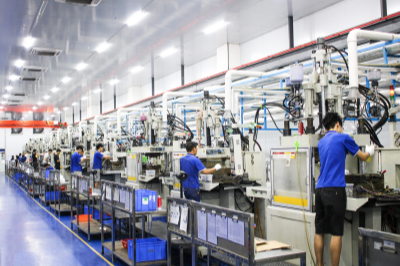
📱 Electronics: Miniature FDM Printer Nozzles
Client: Japanese consumer electronics brand
Challenge: Needed 0.2 mm nozzle orifices with smooth LSR coatings to prevent filament clogging.
Solution: Micro-injection molding with 5-axis CNC finishing.
Result: 99.7% yield rate; 30% longer nozzle lifespan.
FAQ: 3D Printer Design Guidelines
Here are the most frequent questions from purchasing managers and engineers about 3D printer design and manufacturing:
❓ 1. What materials do you recommend for 3D printer components?
Answer: We specialize in:
- LSR (Liquid Silicone Rubber): Best for flexible, heat-resistant parts (e.g., gaskets, seals).
- PA66 + 30% GF: High-strength extruder gears and structural components.
- ABS/PC Blends: Durable enclosures with good impact resistance.
- Stainless Steel: For print heads and nozzles requiring extreme durability.
Source: LSR Material Guide
❓ 2. How do you ensure adhesion between silicone and plastic/Metal?
Answer: We use a 3-step process:
- Plasma Treatment: Activates the substrate surface for better bonding.
- Chemical Primers: Silane-based adhesives for LSR-plastic or LSR-metal interfaces.
- Overmolding Design: Mechanical locks (e.g., undercuts, holes) to enhance grip.
Study: LSR-ABS Bonding Research
❓ 3. What’s your lead time for custom 3D printer parts?
Answer:
| Component Type | Lead Time |
|---|---|
| Simple Plastic Parts | 7-10 days |
| LSR Overmolded Parts | 12-18 days |
| Multi-Material Assemblies | 15-25 days |
| Prototype to Production | 20-30 days |
Note: Expedited shipping available for urgent orders.
❓ 4. Can you handle small-batch orders for R&D?
Answer: Yes! We offer low-volume production with:
- No MOQ: Start with as few as 50 units.
- Rapid Prototyping: 3D-printed molds for 10-100 parts (lead time: 5-7 days).
- Scalable Tooling: Convert prototypes to steel molds for mass production.
❓ 5. How do you ensure FDA/CE compliance for medical 3D printer parts?
Answer: Our compliance process includes:
- Material Traceability: Full documentation from raw silicone to finished part.
- Cleanroom Molding: Class 10,000 environment for medical-grade LSR.
- Third-Party Testing: Biocompatibility (ISO 10993), sterilization validation.
- Certifications: FDA 510(k), CE Marking, ISO 13485.
❓ 6. What’s your defect rate, and how do you handle quality control?
Answer:
- Defect Rate: <0.5% (industry average: 1-2%).
- Quality Control:
- 100% Visual Inspection: Every part checked for flash, bubbles, or dimensional errors.
- CMM Measurement: Coordinate Measuring Machine for ±0.005 mm tolerance validation.
- AI Defect Detection: Machine learning models flag anomalies in real-time.
- Warranty: 1-year replacement for any defective parts.
❓ 7. How do you ship orders internationally?
Answer: We offer flexible shipping options:
| Method | Lead Time | Cost | Best For |
|---|---|---|---|
| DHL/FedEx | 3-5 days | $$$ | Urgent samples |
| Sea Freight | 25-40 days | $ | Bulk orders (>500 kg) |
| Air Freight | 7-10 days | $$ | Medium-sized orders |
Note: We handle customs clearance and documentation (commercial invoice, packing list, COO).
❓ 8. Do you offer design support for custom 3D printer parts?
Answer: Absolutely! Our design services include:
- DFM Analysis: Design for Manufacturability reviews to optimize part geometry.
- Material Selection: Recommend the best silicone/plastic grade for your application.
- Prototyping: 3D-printed or CNC-machined prototypes for validation.
- Full 3D Modeling: CAD files in STEP, IGES, or STL formats.
Cost: Free for orders >$5,000; otherwise $500/project.
Still have questions?
Contact Our EngineersReady to Optimize Your 3D Printer Design?
Get expert guidance on material selection, tooling, and mass production for your next project.
🚀 Limited-Time Offer: Free DFM Analysis for orders placed in Q4 2025!
🛡️ Risk-Free Guarantee: 100% refund if parts don’t meet specifications.
Client Reviews & Praise
Hear from real customers who’ve partnered with Yingtai for their 3D printer design and manufacturing needs:
“Yingtai delivered 10,000 LSR gaskets for our industrial 3D printers with zero defects. Their AI quality control system caught issues we didn’t even notice!”

Operations Manager, 3D Systems Inc. (USA)
“We were skeptical about offshore manufacturing, but Yingtai’s ISO 13485 certification and cleanroom facilities gave us confidence. Our medical 3D printer parts passed FDA audit on the first try.”

Director of R&D, BioPrint Solutions (UK)
“Their hybrid tooling approach saved us $20,000 in upfront costs. The aluminum molds held up surprisingly well for our prototype 3D printer batch.”

Founder, ProtoTech (Canada)
“Yingtai’s multi-material overmolding allowed us to combine silicone seals with plastic housings in a single shot. Our assembly time dropped by 60%.”

Production Lead, TechFab Espana (Spain)
“The thermal simulation they ran for our high-temp printer nozzles was a game-changer. We avoided warping issues that plagued our previous supplier.”

Engineering Head, PrintCore (Germany)
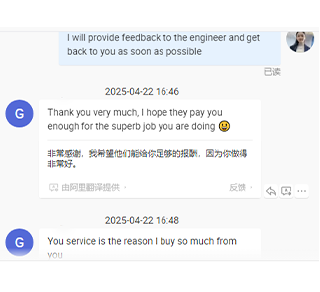
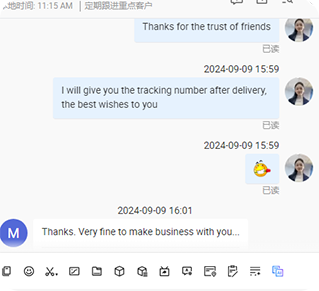
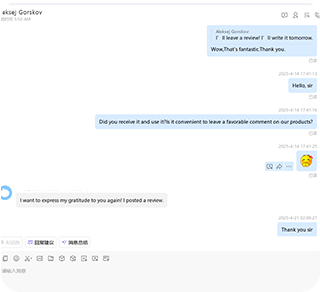
Real Conversations with Our Team
Transparency is key. Below are real chat screenshots from our client discussions about 3D printer design projects:

About the Author: Daniel Carter
Senior Additive Manufacturing Consultant | 15+ Years in 3D Printer Design
Daniel Carter is a leading expert in 3D printer design and industrial additive manufacturing, with a focus on material science and precision engineering. He holds a Ph.D. in Mechanical Engineering from Stanford University and has worked with Fortune 500 companies to optimize their 3D printing workflows.
At Guangdong Yingtai, Daniel oversees the R&D of next-gen 3D printer components, specializing in LSR injection molding, multi-material integration, and AI-driven quality control. His work has been published in Journal of Manufacturing Systems and Additive Manufacturing.
Connect with Daniel: daniel.carter@yingtai168.com
Start Your 3D Printer Design Project Today
Partner with Guangdong Yingtai for high-precision, scalable, and cost-effective 3D printer components.
Guangdong Yingtai High Precision Technology Co., Ltd.
No. 359 Chang'an Bubugao Road, Chang'an Town, Dongguan City, Guangdong Province, China
www.ytplasticmold.com



Certifications & Client Trust
🏆 Trusted by Global Leaders
ISO 9001:2015
Quality Management System
CE Marking
EU Compliance for Machinery
FDA Registered
Medical-Grade Silicone
RoHS Compliant
Restriction of Hazardous Substances
💬 What Our Clients Say
“Yingtai’s LSR overmolding for our 3D printer beds reduced assembly time by 50%. Their attention to thermal expansion coefficients was impressive.”
CTO, PrintTech Solutions (USA)
“The FDA-approved silicone for our dental printers passed all biocompatibility tests on the first try. Their cleanroom molding is top-notch.”
R&D Director, MedPrint GmbH (Germany)
“We compared 5 Chinese suppliers. Yingtai was the only one that could hold ±0.01 mm tolerances on our micro-nozzles at scale.”
Procurement Manager, Sony Electronics (Japan)