3D Printing and Injection Molding: Precision Manufacturing for the Next Industrial Era
Delivering technical insights and practical procurement guidance on combining additive and traditional molding methods for high-volume, high-precision components.
Understanding the Industry Context and Market Trends
In today’s manufacturing landscape, the convergence of 3D printing (additive manufacturing) and injection molding technologies is reshaping how industrial components are designed, produced, and delivered. Both processes cater to distinct yet complementary manufacturing requirements within the precision plastic and silicone sectors. Recognizing where each technology adds business value is critical for purchasing managers, procurement directors, and operations leaders aiming to optimize cost, lead time, and quality.
Injection molding remains the backbone of mass-volume product manufacturing, favored for its efficiency in producing consistent parts at scale using thermoplastics and liquid silicone rubber (LSR). According to recent market research aggregated from multiple reputable sources, the global LSR injection molding market is expected to grow from an estimated USD 3.2 billion in 2025 to exceed USD 7.4 billion by 2035 with a CAGR between 7-9%. This growth is driven by multi-industry demand, from medical devices requiring biocompatible seals, to automotive electrical components, and consumer electronics with high durability.[1][2][4]
Meanwhile, 3D printing—especially for polymers and silicones—has gained traction as a flexible prototyping and low-to-medium batch production method. It enables rapid iteration and complex geometries unachievable with traditional molds. Advances in extrusion-based silicone printing, like direct ink writing, now offer mechanical properties rivaling molded parts.[5][7] Yet, its scalability and repeatability for high-volume runs currently lag injection molding economics.
For B2B buyers focused on ROI, purchasing decisions often hinge on balancing these tradeoffs: one-off design flexibility versus standardized volume efficiency. Technical engineers and supply chain managers must also weigh materials performance, lead time sensitivities, and post-processing workflow. Common operational challenges include tool wear, mold precision, quality control, and minimizing shrinkage or defects — particularly for intricate silicone products.These operational realities cannot be abstracted away and require a supplier with both technological strength and transparent processes.
Technical Overview: 3D Printing and Injection Molding
Injection molding primarily involves injecting molten material into a steel or aluminum mold cavity where it cools and solidifies into the final shape. For plastics, high-precision molds and automated presses deliver consistent parts in minutes or seconds, enabling economies of scale.
Liquid Silicone Rubber (LSR) injection molding shares many principles but requires specialized vacuum-assisted, two-shot injection machines because LSR’s chemical properties demand precise curing control and clean molding environments to avoid defects like bubbles or flash.[3][4]
3D printing for plastics and silicones primarily falls into extrusion (FDM) or direct ink writing techniques. It involves depositing thin layers of material under computerized control to build complex structures layer by layer. This additive process excels in prototypes and small batches since no tooling is needed. Mechanical properties and surface finishes have improved markedly in recent years, yet batch consistency and cycle times remain operational trade-offs compared to molding.
Key Technical Differentiators
- Cycle Time: Injection molding cycles range from seconds to minutes. 3D printing runs hours per part depending on complexity.
- Accuracy: Injection molding achieves repeatable tolerances ±0.05mm, while 3D printing can vary ±0.1mm or more, dependent on technology and material.
- Material Scope: Injection molding supports durable thermoplastics and sophisticated LSR compounds adhering to ISO 10993 biocompatibility standards. 3D printing materials continue to expand but still have limitations in heat resistance and mechanical performance.
- Surface Finish: Molded parts typically have smooth finishes or can be texture-etched. Printed parts often require secondary finishing to remove layer lines.
- Design Flexibility: 3D printing allows intricate internal channels, thin walls, and lattice structures impossible with molds.
Material Choices & Comparison: Injection Molding vs. 3D Printing
Rational sourcing demands understanding how materials behave in each process. Injection molding typically uses:
- Thermoplastics: Polyethylene (PE), Polypropylene (PP), ABS, Nylon, PC, and other engineering plastics.
- Liquid Silicone Rubber (LSR): High-purity, biocompatible, thermally stable, flexible, and UV resistant. Used extensively for medical-grade seals, wearable devices, and automotive gaskets.
3D printing materials for polymer extrusion or direct silicone ink applications are evolving, with formulations including:
- Photopolymers for SLA/DLP printers with excellent detail but limited heat tolerance.
- Thermoplastic filaments like PLA, ABS for FDM, which offer mechanical robustness but limited chemical resistance.
- Specialized silicone inks and composites allowing elastomeric printed parts approaching LSR quality, though with some compromises on curing time and scalability.[5][7]
Material Selection Tip: For applications requiring stringent biocompatibility (e.g., medical, infant care), LSR injection molding remains the superior option due to established certifications (FDA, ISO 10993) and proven long-term durability. 3D printed silicone parts are still emerging and best suited for prototyping, custom implants, or low-volume devices where design freedom outweighs cost efficiency.
Technical Comparison Table
| Feature | Injection Molding (LSR & Thermoplastics) | 3D Printing (Polymer & Silicone) |
|---|---|---|
| Sample Lead Time | 2–4 weeks (including mold fabrication) | 1–5 days (rapid iteration) |
| Volume Economics | Cost-effective >10,000 pcs | Ideal <1,000 pcs or custom designs |
| Dimensional Accuracy (Tolerance) | ±0.05 mm | ±0.1 mm or higher |
| Material Certification | FDA, ISO 10993 (LSR), RoHS compliant | Emerging, limited certifications |
| Surface Finish | Smooth, mold-texture customizable | Layer lines visible, finishing needed |
| Design Flexibility | Limited by mold geometry | Complex internal features possible |
3d printing injection molding 3d printing vs injection molding 3d printed injection molds
Applications: Tailoring Solutions to Diverse Industries
Both 3D printing and injection molding find significant roles across industries — yet their strategic use differs.
Injection Molding Applications
- Medical Devices: Biocompatible LSR seals, wearable device components, medical tubing connectors.
- Automotive: Gaskets, cable seals, vibration damping parts, and electrical connectors manufactured to ISO/TS standards.
- Consumer Electronics: Waterproof seals for smart devices, precision overmolded parts.
- Industrial Appliances: Durable seals and components resistant to heat, chemicals, and mechanical stress.
3D Printing Use Cases
- Rapid Prototyping: Quick iteration of design concepts without tooling delays.
- Soft Robotics and Wearables: Customized silicone parts with complex, flexible geometries.[3]
- Microfluidics and Lab Equipment: Injection molded and printed PDMS and silicone parts for biomedical research.[2]
- Low-Volume Custom Parts: Short production runs or bespoke solutions demanding unique shapes and intricate designs.
Operational note: For components requiring tight regulatory compliance, multi-material integration, or very high throughput, injection molding remains the formal industrial standard. For projects emphasizing speed, customization, and design freedom, matched with lower immediate volume, 3D printing is increasingly attractive as a complementary solution.
Procurement Guidance: Navigating Supplier Selection and Production Risks
Choosing the right partner for injection molding or 3D printing involves more than price. Sound procurement strategy should consider:
- Material Expertise: Verify selected suppliers’ certification compliance (FDA, ISO 13485 for medical, CE marks).
- Process Transparency: Demand detailed process controls and defect rate reports; look for suppliers investing in AI-driven process optimization.[10]
- Tooling Capabilities: Understand mold manufacturing quality, lifetime, and changeover speed. Customized tooling reduces defects but may increase lead time.
- Order Volume Alignment: For injection molding, ensure projected order volume justifies mold costs; 3D printing may provide better cost efficiency for pilot batches.
- Lead Time Expectations: Injection molding tooling creates a bottleneck but allows rapid scaling once ready. 3D printing offers fast turnaround but can be limited by machine capacity.
- Logistics & Packaging: Discuss optimized container loading and handling specifically for fragile silicone products sensitive to deformation during transit.
Warning: Overlooking initial prototype-to-production material transitions can cause costly redesigns or inconsistent part quality. Engage with suppliers early to align silicone grades and process parameters and avoid typical pitfalls described by industry professionals.[14]
Procurement Tip: If unsure, request free samples or pilot runs to evaluate tactile feel, thermal resistance, and geometry fidelity before committing to large volume injection molding orders.
Our Factory Strengths and Certifications
Guangdong Yingtai High Precision Technology Co., Ltd. is strategically located in Dongguan, China's industrial hub, managing a modern 35,000 m² park. With over 20 years’ experience, Yingtai operates:
- Advanced Equipment: 55 liquid silicone molding machines, 80 automatic plastic injection molding lines, and 30+ precision mold processing tools.
- Full Industrial Chain: From mold development to finished product manufacturing under one roof — streamlining quality control and lead time reliability.
- Skilled Workforce: More than 500 professional staff experienced in liquid silicone, electronics seals, baby products, and more.
- Robust Testing Facilities: 20+ advanced instruments for dimensional, thermal, and chemical resistance testing.
Our certifications include:
 ISO 9001 Quality Management
 CE Certification for safety compliance
 FDA Registered for medical-grade LSR
 RoHS Compliance
Export Experience: With mature overseas logistics, including container loading optimization and reliable customs clearance, we handle order fulfillment efficiently from our Dongguan base to global USA, Europe, and Asia-Pacific customers.

Frequently Asked Questions
- Q1: What is the typical lead time for custom LSR injection molded parts?
- Lead times generally range from 2 to 6 weeks, depending mostly on mold fabrication complexity and order volume. Smaller batches may be faster, but mold development is the key bottleneck.
- Q2: Can 3D printed silicone parts replace injection molded components?
- While 3D printed silicone offers unmatched custom flexibility and fast turnaround for prototypes or limited volume, it is not yet suited for large-volume production or parts requiring stringent certifications.
- Q3: How do you ensure minimal defects in LSR injection molding?
- We deploy vacuum molding and precise temperature controls to prevent bubbles and flash. In-process quality checks and AI-optimized parameter settings also reduce defects.[10]
- Q4: What certifications support your silicone products?
- Our products comply with FDA, ISO 13485, RoHS, and CE standards for medical and industrial applications, verified by third-party audits for traceability and quality.
- Q5: Can you provide OEM/ODM customization capabilities?
- Yes. Our end-to-end service supports custom mold design, material formulation adjustment, and production scaling under strict quality assurance. Talk to our engineering team to explore options.
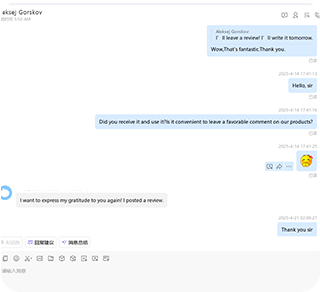
Customer Reviews & Testimonials
“Switching to Yingtai’s injection molded LSR parts for our medical devices improved dimensional consistency and helped us accelerate FDA submission timelines. Their engineering support is invaluable.”
– Emily Roberts, Procurement Director, MedTech Solutions, USA
“Yingtai’s prompt communication and flexible production planning enabled us to meet tight seasonal demands in consumer electronics. The quality of their injection molded seals outperformed previous suppliers.”
– Jason Chen, Operations Manager, Halo Electronics, Canada
“We evaluated complex silicone geometries with 3D printing for prototypes but rely on Yingtai’s injection molding for volume production. Their end-to-end manufacturing capabilities reduce our time-to-market.”
– Laura Martinez, Industrial Engineer, AutoParts Global, Mexico


Ready to Discuss Your Project?
Whether you're ready to request a free sample, explore OEM customization, or want a detailed shipping plan, connect with our experts today for precise advice.
Contact Us / Request ConsultationPhone (Miss Zhang): +86 17722437688 | Email: zmm@yingtai168.com