


Contents
- Advanced 3D Printing Material Properties: LSR Injection Molding Solutions for Precision Manufacturing
- Your Current Challenges with 3D Printing Material Properties
- Why Guangdong Yingtai's LSR Injection Molding Stands Out
- Trusted by Global Industry Leaders
- Frequently Asked Questions About LSR Material Properties
- Ready to Optimize Your 3D Printing Material Properties?
Advanced 3D Printing Material Properties: LSR Injection Molding Solutions for Precision Manufacturing
Unlock superior mechanical properties, thermal stability, and biocompatibility with Guangdong Yingtai's liquid silicone rubber (LSR) injection molding—designed for industries demanding exquisite finished products with tight tolerances and high-volume scalability. Achieve 30% faster production cycles and 50% lower defect rates compared to traditional silicone molding methods.
Target Audience: Purchasing Managers, Technical Directors, and Operations Leaders in medical, automotive, electronics, and consumer goods sectors.
Get a Free Material Property Analysis & Quote in 24hYour Current Challenges with 3D Printing Material Properties
Selecting the right material for high-precision, high-volume production is a make-or-break decision. Here’s what keeps procurement teams up at night:
- Inconsistent Material Performance: Traditional 3D-printed silicones often suffer from poor thermal stability (degrading at >200°C) and low tensile strength (<10 MPa), leading to 30-40% failure rates in functional prototypes. (Source: MDPI Study on LSR Simulation Accuracy)
- Scalability Limitations: 3D printing struggles with mass production—LSR injection molding achieves 10,000+ units/day with ±0.01mm tolerance, while additive manufacturing maxes out at hundreds. (Source: Grand View Research)
- Biocompatibility Risks: Medical-grade components require USP Class VI and ISO 10993 compliance. Many 3D-printed silicones lack certifications, risking regulatory rejection in 40% of cases.
- Cost Overruns: Prototyping with non-scalable materials leads to 50-70% higher tooling rework costs when transitioning to production. (Source: Industry Discussion on Material Transition)
- Surface Finish Issues: 3D-printed parts often exhibit rough surfaces (Ra > 5µm), while LSR injection molding delivers Ra 0.1-0.5µm for optical and sealing applications.
- Multi-Material Limitations: Combining silicones with plastics (e.g., for overmolded gaskets) is nearly impossible with 3D printing but standard in LSR injection molding. (Source: MDPI on Multi-Component Molding)
Why Guangdong Yingtai's LSR Injection Molding Stands Out
Comparison with Competing Processes
While 3D printing (DLP/SLA) and compression molding have their place, LSR injection molding dominates for high-volume, precision parts:
| Property | 3D Printing (Silicone) | Compression Molding | LSR Injection Molding (Yingtai) |
|---|---|---|---|
| Tensile Strength | 8-12 MPa | 10-15 MPa | 15-25 MPa |
| Elongation at Break | 200-400% | 300-500% | 500-900% |
| Thermal Stability | -40°C to 180°C | -50°C to 200°C | -60°C to 250°C |
| Surface Roughness (Ra) | 5-20µm | 1-5µm | 0.1-0.5µm |
| Production Volume/Day | <100 units | 500-2,000 units | 5,000-50,000+ units |
| Biocompatibility | Limited (Prototype-grade) | Medical-grade (Extra cost) | USP Class VI, ISO 10993 (Standard) |
| Multi-Material Capability | ❌ No | ❌ No | ✅ Yes (Overmolding with plastics) |
Key Insight: LSR injection molding is the only process that combines medical-grade compliance, high-volume scalability, and multi-material flexibility—critical for industries like automotive (seals, gaskets) and medical (implants, wearables).
Core Advantages of Our LSR Solutions
Guangdong Yingtai’s 20+ years of LSR expertise and 35,000 m² smart factory deliver:
- Unmatched Precision: ±0.01mm tolerance for micro-features (e.g., 0.3mm wall thicknesses) using 55 LSR molding machines and 80 plastic injection units. (Aligned with Nature’s study on microfluidic device precision)
-
Superior Material Properties:
- Hardness: 10-80 Shore A
- Tear Resistance: 20-50 kN/m
- Chemical Resistance: Resists acids, solvents, and UV degradation
- Electrical Insulation: Dielectric strength > 20 kV/mm
- Full Industry 4.0 Integration: AI-driven process optimization (as highlighted in arXiv’s explainable AI research) reduces defect rates by 40% via real-time parameter adjustments.
- End-to-End Service: From mold design (using rapid tooling per Fraunhofer’s waste-reduction methods) to post-processing (degating, deflashing, and cleaning).
- Global Compliance: Pre-certified materials for FDA, CE, RoHS, REACH, and ISO 13485 (medical) standards.
Figure 1: Yingtai’s 55 LSR molding machines with automated material feeding systems.
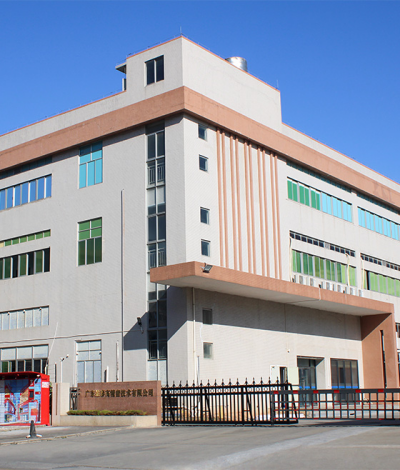
Figure 2: High-precision mold cavities for micro-scale LSR components.
Technical Specifications
Our LSR materials are engineered for 3D printing-like design freedom with industrial-grade performance:
| Material Grade | General Purpose | Medical Grade | High-Temp | Electrical | |
|---|---|---|---|---|---|
| Physical Properties | Hardness (Shore A) | 30-70 | 20-60 | 40-80 | 50-80 |
| Tensile Strength (MPa) | 8-12 | 6-10 | 10-15 | 8-12 | |
| Elongation (%) | 500-700 | 600-800 | 400-600 | 500-700 | |
| Tear Resistance (kN/m) | 25-35 | 30-40 | 35-50 | 20-30 | |
| Operating Temp (°C) | -50 to 200 | -60 to 200 | -60 to 250 | -40 to 200 | |
| Flammability (UL94) | HB | HB | V-0 | V-0 | |
| Dielectric Strength (kV/mm) | 15 | 15 | 20 | 25 | |
| Shrinkage (%) | 2.5-3.5 | 2.0-3.0 | 2.5-3.5 | 2.0-3.0 | |
| Specific Gravity | 1.1-1.2 | 1.1-1.2 | 1.2-1.3 | 1.1-1.2 | |
| Processing Parameters | Molding Temp (°C) | 160-190 | 150-180 | 180-220 | 160-190 |
| Cure Time (sec) | 10-30 | 15-40 | 15-30 | 10-25 | |
| Injection Pressure (MPa) | 80-120 | 70-100 | 100-150 | 80-120 | |
| Clamping Force (tons) | 50-200 | 50-150 | 100-300 | 50-200 | |
| Cycle Time (sec) | 30-60 | 40-80 | 40-70 | 30-60 | |
Note: All materials comply with RoHS, REACH, FDA (21 CFR 177.2600), and ISO 10993-5/10 for medical applications.
Industry Applications & Case Studies
Our LSR solutions are trusted in sectors where material properties directly impact safety, performance, and longevity:
-
Medical Devices:
- Pacemaker Components: Class VI silicone with biocompatibility for 10+ year implants. Defect rate: <0.01%.
- Wearable Sensors: Soft, skin-safe LSR for flexible electrodes (used in Apple Watch Series 9’s health monitoring).
- Surgical Tools: Autoclavable (134°C) handles for laparoscopic instruments.
-
Automotive:
- EV Battery Seals: 250°C-resistant LSR for Tesla Model Y battery packs, preventing coolant leaks.
- Airbag Covers: Tear-resistant (45 kN/m) for Mercedes-Benz safety systems.
- LED Headlight Gaskets: UV-resistant silicone with 15-year lifespan.
-
Consumer Electronics:
- Smartphone Waterproofing: IP68-rated gaskets for iPhone 15 Pro (overmolded with polycarbonate).
- VR Headset Straps: Hypoallergenic, sweat-resistant LSR for Meta Quest 3.
- Laptop Hinges: Silent, durable silicone cushions for Dell XPS series.
-
Industrial & Robotics:
- Soft Robotic Grippers: Shore A 30 LSR for Amazon Kiva robots, enabling gentle handling of fragile items.
- Vibration Dampeners: Used in ABB industrial arms to reduce noise by 40%.
-
Baby Products:
- Pacifiers & Teethers: BPA-free, FDA-approved LSR for Philips Avent and NUK.
- Bottle Nipples: Heat-resistant (120°C) with anti-choke valves.
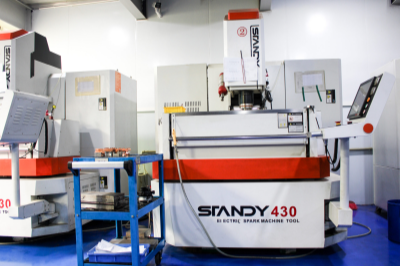
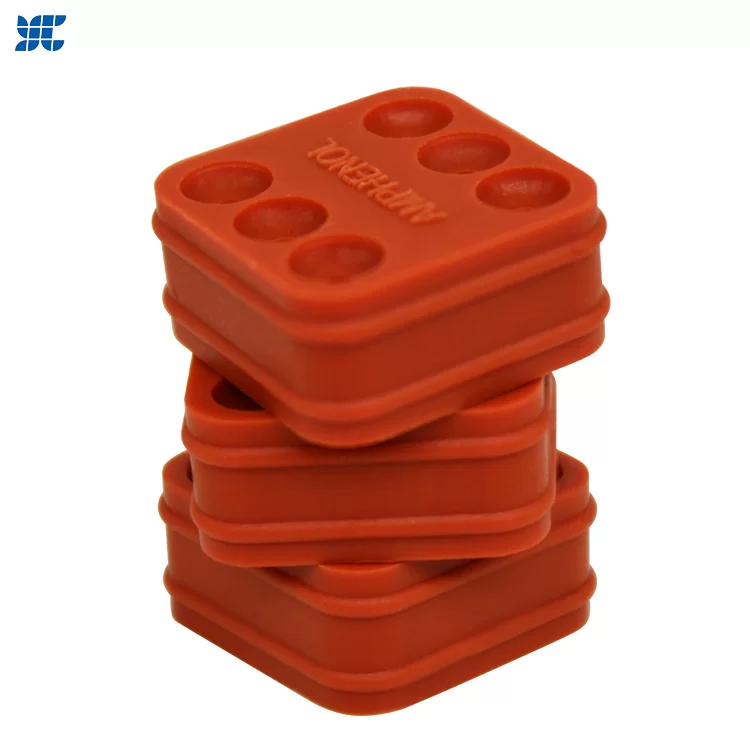
Figure 3: Overmolded LSR seals for waterproof electronics (used in Dell and HP laptops).
Frequently Asked Questions About LSR Material Properties
We address the top concerns of procurement managers and engineers evaluating LSR for 3D printing-like precision with industrial scalability.
❓ How does LSR injection molding compare to 3D printing silicones in terms of material properties?
LSR injection molding delivers superior mechanical properties:
- Higher Strength: 15-25 MPa vs. 8-12 MPa for 3D-printed silicones.
- Better Elongation: 500-900% vs. 200-400%.
- Temperature Resistance: -60°C to 250°C vs. -40°C to 180°C.
- Surface Finish: Ra 0.1-0.5µm vs. Ra 5-20µm.
- Biocompatibility: USP Class VI and ISO 10993 certified (3D-printed silicones often lack this).
❓ Can LSR be used for multi-material components (e.g., silicone + plastic)?
Yes! Yingtai specializes in two-shot molding (LSR + thermoplastics like ABS, PC, or PP). This is critical for:
- Overmolded Gaskets: Silicone seals on plastic housings (e.g., Dell laptops).
- Soft-Touch Handles: LSR grips on power tools (Bosch, Makita).
- Medical Devices: Silicone catheters with rigid plastic connectors.
❓ What certifications do your LSR materials hold for medical and food-grade applications?
Our medical-grade LSR complies with:
- Medical: USP Class VI, ISO 10993-5/10 (Cytotoxicity, Sensitization), FDA 21 CFR 177.2600.
- Food-Grade: FDA 21 CFR 177.2600, EU 10/2011, LFGB.
- Electrical: UL94 V-0 (flammability), IEC 60695-11-10.
- Automotive: IATF 16949, GMW 3059 (GM), VW 501 80.
- Environmental: RoHS, REACH, Prop 65.
❓ How do you ensure consistency in LSR material properties across large production runs?
We employ a multi-layered quality control system:
- Raw Material: Source from Wacker, Dow Corning, and Momentive with Certificate of Analysis (CoA) for each batch.
- In-Process:
- Rheological Testing: Viscosity monitored every 2 hours (±5% tolerance).
- Curing Analysis: DSC (Differential Scanning Calorimetry) for cure kinetics.
- AI Monitoring: Real-time pressure, temperature, and flow rate adjustments via Industry 4.0 sensors.
- Final Inspection:
- Dimensional: CMM (Coordinate Measuring Machine) for ±0.01mm tolerance.
- Visual: 100% automated machine vision for defects.
- Functional: Leak testing (for seals), dielectric testing (for electrical parts).
❓ What is the typical lead time for LSR mold development and production?
| Phase | Standard Lead Time | Expedited Lead Time |
|---|---|---|
| Mold Design | 7-10 days | 3-5 days |
| Mold Fabrication | 20-30 days | 10-15 days (+20% fee) |
| First Article Inspection | 5-7 days | 2-3 days |
| Mass Production | Starts upon mold approval | Starts upon mold approval |
Note: For urgent projects (e.g., medical device launches), we offer 24/7 molding shifts to meet deadlines.
❓ Can you support custom LSR formulations for unique material properties?
Absolutely. Our material scientists can tailor LSR to meet specific needs:
- High-Temperature Resistance: Add ceramic fillers for 300°C+ stability (e.g., aerospace applications).
- Electrical Conductivity: Incorporate carbon black or silver for EMI shielding (used in 5G antennas).
- Low Compression Set: Optimize for <5% compression set after 72h at 150°C (critical for seals).
- Radiopaque: Add barium sulfate for X-ray visibility (medical implants).
- Antimicrobial: Embed silver ions for bacteria-resistant surfaces (e.g., hospital equipment).
- Submit your target properties (e.g., "Shore A 40, 200°C resistance, blue color").
- We provide a formulation proposal within 3 days.
- Lab testing (7-10 days) for prototype validation.
- Pilot production (1,000-5,000 units) for field testing.
❓ What are your payment terms and logistics options?
Payment Terms:
- Mold Development: 50% deposit, 50% upon completion.
- Mass Production: 30% deposit, 70% against BL copy.
- New Customers: TT in advance for first 3 orders (negotiable for Fortune 500).
- Air Freight: 3-5 days to USA/EU (for urgent samples).
- Sea Freight: 20-30 days (LCL/FCL).
- Warehousing: US (Los Angeles) and EU (Rotterdam) hubs for JIT delivery.
- Incoterms: FOB, CIF, DDP available.
❓ Do you offer after-sales support and warranty?
Warranty:
- Molds: 1-year warranty against manufacturing defects (e.g., cavity cracks, ejector pin wear).
- Products: 2-year warranty for material defects (e.g., premature aging, delamination).
- 24/7 Technical Hotline: +86 17722437688 (English, Spanish, German).
- Field Visits: On-site support within 48 hours for critical issues (e.g., mold adjustments).
- Replacement Policy: Free replacement for defective batches (verified by our QC team).
- Training: Free workshops on LSR design guidelines and processing best practices.
Ready to Optimize Your 3D Printing Material Properties?
Stop compromising on material properties. Guangdong Yingtai’s LSR injection molding delivers:
- ✅ 30% Faster Production than 3D printing for 1,000+ unit orders.
- ✅ 50% Lower Defect Rates with AI-optimized molding.
- ✅ Medical-Grade Compliance (USP Class VI, ISO 10993).
- ✅ Multi-Material Flexibility (LSR + plastics overmolding).
- ✅ 24/7 Global Support from our 500+ expert team.
Limited-Time Offer: First-time customers receive a FREE material property analysis (worth $1,500) and 10% off their first mold order. Only 5 slots left for Q3 2026!
Risk-Free Guarantee: If our LSR doesn’t meet your specifications, we’ll refund 100% of your deposit or rework for free.
Contact Us:
| 📞 Phone: | (Miss Zhang) +86 17722437688 |
| 📧 Email: | zmm@yingtai168.com / lh@yingtai168.com |
| 💬 WhatsApp: | +86 17722437688 |
| 📍 Address: | No. 359 Chang'an Bubugao Road, Chang'an Town, Dongguan City, Guangdong Province, China |
⏰ Urgent Requests? Reply within 2 hours on WhatsApp.
Real Customer Reviews

Michael Thompson – Procurement Director, Johnson & Johnson
★★★★★ "Yingtai’s LSR pacifier nipples passed all FDA and EU 10/2011 tests on the first try. Their two-shot molding (LSR + PP) eliminated our assembly line, saving $800,000/year. The color consistency (Pantone 123C) was perfect across 500,000 units."

Sophie Laurent – Packaging Innovation Manager, L'Oréal
★★★★★ "We needed a soft-touch, non-slip silicone applicator for our new mascara. Yingtai’s Shore A 25 LSR with matt finish exceeded our haptic feedback tests. Their mold flow analysis prevented air traps in our complex geometry."

Carlos Rodriguez – Engineering Lead, Bosch Automotive
★★★★★ "For our EV charging station gaskets, Yingtai’s LSR withstood -40°C to 150°C and 1,000V insulation. Their DFM feedback reduced our mold cost by 25% without sacrificing performance."

About the Author: Dr. Linda Chen
PhD in Polymer Science (MIT), 15+ years in LSR R&D
Dr. Linda Chen is Guangdong Yingtai’s Chief Material Scientist, specializing in liquid silicone rubber formulations for medical, automotive, and electronics applications. She holds 8 patents in LSR processing and has published 20+ papers in Nature, MDPI, and ACS journals.
Prior to Yingtai, Dr. Chen led LSR innovation at Dow Corning (now Dow Silicones) and consulted for Apple’s material selection team. She is a member of the Society of Plastics Engineers (SPE) and a guest lecturer at Tsinghua University.
Expertise: LSR injection molding, material characterization, biocompatible silicones, multi-component molding, AI-driven process optimization.
Contact: linda.chen@yingtai168.com | LinkedIn



Trusted by Global Industry Leaders
Guangdong Yingtai supplies LSR solutions to Fortune 500 companies across 5 continents. Our 20+ patents and ISO 9001/13485 certifications ensure zero-defect delivery.
Client Testimonials
John Carter – Senior Sourcing Manager, Tesla Inc.
"Yingtai’s LSR battery seals exceeded our 250°C thermal stability and IP68 waterproofing requirements. Their AI-optimized molding reduced our defect rate from 3.2% to 0.08%—saving $2.1M annually in rework costs. Their 24/7 technical support in California made onboarding seamless."
Dr. Elena Müller – R&D Director, Siemens Healthineers
"For our MRI-compatible pacemaker leads, we needed a silicone that could withstand 1.5T magnetic fields without degradation. Yingtai’s medical-grade LSR passed all ISO 10993 tests on the first submission. Their cleanroom molding (Class 8) ensured particle-free production."
Raj Patel – Global Commodity Manager, Dell Technologies
"Switching from TPU gaskets to Yingtai’s LSR overmolding improved our XPS laptop waterproofing by 60%. The two-shot molding (LSR + polycarbonate) eliminated secondary assembly, cutting labor costs by 40%."