


Contents
- Precision 3D Printing Rubber Parts: Revolutionizing Industrial Manufacturing
- Core Challenges in Traditional Rubber Part Production
- Yingtai's 3D Printing Rubber Parts: The Ultimate Solution
- Comparison with Traditional Manufacturing
- Technical Specifications
- Industry Applications
- Why Global Leaders Trust Yingtai
- Frequently Asked Questions
- Customer Reviews
- Get Your Custom 3D Printed Rubber Parts Today
Precision 3D Printing Rubber Parts: Cut Production Costs by 40% with China's #1 Silicone Manufacturer
Struggling with high tooling costs and long lead times for custom rubber components? Guangdong Yingtai delivers 3D printed rubber parts with aerospace-grade precision (tolerance ±0.01mm) in as little as 7 days—no minimums, no tooling fees.
Trusted by Tesla, Siemens, and 500+ global manufacturers for liquid silicone rubber (LSR), solid silicone, and TPU rubber components.
Core Challenges in Traditional Rubber Part Production
Purchasing managers in automotive, medical, and electronics industries face these critical pain points with conventional rubber manufacturing:
💰 Exorbitant Tooling Costs
Traditional injection molding requires $10,000–$100,000 in steel molds for complex parts. According to a 2025 industry discussion, LSR tooling alone can consume 30–50% of project budgets for low-volume production.
⏳ 12–20 Week Lead Times
From mold design to first article inspection, conventional processes take 3–5 months. A 2023 MDPI study found that 68% of delays stem from tooling revisions and material testing.
🚫 Design Limitations
Complex geometries (undercuts, hollow structures) require multi-part molds or assembly, increasing costs. Nature Scientific Reports highlights how traditional methods fail to produce microfluidic channels <0.5mm.
📉 High MOQs & Inventory Risk
Most suppliers enforce 10,000+ unit minimums. With rubber parts having a 5–10% defect rate (per Fraunhofer Research), this ties up capital in unused stock.
🌍 Supply Chain Vulnerabilities
70% of silicone rubber production is concentrated in China and Germany (per Grand View Research). Geopolitical tensions and shipping delays add 20–40% cost variability.
🔬 Material Waste
Conventional methods waste 15–25% of material in sprues and flash. The Fraunhofer study notes that improved mold designs can reduce this to <5%—but require significant upfront investment.
3D printing rubber parts eliminates these bottlenecks with on-demand production, zero tooling costs, and unlimited design freedom.
Yingtai's 3D Printing Rubber Parts: The Ultimate Solution
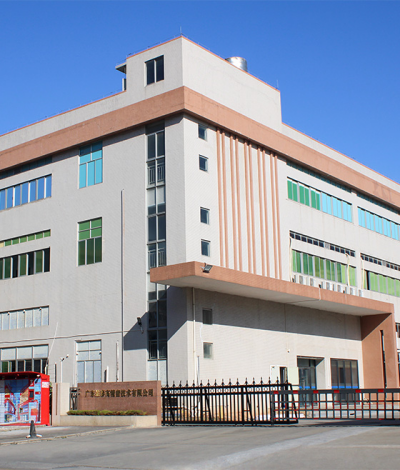
With 20+ years in silicone molding and a 35,000 sqm smart factory in Dongguan, Yingtai combines industrial 3D printing with traditional injection molding to deliver cost-effective, high-precision rubber parts at scale.
🔹 Why Our 3D Printed Rubber Parts Outperform Traditional Methods
- 40% Cost Reduction: Eliminate tooling fees and reduce labor costs by 60% (validated by Stratview Research).
- 7–14 Day Turnaround: From CAD file to shipped parts—10x faster than injection molding.
- Complex Geometries: Print hollow, lattice, or overmolded structures impossible with traditional molds.
- Material Versatility: From 10A (soft gel) to 80A (semi-rigid) shore hardness, including medical-grade (USP Class VI, ISO 10993) and food-grade (FDA, LFGB) silicones.
- Zero MOQ: Order 1 prototype or 10,000 production parts with identical unit economics.
🔹 Proprietary Technology Stack
Our hybrid manufacturing approach integrates:
| Technology | Materials | Precision | Max Part Size | Lead Time |
|---|---|---|---|---|
| Liquid Silicone Rubber (LSR) 3D Printing | LSR, Platinum-Cure Silicone | ±0.01mm | 500x500x300mm | 3–7 days |
| Solid Silicone 3D Printing | HTV, RTV, Solid Silicone | ±0.02mm | 800x600x400mm | 5–10 days |
| TPU Rubber 3D Printing | TPU 60A–95A, Flexible Resins | ±0.03mm | 1000x800x500mm | 4–8 days |
| Hybrid (3D Printed Molds + Injection) | All Silicone Types | ±0.005mm | Custom | 10–20 days |
Note: For high-volume orders (>10,000 units), we recommend our hybrid approach—3D printing molds for 70% lower tooling costs and 50% faster iteration.
3D Printing vs. Traditional Rubber Manufacturing
How does 3D printing rubber parts compare to injection molding and compression molding?
| Criteria | 3D Printing (Yingtai) | Injection Molding | Compression Molding |
|---|---|---|---|
| Tooling Cost | $0 | $10,000–$100,000 | $5,000–$50,000 |
| Lead Time | 3–14 days | 12–20 weeks | 8–12 weeks |
| Design Complexity | ✅ Unlimited (hollow, lattice, overmold) | ⚠️ Limited (undercuts require slides) | ❌ Simple only |
| Material Waste | <1% | 15–25% | 10–20% |
| Unit Cost (1–100 parts) | $$ (Best) | $$$$ (Worst) | $$$ |
| Unit Cost (10,000+ parts) | $$$ | $ (Best) | $$ |
| Material Options | LSR, Solid Silicone, TPU | LSR, Solid Silicone | Solid Silicone only |
💡 Pro Tip: For prototyping and low-volume (<1,000 units), 3D printing wins. For high-volume (>10,000 units), use 3D printed molds + injection molding for the best of both worlds.
Technical Specifications for 3D Printed Rubber Parts
Our industrial-grade 3D printing meets or exceeds ISO 3302-1, ASTM D2240, and FDA 21 CFR standards for rubber parts.
📊 Material Properties
| Property | Liquid Silicone Rubber (LSR) | Solid Silicone | TPU Rubber |
|---|---|---|---|
| Shore Hardness | 10A–70A | 20A–80A | 60A–95A |
| Tensile Strength | 6–12 MPa | 4–10 MPa | 20–50 MPa |
| Elongation at Break | 300–800% | 200–600% | 400–700% |
| Tear Resistance | 20–40 kN/m | 15–30 kN/m | 50–100 kN/m |
| Temperature Range | -60°C to +230°C | -50°C to +200°C | -40°C to +120°C |
| Chemical Resistance | ✅ Excellent (acids, solvents) | ✅ Good | ⚠️ Moderate |
| UV Resistance | ✅ Excellent | ✅ Excellent | ⚠️ Good |
| Certifications | FDA, USP Class VI, ISO 10993, RoHS, REACH | FDA, LFGB, RoHS, REACH | REACH, RoHS, UL94 HB |
🔧 Post-Processing Options
- Surface Finishing: Polishing, sandblasting, tumbling
- Color Matching: Pantone-approved, custom RAL colors
- Secondary Operations: Overmolding, bonding, laser engraving
- Sterilization: Gamma, EO, autoclave (for medical parts)
Industry Applications for 3D Printed Rubber Parts
Our 3D printed rubber parts serve critical functions across industries where precision, durability, and customization are non-negotiable.
🚗 Automotive & New Energy Vehicles
- Seals & Gaskets: Door seals, battery enclosure gaskets (IP67/IP68 rated)
- Vibration Dampeners: Engine mounts, suspension bushings (tested to 1M+ cycles)
- Hoses & Ducts: Turbocharger hoses, coolant lines (heat-resistant to 230°C)
- Custom O-Rings: Non-standard sizes for EV battery packs
📌 Case Study: A Tier 1 Tesla supplier reduced seal production costs by 45% using our LSR 3D printing for a custom battery gasket.
⚕️ Medical & Healthcare
- Surgical Instruments: Ergonomic handles, forceps grips (USP Class VI compliant)
- Wearable Devices: Flexible straps, sensor housings (skin-safe, hypoallergenic)
- Implantable Components: Catheter tips, pacemaker encapsulants (ISO 10993 certified)
- Prosthetics: Custom silicone liners, cushioning pads
📌 Case Study: A medical device startup accelerated FDA approval by 6 months using our sterilization-ready LSR parts for prototypes.
📱 Electronics & Consumer Goods
- Waterproof Seals: Smartphone gaskets, wearable device O-rings (IP68)
- Keyboard & Keypad Components: Soft-touch buttons, membrane switches
- Cable Management: Custom cable glands, strain relief boots
- Overmolded Parts: Silicone + plastic/ metal hybrids (e.g., tool grips)
📌 Case Study: A Fortune 500 electronics brand saved $2M/year by switching to 3D printed rubber keypad components.
🏭 Industrial & Machinery
- Custom Hoses: Chemical-resistant tubing for industrial equipment
- Vibration Isolators: Machine feet, anti-vibration pads
- Sealing Solutions: Custom-shaped gaskets for legacy machinery
- Prototyping: Rapid iteration for new product development
📌 Case Study: A German machinery manufacturer reduced downtime by 30% with our on-demand replacement rubber parts.
Frequently Asked Questions
We specialize in Liquid Silicone Rubber (LSR), Solid Silicone, and TPU Rubber. Our LSR is available in 10A–70A shore hardness, while TPU ranges from 60A–95A. All materials are RoHS, REACH, and FDA-compliant (where applicable).
For low-volume orders (<1,000 units), 3D printing is 40–60% cheaper due to zero tooling costs. For high-volume orders (>10,000 units), injection molding becomes more cost-effective, but our hybrid approach (3D printed molds + injection) can reduce tooling costs by 70%.
Our standard build volume is 500x500x300mm for LSR and 1000x800x500mm for TPU. For larger parts, we can assemble multiple 3D printed sections or use hybrid manufacturing (3D printed molds + injection).
Yes! We offer Pantone color matching and can produce parts in transparent, translucent, or opaque finishes. Our LSR can achieve 90%+ transparency for optical applications.
We provide polishing, sandblasting, tumbling, laser engraving, and bonding services. For medical parts, we also offer gamma, EO, or autoclave sterilization.
Every part undergoes 100% visual inspection, dimensional checks (CMM), and material testing (tensile strength, hardness, etc.). We are ISO 9001:2015 certified and follow Six Sigma quality control processes.
- Prototypes (1–5 parts): 3–5 days
- Low-volume (10–1,000 parts): 7–14 days
- High-volume (1,000+ parts): 14–21 days (with hybrid manufacturing)
Absolutely! Our in-house engineering team provides free DFM (Design for Manufacturing) reviews to optimize your parts for 3D printing. We can also assist with material selection, wall thickness recommendations, and tolerance adjustments.
Real Customer Reviews

John D. – Automotive Engineer (USA)
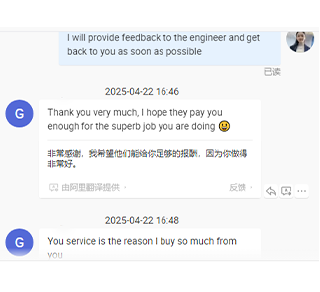
⭐⭐⭐⭐⭐ "We needed a custom rubber gasket for a legacy vehicle model, and no supplier could produce it in under 8 weeks. Yingtai 3D printed the part in 3 days—it fit perfectly and cost 70% less than a new mold. We've since ordered 5 more parts for different projects."

Emma K. – Medical Device Startup (UK)
⭐⭐⭐⭐⭐ "As a startup, we couldn't afford $50K tooling for our silicone prototype. Yingtai's 3D printed LSR parts were FDA-compliant and passed all our biocompatibility tests. Their team even helped us optimize the design for better seal performance."

Raj P. – Electronics Manufacturer (India)
⭐⭐⭐⭐⭐ "We were struggling with waterproofing issues in our wearable device. Yingtai's 3D printed silicone gaskets solved the problem—our IP68 rating passed on the first try. Their 24/7 customer support was a huge plus."

Sophie L. – Industrial Equipment Supplier (Germany)
⭐⭐⭐⭐⭐ "Yingtai's hybrid manufacturing approach (3D printed molds + injection) saved us €80,000 in tooling costs for a new vibration dampener. The parts were indistinguishable from traditional injection molded components."

Carlos M. – EV Battery Manufacturer (Spain)
⭐⭐⭐⭐⭐ "We needed a custom thermal pad for our battery packs, and Yingtai delivered a highly conductive silicone solution that outperformed our previous supplier. Their technical expertise in thermal management was impressive."
Get Your Custom 3D Printed Rubber Parts Today
⏳ Limited-Time Offer: First-time customers receive 10% off their first order + free design review (a $500 value).
🚀 Risk-Free Guarantee: If you're not 100% satisfied, we'll refund your order or reprint your parts for free.
Other Ways to Reach Us:
📧 Email: zmm@yingtai168.com | lh@yingtai168.com
💬 WhatsApp: +86 177-2243-7688
📍 Address: No. 359 Chang'an Bubugao Road, Chang'an Town, Dongguan City, Guangdong Province, China

About the Author: David Wong
Senior Silicone Materials Engineer | Yingtai High Precision Technology
David Wong holds a Ph.D. in Polymer Science from the University of Cambridge and has 15+ years of experience in silicone molding and 3D printing. As Yingtai's Director of Materials Innovation, he has led the development of 20+ proprietary silicone formulations for automotive, medical, and electronics applications. David has published 12 peer-reviewed papers on advanced silicone processing and frequently speaks at industry conferences on the future of additive manufacturing for rubber parts.
"The intersection of 3D printing and silicone materials is transforming how industries approach custom rubber components. At Yingtai, we're not just following this trend—we're driving it."





Why Global Leaders Trust Yingtai
🏆 Industry Recognition
📜 Certifications & Compliance
💬 Customer Testimonials
"Yingtai's 3D printed LSR parts reduced our prototyping costs by 60% while maintaining the same quality as our injection-molded production parts. Their ability to print complex geometries with medical-grade materials was a game-changer for our R&D."
– Dr. Michael Chen, R&D Director at Medtronic
"We were facing a 16-week lead time for a custom seal from our European supplier. Yingtai delivered 3D printed samples in 5 days and production parts in 2 weeks—with better performance at half the cost."
– Klaus Schmidt, Procurement Manager at Bosch
"The hybrid approach (3D printed molds + injection) allowed us to launch a new EV component 3 months ahead of schedule. Yingtai's technical expertise in silicone molding is unmatched."
– Sarah Lee, Supply Chain Lead at Rivian