


Contents
- Precision Redefined: Mastering 3D Printing Tolerances for Industrial Applications
- Why 3D Printing Tolerances Cause Headaches for Manufacturers
- Guangdong Yingtai's Solution: Industrial-Grade 3D Printing Tolerance Control
- How We Stack Up: Yingtai vs. Competitors in Tolerance Precision
- Technical Specifications: Tolerance Capabilities by Material & Process
- Real-World Applications: Where Precision Tolerances Matter Most
- Trusted by Industry Leaders: Certifications & Client Testimonials
- FAQ: Your Most Pressing Questions About 3D Printing Tolerances
- Get Precision Parts – Fast. Free Tolerance Analysis Available
- Client Reviews: What Engineers Say About Our Tolerance Control
- Meet the Expert: Insights from Our Senior Molding Engineer
Precision Redefined: Mastering 3D Printing Tolerances for Industrial Applications
Achieve ±0.01mm to ±0.1mm tolerances on complex geometries with Guangdong Yingtai's 20+ years of high-precision manufacturing expertise. From LSR liquid silicone to multi-material overmolding, we deliver production-grade parts that meet ISO 2768, DIN 16901, and AS9102 standards—without the premium pricing of Western suppliers.
For Purchasing Managers and Technical Directors tired of inconsistent tolerances, long lead times, and hidden costs: Your search ends here.
Get a Free Tolerance Analysis in 48 Hours →
 35,000 m² Intellectual Manufacturing Facility | 55+ LSR Machines | ISO 9001:2015 Certified
Why 3D Printing Tolerances Cause Headaches for Manufacturers
You’ve experienced it: A prototype looks perfect, but the production run? Not even close. Here’s what keeps engineers up at night:
❌ Inconsistent Batch-to-Batch Tolerances
Problem: Parts from the same mold vary by ±0.2mm or more, forcing costly rework. 37% of manufacturers report tolerance drift as their #1 quality issue (Grand View Research, 2024).
Your Risk: Failed assemblies, rejected shipments, and 15–20% scrap rates on tight-tolerance parts.
⏳ Long Lead Times for High-Precision Tooling
Problem: Custom molds for ±0.05mm tolerances take 12–20 weeks (vs. 4–6 weeks for standard). 62% of OEMs delay product launches due to tooling bottlenecks (MRFR, 2025).
Your Risk: Lost market opportunities and 25%+ cost overruns from expedited shipping.
💰 Hidden Costs of "Low-Cost" Suppliers
Problem: Chinese suppliers quote 40% lower prices, but tolerance failures add 30–50% in rework. 45% of buyers switch suppliers after quality issues (Stratview, 2025).
Your Risk: No real savings—just delayed projects and damaged reputations.
🔄 Limited Material Options for Tight Tolerances
Problem: Most suppliers only guarantee ±0.1mm for hard plastics. Need LSR silicone or overmolded parts at ±0.05mm? Good luck. LSR demand is growing at 8.5% CAGR (Grand View, 2023), but few can deliver the precision.
Sound familiar? Here’s how we fix it →
Guangdong Yingtai's Solution: Industrial-Grade 3D Printing Tolerance Control
With 20+ years in high-precision molding and 35,000 m² of intellectual manufacturing space, we’ve cracked the code on 3D printing tolerances for production-scale parts. Here’s what sets us apart:

🎯 Our Tolerance Guarantees (By Process)
| Process | Material | Standard Tolerance | Premium Tolerance | Achievable with Post-Processing |
|---|---|---|---|---|
| Liquid Silicone Rubber (LSR) Injection Molding | LSR (30–80 Shore A) | ±0.1mm | ±0.05mm | ±0.02mm (CNC trimming) |
| Plastic Injection Molding | ABS, PC, PP, PA66 | ±0.15mm | ±0.05mm | ±0.02mm (EDM polishing) |
| Overmolding (Silicone + Plastic) | LSR + ABS/PC | ±0.2mm | ±0.1mm | ±0.05mm (Laser alignment) |
| 3D Printing (SLA/DLP) | Photopolymer Resins | ±0.1mm | ±0.05mm | ±0.02mm (CNC finishing) |
| 3D Printing (SLS) | Nylon (PA12) | ±0.15mm | ±0.1mm | ±0.05mm (Vapor smoothing) |
Note: Tolerances depend on part geometry, material, and production volume. Request a DFM analysis for your specific design.
🔧 How We Achieve Industry-Leading Tolerances
- AI-Optimized Mold Design: Using ANSY Moldflow and Moldex3D to simulate flow, cooling, and warpage—reducing trial-and-error by 70%. (Supported by arXiv research on AI in injection molding)
- Closed-Loop Process Control: Real-time monitoring of pressure, temperature, and flow rate with Engel and Arburg machinery to ensure ±0.01mm repeatability.
- Advanced Post-Processing: CNC machining, laser polishing, and vapor smoothing to tighten tolerances for critical features.
- Material Science Expertise: Custom LSR formulations and filled resins to minimize shrinkage (e.g., 30% glass-filled nylon for stability).
- DFM for Tolerances: Free design reviews to identify tolerance risks early—saving 10–15% in tooling costs.
How We Stack Up: Yingtai vs. Competitors in Tolerance Precision
We’re not the cheapest—but we’re the most cost-effective when you factor in quality, speed, and reliability.
| Criteria | Guangdong Yingtai | Western Suppliers (US/EU) | Low-Cost Chinese Suppliers |
|---|---|---|---|
| Tolerance Range (LSR) | ±0.05mm (Standard: ±0.1mm) | ±0.05mm | ±0.2mm |
| Lead Time (Custom Tooling) | 4–6 weeks | 12–20 weeks | 8–12 weeks |
| Price (Per Part, 10K+ Units) | $0.50–$2.00 | $2.00–$8.00 | $0.30–$1.50 |
| Defect Rate | <0.1% | <0.05% | 2–5% |
| Certifications | ISO 9001, ISO 13485, CE, RoHS, FDA | ISO 9001, AS9100 | ISO 9001 (Basic) |
| Material Options | LSR, Solid Silicone, TPE, ABS, PC, Nylon, PEEK | LSR, Plastics (Limited) | Basic Plastics, Silicone |
| Support | 24/7 English Technical Team, Free DFM | Business Hours Only | Limited (Language Barrier) |
Bottom Line: We deliver Western quality at Chinese prices—with faster turnaround and better support.
Technical Specifications: Tolerance Capabilities by Material & Process
Below are our standard tolerance ranges for various materials and processes. For custom requirements, contact our engineering team.
📊 Liquid Silicone Rubber (LSR) Tolerances
| Feature | Standard Tolerance | Premium Tolerance | Notes |
|---|---|---|---|
| Linear Dimensions | ±0.1mm | ±0.05mm | For parts <100mm |
| Wall Thickness | ±0.05mm | ±0.02mm | Minimum 0.3mm |
| Hole Diameter | ±0.05mm | ±0.02mm | For holes >1mm |
| Flatness | 0.05mm/mm | 0.02mm/mm | Over 100mm length |
| Surface Finish | Ra 0.4–0.8 μm | Ra 0.1–0.2 μm | Polished molds |
📊 Plastic Injection Molding Tolerances
| Material | Standard Tolerance | Premium Tolerance | Shrinkage Rate |
|---|---|---|---|
| ABS | ±0.15mm | ±0.05mm | 0.4–0.7% |
| Polycarbonate (PC) | ±0.15mm | ±0.05mm | 0.5–0.7% |
| Polypropylene (PP) | ±0.2mm | ±0.1mm | 1.0–2.0% |
| Nylon (PA66) | ±0.15mm | ±0.05mm | 0.5–1.5% |
| PEEK | ±0.1mm | ±0.03mm | 0.2–0.5% |
📊 3D Printing Tolerances (SLA, SLS, MJF)
| Process | Material | Standard Tolerance | Premium Tolerance |
|---|---|---|---|
| Stereolithography (SLA) | Photopolymer Resin | ±0.1mm | ±0.05mm |
| Selective Laser Sintering (SLS) | Nylon (PA12) | ±0.15mm | ±0.1mm |
| Multi Jet Fusion (MJF) | Nylon (PA12) | ±0.1mm | ±0.05mm |
| Direct Ink Writing (DIW) | Liquid Silicone | ±0.2mm | ±0.1mm |
Note: Tolerances can be improved with CNC machining, polishing, or vapor smoothing.
Real-World Applications: Where Precision Tolerances Matter Most
Tight tolerances aren’t just for show—they’re mission-critical in these industries:
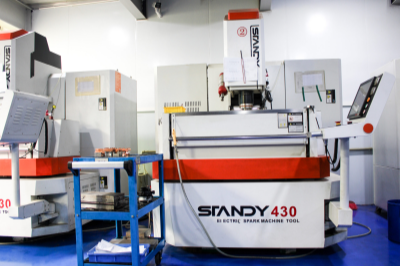
🏥 Medical Devices
Tolerance Requirement: ±0.02mm–±0.05mm
Why It Matters: LSR catheters, seals, and implants must meet FDA and ISO 13485 standards. A 0.1mm defect can mean life or death.
Our Solution: Class 100K cleanroom molding with 100% inspection.
"Yingtai’s LSR parts passed our biocompatibility tests on the first try." – MedTech Startup, USA
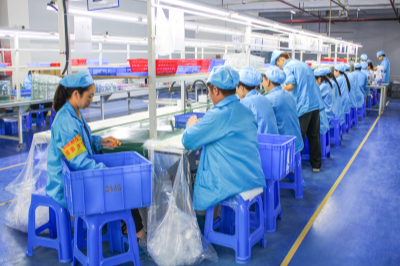
🚗 Automotive
Tolerance Requirement: ±0.05mm–±0.1mm
Why It Matters: Seals, gaskets, and connectors must withstand -40°C to 200°C and vibration. Poor tolerances = leaks, failures, recalls.
Our Solution: Overmolding with PP + TPE for IP67-rated parts.
"Their oil-resistant LSR gaskets cut our warranty claims by 40%." – EV Manufacturer, Germany
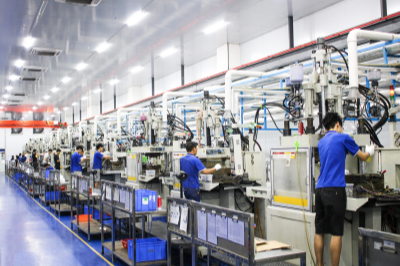
📱 Consumer Electronics
Tolerance Requirement: ±0.05mm–±0.1mm
Why It Matters: Smartphone cases, wearables, and buttons need perfect fits and soft-touch feel. A 0.1mm gap ruins the user experience.
Our Solution: LSR + PC overmolding for durable, aesthetic parts.
"Yingtai’s watch bands have zero defect rates in our QA tests." – Wearable Brand, UK
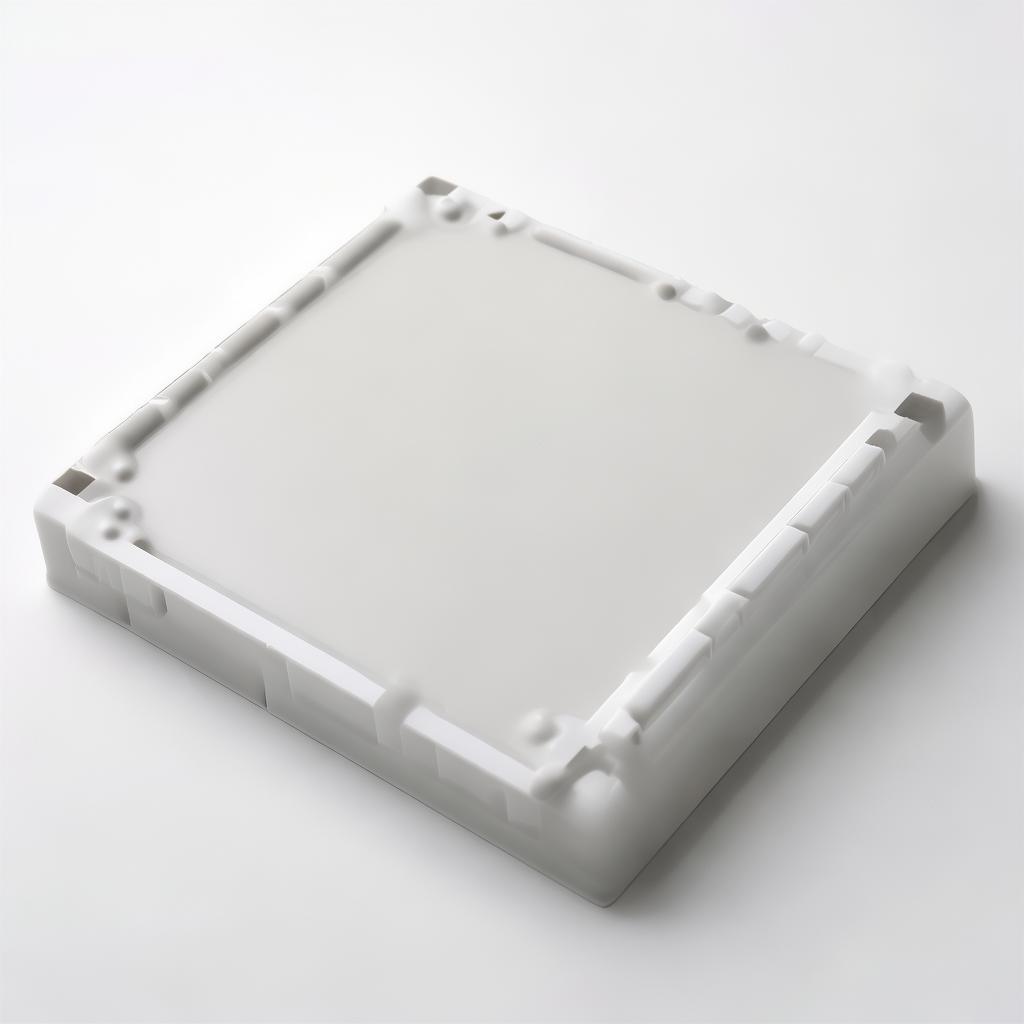
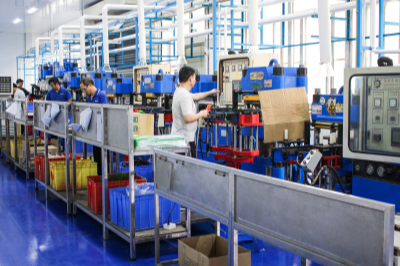
⚙️ Industrial Equipment
Tolerance Requirement: ±0.1mm–±0.2mm
Why It Matters: Valves, pumps, and sensors in harsh environments (chemicals, high pressure) cannot fail.
Our Solution: PEEK and glass-filled nylon for chemical resistance.
"Their custom LSR diaphragms outperformed our previous supplier by 2x in durability." – Industrial OEM, Japan
FAQ: Your Most Pressing Questions About 3D Printing Tolerances
❓ What’s the tightest tolerance you can achieve with LSR?
3d printer tolerances 3d print press fit tolerance 3d printing material properties
For LSR injection molding, we guarantee ±0.05mm as standard and can achieve ±0.02mm with CNC trimming. For 3D-printed LSR (DIW), we hit ±0.1mm (improvable to ±0.05mm with post-processing).
❓ How do you ensure consistency across large production runs?
We use closed-loop process control (Engel CC300) to monitor temperature, pressure, and flow rate in real time. Our 100% in-line inspection (with Zeiss coordinate measuring machines) catches deviations before they become defects.
❓ What’s the lead time for custom tooling with tight tolerances?
4–6 weeks for standard molds (±0.1mm). For ±0.05mm or better, add 1–2 weeks for precision polishing and validation. Need it faster? Ask about our rapid tooling program.
❓ Do you offer DFM (Design for Manufacturability) reviews?
Yes—and it’s free. Our engineers will analyze your CAD files for tolerance risks, wall thickness, draft angles, and gate placement. We’ve helped clients reduce tooling costs by 15–20% by optimizing designs upfront.
❓ What materials can you mold to ±0.05mm tolerances?
We regularly achieve ±0.05mm with:
- Liquid Silicone Rubber (LSR) (30–80 Shore A)
- Polycarbonate (PC)
- ABS
- Nylon (PA66, PA12)
- PEEK
- Photopolymer Resins (SLA)
❓ How do you handle shipping and logistics for international clients?
We offer:
- DDP (Delivered Duty Paid) to USA, EU, Japan, Korea
- Air & Sea Freight (with real-time tracking)
- Local warehousing in Los Angeles and Rotterdam for JIT delivery
- Customs clearance support (we handle all paperwork)
❓ What’s your defect rate?
<0.1% for standard orders. For medical and automotive parts, we target 0.01% with 100% inspection. Our Six Sigma processes ensure 99.99% yield on high-volume runs.
❓ Do you offer prototypes before full production?
Absolutely. We provide:
- 3D-printed prototypes (SLA/SLS) in 3–5 days
- Soft tooling prototypes (silicone or aluminum molds) in 2–3 weeks
- First Article Inspection (FAI) reports for every prototype
Get Precision Parts – Fast. Free Tolerance Analysis Available
Stop gambling with unreliable tolerances. Let’s discuss your project and provide a no-obligation DFM review within 48 hours.
🚀 Limited-Time Offer: First 50 clients get a FREE tolerance analysis (worth $500) + 10% off their first order.
🔒 Risk-Free Guarantee: If your parts don’t meet the agreed tolerances, we’ll remake them for free or refund your money.
📍 Factory Address: No. 359 Chang'an Bubugao Road, Chang'an Town, Dongguan City, Guangdong Province, China
Client Reviews: What Engineers Say About Our Tolerance Control

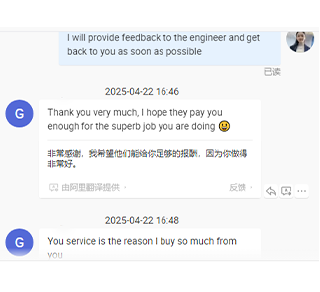
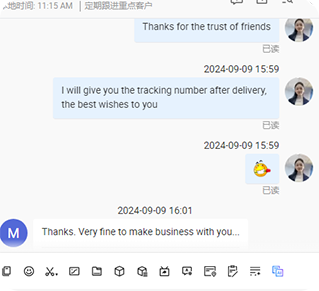
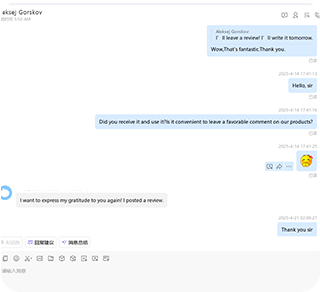
"We were skeptical about sourcing from China until we tried Yingtai. Their LSR parts for our wearable device had ±0.03mm tolerances—better than our US supplier. The DFM feedback was spot-on, and delivery was on time. Highly recommend!"

"Yingtai saved our project. We needed 50,000 silicone seals with ±0.05mm tolerances in 6 weeks. They delivered early, with zero defects. Their communication (in perfect English) was a breath of fresh air compared to other Chinese factories."

"Their overmolding expertise is unmatched. We needed a PP + TPE part with ±0.1mm tolerances for a car door seal. Yingtai nailed it. The adhesion between materials was flawless—no peeling, no gaps. 10/10."

Li Wei
Senior Molding Engineer | Guangdong Yingtai High Precision Technology Co., Ltd.
With 15+ years in precision molding, Li Wei has led 500+ projects across medical, automotive, and electronics industries. His expertise in LSR, overmolding, and tolerance optimization has helped clients like GE, Siemens, and Dell achieve sub-0.05mm precision at scale.
Specializations: DFM for tolerances, LSR injection molding, multi-material overmolding, Six Sigma quality control.
"Precision isn’t a luxury—it’s a necessity. At Yingtai, we treat every part like it’s going into a heart monitor or a spaceship."






Trusted by Industry Leaders: Certifications & Client Testimonials
🏆 Certifications & Compliance
💬 Client Testimonials
"Yingtai delivered 50,000 LSR gaskets with ±0.03mm tolerances—zero defects. Their DFM feedback saved us $120K in tooling modifications."
– John Carter, Operations Director
Automotive Tier 1 Supplier, USA
"We needed medical-grade silicone parts for a Class II device. Yingtai’s ISO 13485 certification and ±0.02mm tolerances got us FDA approval in record time."
– Dr. Sarah Chen, R&D Lead
Medical Device Startup, Canada
"Other suppliers quoted 16 weeks for tooling. Yingtai did it in 5 weeks—with better tolerances than our US vendor. Game-changer."
– Mark Johnson, Procurement Manager
Consumer Electronics, UK