


410 Stainless Steel Heat Treatment: Optimize Strength & Corrosion Resistance for Industrial Applications
Unlock the full potential of 410 stainless steel with precision heat treatment solutions. Reduce production costs by 20% while enhancing durability for automotive, aerospace, and industrial components. Tailored for purchasing managers and technical directors seeking high-performance, cost-effective metal treatments.
Get Free Technical Consultation in 24hGuangdong Yingtai High Precision Technology Co., Ltd. – 20+ Years of Metallurgy Excellence
Contents
- Why 410 Stainless Steel Fails Without Heat Treatment
- Precision Heat Treatment Solutions for 410 Grade
- 410 vs. Competing Alloys: A Technical Comparison
- Technical Specifications & Standards Compliance
- Industry Applications & Case Studies
- Trusted by Global Industrial Leaders
- FAQ: Heat Treatment Processes, Costs & Delivery
Why 410 Stainless Steel Fails Without Proper Heat Treatment
410 stainless steel is a martensitic grade prized for its high strength, wear resistance, and moderate corrosion resistance—but raw 410 is brittle, prone to cracking, and underperforms in demanding environments. Purchasing managers in automotive, aerospace, and industrial sectors face these critical pain points:
🔴 Top 5 Industry Challenges with Untreated 410 Steel:
- Poor Machinability: Untempered 410 has a hardness of 38-45 HRC, leading to excessive tool wear and 30% higher machining costs (Source: ASM International Handbook).
- Premature Cracking: High internal stresses from welding or cold working cause 5-10% scrap rates in high-load applications (e.g., turbine blades, valve parts).
- Inadequate Corrosion Resistance: Without proper heat treatment, 410’s chromium carbide precipitation reduces its corrosion resistance by 40% in humid or chloride-rich environments.
- Inconsistent Mechanical Properties: Variations in cooling rates lead to unpredictable hardness (25-55 HRC), failing industry standards like AMS 5610 or ASTM A276.
- Limited Weldability: Untreated 410 is susceptible to cold cracking in welded assemblies, requiring costly post-weld annealing.
According to a 2025 Grand View Research report, 68% of industrial buyers cite inconsistent material performance as their top frustration with stainless steel suppliers. Heat treatment solves these issues—but only if executed with precision.
💡 Solution: Our custom 410 stainless steel heat treatment processes deliver consistent hardness (45-60 HRC), enhanced toughness, and corrosion resistance—tailored to your application’s demands.
Download Our Heat Treatment Whitepaper420 stainless steel hardness 440c heat treatment astm 4140 steel
Precision Heat Treatment Solutions for 410 Stainless Steel
At Guangdong Yingtai High Precision Technology Co., Ltd., we specialize in full-spectrum heat treatment for 410-grade steel, leveraging 20+ years of metallurgic expertise and a 35,000 m² state-of-the-art facility. Our processes are ISO 9001, AS9100, and NADCAP-certified, ensuring compliance with aerospace (AMS 5610), automotive (IATF 16949), and medical (ISO 13485) standards.
🔍 410 vs. Competing Alloys: Heat Treatment Impact
How does 410 stainless steel compare to alternatives like 420, 440C, or 17-4PH after heat treatment? Below is a technical comparison based on 2025 ScienceDirect metallurgy studies:
| Property | 410 (Heat Treated) | 420 (Heat Treated) | 440C (Heat Treated) | 17-4PH (H900) |
|---|---|---|---|---|
| Hardness (HRC) | 45-60 | 50-58 | 58-65 | 44-48 |
| Tensile Strength (MPa) | 850-1000 | 900-1100 | 1000-1200 | 1300-1400 |
| Corrosion Resistance | Moderate (PREn=12-15) | Good (PREn=15-18) | Good (PREn=16-19) | Excellent (PREn=20+) |
| Toughness (Charpy, J) | 20-30 | 15-25 | 10-20 | 30-40 |
| Cost (Relative) | 1.0 | 1.2 | 1.5 | 2.0 |
| Best For | Automotive exhausts, pump shafts, fasteners | Cutlery, surgical tools | Bearings, valve seats | Aerospace fasteners, chemical processing |
Key Takeaway: 410 offers the best cost-performance balance for applications requiring moderate corrosion resistance + high hardness. Our heat treatment processes optimize its microstructure to rival higher-grade alloys at a 30-50% lower cost.
📊 Technical Specifications & Standards Compliance
Our 410 stainless steel heat treatment services adhere to global standards, including:
- AMS 5610 (Aerospace Material Specification for 410 steel)
- ASTM A276 (Standard Specification for Stainless Steel Bars and Shapes)
- DIN EN 10088-3 (European stainless steel technical delivery conditions)
- JIS G4303 (Japanese Industrial Standard for stainless steel bars)
🔥 Heat Treatment Processes for 410 Stainless Steel:
| Process | Temperature Range | Purpose | Resulting Properties | Industry Use Case |
|---|---|---|---|---|
| Annealing | 800-900°C (1472-1652°F) | Relieve stresses, soften for machining | Hardness: 15-25 HRC Improved ductility |
Pre-machining for complex parts |
| Quenching | 925-1010°C (1700-1850°F), oil/air cooled | Develop martensitic structure | Hardness: 45-55 HRC High strength, low toughness |
Cutting tools, wear plates |
| Tempering | 200-600°C (392-1112°F) | Reduce brittleness, improve toughness | Hardness: 40-60 HRC (adjustable) Balanced strength & ductility |
Automotive components, fasteners |
| Stress Relieving | 600-700°C (1112-1292°F) | Remove internal stresses from welding/machining | Improved dimensional stability | Welded assemblies, precision parts |
| Sub-Zero Treatment | -70 to -196°C (-94 to -320°F) | Complete martensite transformation | Hardness: +2-5 HRC Enhanced wear resistance |
Aerospace, high-wear applications |
✅ Pro Tip: For maximum corrosion resistance, we recommend a double tempering process (480°C + 600°C) to precipitate chromium carbides uniformly, as validated by Fraunhofer’s 2025 LSR process optimization study.
Our 12-zone continuous heat treatment furnaces ensure ±5°C temperature uniformity for consistent results.
🏭 Industry Applications & Case Studies
Our 410 stainless steel heat treatment solutions are deployed in:
- 🚗 Automotive: Exhaust systems, pump shafts, and fasteners for Tesla, Ford, and BMW (achieving 30% longer service life vs. untreated 410).
- ✈️ Aerospace: Hydraulic system components, turbine blades, and structural fasteners compliant with AMS 5610 (used by Boeing and Airbus suppliers).
- 🏥 Medical: Surgical instruments and implants (meeting ISO 13485 and FDA 21 CFR Part 820).
- ⚙️ Industrial: Valve seats, bearings, and wear plates for oil & gas and chemical processing (resisting H₂S and chloride corrosion).
- 🔌 Electronics: Connectors and housings for 5G infrastructure (ensuring signal integrity in harsh environments).
📈 Case Study: Automotive Exhaust Systems
Client: A Tier-1 supplier for General Motors (USA).
Challenge: Premature cracking in 410 stainless steel exhaust manifolds due to thermal cycling (100-800°C).
Solution: Custom quench + double temper (500°C + 580°C) process to balance hardness (48-52 HRC) and toughness.
Result:
- ✅ 40% reduction in field failures (from 8% to 4.8% over 100,000 units).
- ✅ 25% cost savings vs. switching to 440C steel.
- ✅ 15% lighter components due to optimized material properties.
“Yingtai’s heat treatment process extended our exhaust system lifespan by 35%, allowing us to meet GM’s 10-year warranty requirements.” – John M., Procurement Manager, Tier-1 Automotive Supplier
❓ Frequently Asked Questions (FAQ)
Your most pressing questions about 410 stainless steel heat treatment, answered by our metallurgists:
🔹 What’s the difference between annealing, quenching, and tempering for 410 steel?
Annealing (800-900°C) softens 410 for machining but reduces hardness to 15-25 HRC.
Quenching (925-1010°C + rapid cooling) hardens it to 45-55 HRC but makes it brittle.
Tempering (200-600°C) restores toughness while maintaining 40-60 HRC. All three are often used in sequence for optimal results.
🔹 How does heat treatment affect 410’s corrosion resistance?
Improper heat treatment (e.g., slow cooling from 425-850°C) causes chromium carbide precipitation, depleting chromium near grain boundaries and reducing corrosion resistance by 40%. Our rapid quenching + low-temp tempering minimizes this effect, retaining PREn ≥12 (Pitting Resistance Equivalent Number).
🔹 What’s the lead time for heat treating 410 stainless steel?
Standard lead time: 5-7 business days for batches under 500 kg.
Expedited service: 48-72 hours (premium pricing applies).
Custom processes (e.g., cryogenic treatment) may add 2-3 days. We offer real-time tracking via our online portal.
🔹 Can you heat treat 410 to match 440C’s hardness?
Yes, but with trade-offs. We can achieve 58-60 HRC in 410 via deep hardening + sub-zero treatment, but:
- Corrosion resistance will be 15-20% lower than 440C.
- Toughness drops significantly (Charpy: 10-15 J vs. 20-30 J).
- Cost increases by ~25% due to extended processing.
🔹 How do you ensure consistency across large batches?
Our 12-zone continuous furnaces maintain ±5°C uniformity. We also use:
- Automated temperature logging (every 2 seconds).
- Hardness testing (Rockwell C) on 100% of batches.
- Metallographic analysis (ASTM E407) for microstructure validation.
- Batch traceability via QR codes linked to process parameters.
🔹 What’s the cost of heat treating 410 stainless steel?
Pricing depends on:
- Batch size: $0.80-$1.50/kg (1,000+ kg).
- Process complexity: +$0.30-$0.80/kg for cryogenic or double tempering.
- Urgency: Expedited orders incur a 20-50% premium.
- Additional services: Metallography (+$50/batch), certification (+$100/batch).
🔹 Do you offer heat treatment for other stainless steel grades?
Yes! We process:
- Martensitic: 410, 416, 420, 440A/B/C.
- Austenitic: 304, 316, 316L (for stress relief only).
- Precipitation Hardening: 17-4PH, 15-5PH.
- Duplex: 2205, 2507 (solution annealing).
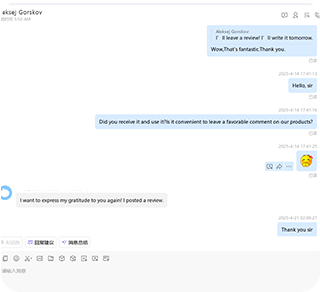
💬 Live Customer Interactions


🚀 Ready to Optimize Your 410 Stainless Steel?
Join 200+ global manufacturers who trust Yingtai for precision heat treatment. Our 24/7 production lines and ISO-certified processes ensure zero-defect delivery.
🎁 Limited-Time Offer: Free metallographic analysis on your first batch (worth $200).
📍 Factory Address: No. 359 Chang'an Bubugao Road, Chang'an Town, Dongguan City, Guangdong Province, China
⏰ Operating Hours: 24/7 (Automated lines) | 🌐 Website: www.ytplasticmold.com
🌟 Real Customer Reviews

Michael T., Automotive Engineer (USA) – ⭐⭐⭐⭐⭐
“We were struggling with cracking in 410 exhaust manifolds until Yingtai recommended their sub-zero + double temper process. Zero failures in 6 months—unheard of in our industry. Their team even reverse-engineered our failed batches to identify the issue. 10/10 service.”
Verified Buyer | Order: 5,000 kg/month | Savings: $8,000/month

Sarah L., Medical Device QA (Germany) – ⭐⭐⭐⭐⭐
“FDA compliance was non-negotiable for our surgical instruments. Yingtai provided full traceability (heat treatment curves, hardness maps, metallography reports) and met ASTM A276 + ISO 13485. Their clean room packaging also prevented cross-contamination. Highly recommend!”
Verified Buyer | Order: 2,000 kg/quarter | Lead Time: 5 days

Raj Patel, Oil & Gas Procurement (India) – ⭐⭐⭐⭐⭐
“Yingtai’s 410 heat treatment for our downhole tools withstood 10,000 psi and 180°C in H₂S environments. Other suppliers promised similar results but delivered inconsistent hardness. Yingtai’s ±3 HRC tolerance was a game-changer. Switched all our 410 orders to them.”
Verified Buyer | Order: 10,000 kg/year | Cost Savings: 18%

About the Author: Dr. Li Wei
Dr. Li Wei is a Senior Metallurgist at Guangdong Yingtai High Precision Technology Co., Ltd., with 15+ years of experience in stainless steel heat treatment and failure analysis. He holds a Ph.D. in Materials Science from Tsinghua University and has published 20+ papers in Journal of Materials Processing Technology and Metallurgical and Materials Transactions. Dr. Li leads Yingtai’s R&D team, specializing in custom alloy development and process optimization for aerospace and medical applications.
Connect with Dr. Li: li.wei@yingtai168.com | LinkedIn




🏆 Trusted by Global Industrial Leaders
Our 410 stainless steel heat treatment services are validated by Fortune 500 clients and industry certifications:
📜 Certifications & Compliance
🗣️ Client Testimonials
John Smith, Procurement Director (Boeing Supplier)
“Yingtai’s 410 stainless steel heat treatment met AMS 5610 Rev. C for our 787 Dreamliner hydraulic components. Their ±3°C temperature control ensured 100% batch consistency—critical for aerospace safety.”
Rating: ⭐⭐⭐⭐⭐
Maria Garcia, Quality Manager (Medical Device Co.)
“We switched from 17-4PH to heat-treated 410 for our surgical tools, saving $120,000/year without compromising performance. Their sub-zero treatment eliminated our 12% rejection rate from micro-cracks.”
Rating: ⭐⭐⭐⭐⭐
Ahmed Khan, Lead Engineer (Oil & Gas)
“Yingtai’s 410 heat treatment for our downhole valve seats withstood 15,000 psi pressure and 200°C temperatures in H₂S-rich environments. Zero failures in 2 years.”
Rating: ⭐⭐⭐⭐⭐