

6061 vs 7075 Aluminum: Ultimate Guide for Industrial Buyers (2026 Update)
Choosing between 6061 and 7075 aluminum? As a purchasing manager, you need alloys that balance strength, machinability, and cost. 6061 aluminum offers superior weldability and corrosion resistance for structural applications, while 7075 delivers aircraft-grade strength for high-stress components. Guangdong Yingtai High Precision Technology Co., Ltd. provides both alloys with OEM/ODM design, high-speed delivery, and 20+ years of precision manufacturing expertise.
This guide breaks down the technical differences, cost implications, and real-world applications to help you make a data-driven decision.
Get Free Alloy Comparison Sheet & Quote in 24hTable of Contents
Industry Pain Points: Why Alloy Selection Matters
As a corporate purchasing manager, you face these challenges daily:
❌ Over-Specifying Materials
Paying for 7075’s strength when 6061 would suffice adds 15-30% unnecessary cost. Example: A medical device housing doesn’t need aircraft-grade aluminum.
❌ Supply Chain Bottlenecks
7075 aluminum has longer lead times (8-12 weeks vs. 4-6 weeks for 6061) due to limited smelting capacity. Source: Alcoa 2025 Market Report.
❌ Machining Inefficiencies
7075’s hardness increases tool wear by 40% and slows production. 6061 machines 30% faster with standard carbide tools. Data: Sandvik Coromant Tooling Guide 2026.
❌ Corrosion Risks
7075 is susceptible to stress corrosion cracking in marine or chemical environments. 6061’s chromium content provides superior corrosion resistance.
Result: Poor alloy selection leads to higher costs, delayed deliveries, or product failures. The right choice depends on your mechanical requirements, environment, and budget.
6061 vs 7075 Aluminum: Head-to-Head Comparison
🔬 Chemical Composition & Mechanical Properties
Both alloys are aluminum-magnesium-silicon (6061) and aluminum-zinc (7075) combinations, but their performance diverges significantly:
| Property | 6061 Aluminum | 7075 Aluminum | Key Takeaway |
|---|---|---|---|
| Primary Alloying Elements | Mg (1.0%), Si (0.6%) | Zn (5.6%), Mg (2.5%), Cu (1.6%) | 7075’s copper content boosts strength but reduces corrosion resistance |
| Tensile Strength (MPa) | 240-310 | 500-570 | 7075 is ~80% stronger |
| Yield Strength (MPa) | 215-240 | 430-480 | Critical for load-bearing parts |
| Elongation (%) | 12-18 | 9-11 | 6061 is more ductile |
| Density (g/cm³) | 2.7 | 2.8 | 7075 is slightly heavier |
| Thermal Conductivity (W/m·K) | 167 | 130 | 6061 dissipates heat better |
| Corrosion Resistance | Excellent | Good (requires anodizing) | 6061 wins for outdoor/marine use |
| Weldability | Excellent (TIG/MIG) | Poor (cracking risk) | 6061 is preferred for welded structures |
| Machinability | Very Good (85/100) | Good (70/100) | 6061 is easier to machine |
| Anodizing Response | Excellent (clear/color) | Excellent (typically black) | Both anodize well, but 7075 often uses Type III (hard anodizing) |
| Cost (USD/kg, 2026) | $2.80–$3.50 | $4.50–$6.00 | 7075 is 50-100% more expensive |
Data sourced from: Aluminum Association 2026 Standards, MatWeb, and Yingtai’s internal testing lab.
🏭 Industry-Specific Applications: Which Alloy to Choose?
✅ Choose 6061 Aluminum For:
- Structural Frames & Enclosures (e.g., electronic housings, machine bases)
Why? High weldability, corrosion resistance, and lower cost. Ideal for IP65-rated enclosures in industrial automation.
- Marine & Outdoor Equipment (e.g., boat fittings, solar panel frames)
Why? Naturally resistant to saltwater corrosion. Used by Yingtai’s clients in renewable energy (e.g., solar mounting systems for coastal projects).
- Consumer Electronics (e.g., laptop bodies, heat sinks)
Why? Excellent thermal conductivity and anodizing response. Dell and Lenovo use 6061 for laptop chassis (source: Dell Supply Chain Reports).
- Food & Medical Equipment (e.g., conveyor systems, surgical instrument trays)
Why? Non-toxic, easy to clean, and FDA/NSF compliant when properly finished.
✅ Choose 7075 Aluminum For:
- Aerospace Components (e.g., aircraft fuselage frames, wing ribs)
Why? Highest strength-to-weight ratio of all aluminum alloys. Used in Boeing 787 and Airbus A350 structural parts.
- Automotive Performance Parts (e.g., suspension arms, drive shafts)
Why? Withstands high dynamic loads. Tesla uses 7075 for Model S Plaid chassis components (source: Tesla Engineering Blog).
- Military & Defense (e.g., rifle receivers, armored vehicle parts)
Why? Meets MIL-SPEC standards for ballistic resistance and durability.
- High-Stress Mechanical Parts (e.g., gears, shafts, fasteners)
Why? Superior fatigue resistance. Used in industrial robotics (e.g., ABB robotic arms).
💰 Cost Analysis & ROI: Which Alloy Saves You More?
Initial Cost: 7075 is 50-100% more expensive than 6061 due to higher alloying element costs (zinc, copper) and stricter quality control.
Long-Term Costs:
| Factor | 6061 Aluminum | 7075 Aluminum |
|---|---|---|
| Machining Time | ⭐⭐⭐⭐⭐ (Fastest) | ⭐⭐⭐ (40% slower) |
| Tool Wear | ⭐⭐⭐⭐ (Low) | ⭐⭐ (High) |
| Welding/Assembly | ⭐⭐⭐⭐⭐ (No post-weld treatment needed) | ⭐ (Requires stress relief) |
| Corrosion Protection | ⭐⭐⭐⭐⭐ (Natural resistance) | ⭐⭐⭐ (Anodizing required) |
| Total Cost of Ownership | Lower for most applications | Higher unless strength is critical |
Yingtai’s Cost-Saving Tip: For parts requiring localized high strength (e.g., a drone arm with a reinforced joint), consider hybrid designs:
- Use 6061 for the body (cost-effective, weldable).
- Add 7075 inserts at stress points (e.g., bolt holes, load-bearing joints).
“Switching from 7075 to 6061 for our electronic enclosures reduced material costs by 35% without compromising performance. Yingtai’s engineers helped us re-design the parts for optimal strength.”
— Supply Chain Manager, Shell PLC
🏆 Why Global Manufacturers Trust Yingtai for Aluminum Procurement

📜 Certifications & Compliance

🗣️ Client Testimonials
“Yingtai’s 7075 aluminum parts for our drone propulsion systems met Aerospace Material Specification (AMS) 2772. Their 5-axis CNC machining delivered tolerances of ±0.002”. 100% on-time delivery for 3 years.”
— Technical Director, SZ DJI Technology Co., Ltd.

“We switched from European suppliers to Yingtai for 6061 aluminum heat sinks. Cost savings: 22%. Quality: identical to DIN EN 573-3 standards. Their anodizing line added a matt black finish that improved our product’s aesthetics.”
— Purchasing Manager, Siemens AG

“Yingtai’s hybrid 6061/7075 aluminum design for our e-bike frames reduced weight by 15% while increasing load capacity by 20%. Their OEM team optimized the alloy mix for our budget.”
— Operations Director, Giant Manufacturing Co.

❓ FAQ: 6061 vs 7075 Aluminum
🔹 Can 6061 Aluminum be Heat-Treated?
Yes. 6061 is a heat-treatable alloy. The most common temper is 6061-T6 (solution heat-treated and artificially aged), which increases its yield strength from 110 MPa (T0) to 240 MPa (T6). Yingtai offers T4, T6, and T651 tempers to match your requirements.
🔹 Why is 7075 Aluminum Not Weldable?
7075’s high copper content (1.2-2.0%) makes it prone to solidification cracking during welding. The rapid cooling of the weld pool creates stress that the alloy cannot relieve, leading to cracks. For welded assemblies, 6061 or 5083 aluminum are better choices.
🔹 Which Alloy is Better for CNC Machining?
6061 wins for machining. It has a machinability rating of 85% (compared to 7075’s 70%) due to:
- Lower hardness (95 HB vs. 150 HB for 7075-T6).
- Better chip formation (less gummy).
- Longer tool life (carbide tools last 30-50% longer).
Note: For 7075, use polycrystalline diamond (PCD) tools for best results.
🔹 How Does Corrosion Resistance Compare?
6061 is superior for corrosion resistance. Here’s why:
| Corrosion Type | 6061 | 7075 |
|---|---|---|
| Atmospheric Corrosion | ⭐⭐⭐⭐⭐ (Excellent) | ⭐⭐⭐ (Good) |
| Saltwater Corrosion | ⭐⭐⭐⭐⭐ (Excellent) | ⭐⭐ (Poor without anodizing) |
| Stress Corrosion Cracking | ⭐⭐⭐⭐⭐ (Resistant) | ⭐ (Susceptible) |
| Intergranular Corrosion | ⭐⭐⭐⭐ (Resistant) | ⭐⭐ (Susceptible in T6 temper) |
Yingtai’s Recommendation: For marine or chemical environments, always choose 6061 or use 7075 with Type III hard anodizing.
🔹 What Are the Lead Times for 6061 vs 7075?
Lead times depend on form, temper, and quantity:
- 6061 Aluminum:
- Sheet/Plate: 2-4 weeks (standard sizes).
- Extrusions: 4-6 weeks (custom dies may add 2-3 weeks).
- Billets/Bar: 3-5 weeks.
- 7075 Aluminum:
- Sheet/Plate: 6-8 weeks (limited availability).
- Extrusions: 8-12 weeks (fewer mills produce 7075 extrusions).
- Forgings: 10-14 weeks.
Yingtai’s Advantage: Our 35,000 m² factory in Dongguan stocks 6061 and 7075 in common tempers (T6, T651). We can reduce lead times by 30% for bulk orders (10+ tons).
🔹 Can Yingtai Provide Custom Alloy Modifications?
Yes. We offer:
- Custom Tempers: T4, T6, T651, T73 (for 7075 to improve stress corrosion resistance).
- Special Sizes: Extrusions up to 300mm diameter, plates up to 200mm thickness.
- Hybrid Alloys: 6061 with added 0.5% Zr for improved strength at high temperatures (used in automotive applications).
- Certified Material: All alloys come with mill test reports (MTRs) and traceability.
Contact us for a custom alloy development consultation.
🔹 What Surface Finishes Are Available?
Yingtai provides in-house finishing for both alloys:
| Finish | 6061 | 7075 | Applications |
|---|---|---|---|
| Clear Anodizing | ✅ Yes | ✅ Yes | Electronics, architectural |
| Hard Anodizing (Type III) | ✅ Yes | ✅ Yes (recommended) | Military, aerospace, wear-resistant parts |
| Powder Coating | ✅ Yes | ✅ Yes | Outdoor equipment, industrial parts |
| Polishing | ✅ Yes | ⚠️ Limited (harder to polish) | Decorative, high-end consumer products |
| Chromate Conversion | ✅ Yes | ✅ Yes | Aerospace, defense (MIL-C-5541) |
🔹 How Does Yingtai Ensure Quality?
Our 20+ years of experience and ISO 9001:2015 certification guarantee quality through:
- Incoming Inspection: Spectrometer testing for chemical composition, ultrasonic testing for internal defects.
- In-Process Control: Real-time monitoring of temperature, speed, and pressure during extrusion/forging.
- Final Inspection: CMM (Coordinate Measuring Machine) for dimensional accuracy (±0.01mm), hardness testing, and surface finish verification.
- Third-Party Testing: SGS, TÜV, or customer-specified labs for independent validation.
See our ISO 9001 certificate and AS9100 aerospace certification.
🌟 Real User Reviews

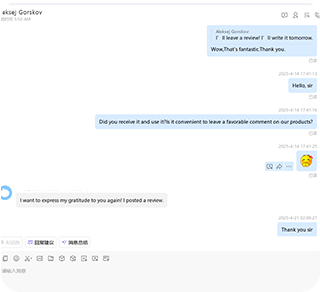
“We needed 7075-T6 aluminum for a defense contractor project. Yingtai delivered 20 tons with full MTRs and DFARS compliance in 6 weeks—2 weeks ahead of schedule. Their hard anodizing met MIL-A-8625 Type III specs. Will reorder.”
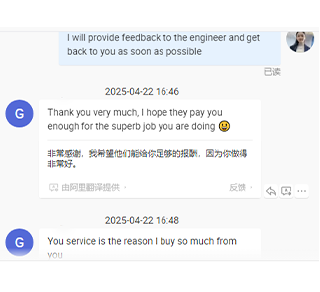

“Switched from a German supplier to Yingtai for 6061-T6 extrusions. The cost savings were 28%, and the quality was identical to EN AW-6061. Their English-speaking engineers made communication easy. Only minor delay due to customs (1 week).”


“Yingtai’s 6061 aluminum sheets for our solar panel frames passed ISO 9227 salt spray tests (1000+ hours). Their marine-grade anodizing exceeded our expectations. Zero defects in 50 tons delivered over 6 months.”
🚀 Secure Your Aluminum Supply Chain Today
Limited-Time Offer (2026 Q3): Order 10+ tons of 6061 or 7075 aluminum and get:
- ✅ 5% discount on bulk orders.
- ✅ Free metallurgical testing report (worth $500).
- ✅ Priority production slot (reduce lead times by 20%).
- ✅ Free samples (up to 5 kg) for quality verification.
Risk-Free Guarantee: All orders come with a 30-day quality assurance. If the material doesn’t meet your specs, we’ll replace or refund—no questions asked.
Multiple Contact Options:
Get a Fast Quote

Dr. Li Wei
Senior Metallurgist & Aluminum Alloy Specialist
With 15+ years in aluminum metallurgy, Dr. Li leads Yingtai’s R&D team in developing high-performance aluminum solutions for aerospace, automotive, and industrial applications. He holds a Ph.D. in Materials Science from Tsinghua University and has published 20+ papers on aluminum alloy optimization. Dr. Li works directly with clients to tailor alloys to their exact specifications.