In an era where manufacturing precision and durability dominate procurement criteria, A8 tool steel emerges as a versatile, high-performance grade widely favored by toolmakers and industrial suppliers. It holds a strategic spot among cold
Product Details
A8 Tool Steel: Precision, Reliability & Performance for Modern Manufacturing
Understanding A8 Tool Steel: The Backbone of Durable Industrial Tooling
In an era where manufacturing precision and durability dominate procurement criteria, A8 tool steel emerges as a versatile, high-performance grade widely favored by toolmakers and industrial suppliers. It holds a strategic spot among cold work tool steels, offering a balance of hardness, wear resistance, and machinability suited for complex tooling applications, short to medium-run production, and parts subject to moderate stress.
Sourced primarily from reliable international suppliers with certifications to ISO standards, A8 is tailored to meet demands for repeatability and longevity in stamping dies, forming tools, and cold work punches. Unlike more exotic alloys with extended lead times and higher costs, A8 grants operators a pragmatic choice for tooling shops seeking consistent quality without pricing premiums.
Across the US and broader English-speaking markets, procurement teams value its blend of tribological stability and operational predictability. Integrating modern heat treatment methods, A8 tools reach hardness levels typically between 56–62 HRC after quenching and tempering — striking a practical compromise between brittleness and toughness.
A critical observation from production manager dialogues reveals that A8’s ability to maintain edge sharpness across fixed tool runs can notably reduce downtime for regrinding and polishing. As unexpected tool wear disrupts manufacturing workflows and inflates costs, choosing a steel grade like A8 with proven regional industrial track records—especially in automotive components and household appliance tooling—is a calculated move for cost containment.
Procurement specialists advising OEMs and ODM factories often highlight operational considerations too: lead time variability, supplier logistics, and batch consistency in chemistry significantly impact downstream processes. Current global logistics flux has translated into interest for factory direct sourcing models where supply chain transparency and technical support are pivotal decision factors.
Industry data also indicate that A8 tool steel benefits from advances in vacuum heat treatment and cryogenic processing, providing improved dimensional stability without compromising surface integrity. Manufacturers investing in such process optimizations report reduced defect rates from micro-cracking and better flatness – crucial quality parameters for fine blanking and deep drawing operations.
Common Challenges in Tool Steel Procurement & Use
Inconsistent material hardness and microstructure leading to premature tool failure and product scrap rates.
Extended lead times from offshore suppliers disrupting production schedules and increasing inventory carrying costs.
Heat treatment variability causing dimensional distortion or excessive brittleness in finished tools.
Supplier communication gaps that complicate specification adjustments or technical troubleshooting onsite.
Lack of transparency in certification and compliance documentation, delaying approval and validation workflows.
Difficulty sourcing specialty grades like A8 in required quantities due to market demand fluctuations.
These are common issues echoed by purchasing directors in automotive stampings and consumer electronics tooling lines. Managing risk means balancing upfront costs against long-term performance and supplier reliability—areas where strategic partnerships with known factories can pay dividends.
Technical Overview & Specifications of A8 Tool Steel
A8 tool steel is categorized as a high-carbon, high-chromium cold work tool steel with notable wear resistance and toughness. Below is a detailed composition and mechanical properties table synthesized from industry standards and supplier datasheets:
Element
% Weight
Carbon (C)
1.45 – 1.55
Chromium (Cr)
11.5 – 12.5
Manganese (Mn)
0.30 – 0.55
Silicon (Si)
0.30 – 0.50
Molybdenum (Mo)
0.40 – 0.60
Vanadium (V)
0.25 – 0.40
Nickel (Ni)
≤ 0.30
Property
Value / Range
Notes
Typical Hardness (HRC)
56 - 62
After quench and temper
Tensile Strength (MPa)
1200 - 1500
Dependent on heat treatment
Machinability Index
Good
Better than some higher alloyed grades
Wear Resistance
High
Ideal for medium-run tooling
Heat treatment conditions typically require austenitizing between 1020°C to 1050°C with oil or air quenching, followed by double tempering at 530°C to 560°C to optimize mechanical balance. It's critical buyers confirm heat treatment certifications and request microstructure analysis reports during factory audits to avoid premature failures.
A Comparative Look: A8 Tool Steel vs. Other Key Grades
When selecting tool steel grades, the evaluation often narrows down to balancing wear resistance, toughness, cost, and machinability. The table below contrasts A8 with some commonly specified alternatives:
Notice that A8 stands out with a balanced combination of properties, ideal for tooling that demands wear resistance without sacrificing machinability and toughness excessively. For applications sensitive to shock loading, S7 is preferred, while D2 suits heavier wear but demands more careful machining and heat treatment.
Applications & Industrial Use Cases for A8 Tool Steel
From the operational standpoint, A8 tool steel finds its niche in the following areas:
Cold forming tools: punches, dies, and cutting tools for moderate production volumes.
Stamping and blanking dies: where dimensional stability and surface finish are critical.
Plastic injection molding: tooling components requiring wear resistance and toughness.
Industrial knives and shear blades: balancing sharpness retention and ductility.
OEM and ODM tooling projects: especially where custom heat treatment cycles enhance performance.
In real-world manufacturing setups, production managers have reported noticeable reductions in rework when opting for A8, especially in applications involving abrasive metal sheet forming. The material’s consistent machinability also facilitates tool adjustments and modifications, critical in prototyping or process iteration environments.
Procurement Guidance & Supplier Evaluation for A8 Tool Steel
Industrial buyers and purchasing directors will encounter multiple sourcing options — domestic mills, international foundries, and specialty importers. Here are some procurement considerations:
Verify chemical composition certifications (e.g., mill test reports compliant with ASTM A681 or equivalent national standards) before order confirmation.
Review heat treatment documentation: including tempering curves, hardness verification, and grain size analysis to confirm material integrity.
Ask for traceability and batch control procedures to avoid mix-ups or material substitution — a common issue in commodity steel sourcing.
Confirm machining tolerances and delivery logistics: knowing batch lead times and packaging methods reduces supply chain risks.
Request sample deliveries for initial prototyping: this helps validate machinability and performance in real tooling scenarios.
Transparency during factory audits can help reduce potential project delays, a common concern in cross-border procurement where communication lags mask on-ground realities. For OEM/ODM clients, negotiating for private labeling or custom packaging is usually feasible when backed by solid order volumes.
Certifications & Factory Profile: Ensuring Quality and Compliance
A reputable supplier of A8 tool steel will typically provide:
ISO 9001:2015 certified quality management system — a baseline indicator of documented process controls and continuous improvement.
Material test reports (MTR) aligned with ASTM or EN standards, evidencing consistent chemical and mechanical properties.
Advanced heat treatment equipment such as vacuum or atmosphere-controlled furnaces to minimize oxidation and decarburization.
Non-destructive testing (NDT) capabilities: ultrasonic or magnetic particle inspection to detect internal flaws.
Experienced technical team: metallurgy experts and heat treat specialists providing process advice and troubleshooting assistance.
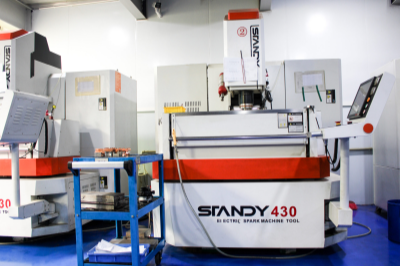
Guangdong Yingtai High Precision Technology Co., Ltd., based in Dongguan, China, exemplifies such a supplier. Their integration of over 30 precision molding and testing instruments combined with a dedicated team of 500+ professionals supports comprehensive quality oversight—from raw steel sourcing to finished tooling support.
Precision tooling production and inspection facilities at Yingtai Industrial Park.
Frequently Asked Questions about A8 Tool Steel
Q1: What heat treatment should A8 tool steel undergo for optimal hardness?
Typically, austenitize between 1020°C to 1050°C followed by oil quenching and double tempering at 530°C to 560°C yields 56-62 HRC hardness. Precise control over tempering times helps balance toughness and wear resistance.
Q2: How does A8 compare cost-wise with D2 or O1 tool steels?
A8 generally offers competitive pricing slightly below D2 due to lower alloy content but better wear resistance than O1. Budgeting must factor in machining and heat treatment complexity.
Q3: Can A8 tool steel be polished to achieve mirror-like finishes?
Yes, with skilled grinding and finishing, A8’s high chromium content supports mirror polishing, useful for fine blanking punches and high-gloss tooling surfaces.
Q4: What lead time can be expected for standard A8 tool steel stock orders?
Stock items typically ship within 2-4 weeks depending on quantity and dimension. Custom heat treatment or specific certifications may extend delivery by 1-2 weeks.
Q5: What logistical considerations affect cross-border A8 steel shipments?
Heavy steel shipments require careful container packing to prevent damage and maintain batch integrity. Working with suppliers providing export documentation (CO, MTR, customs filings) reduces clearance delays.
Q6: Does Guangdong Yingtai offer OEM or ODM services for customized tooling components?
Yes, Yingtai provides both OEM and ODM solutions focused on specialized tooling design, precision heat treatment, and rapid prototyping support to meet diverse client needs.
Client Reviews & Real-World Feedback
John M., Procurement Manager - Automotive OEM, Michigan, USA
"We've sourced A8 tool steel for over five years through Guangdong Yingtai, and their consistency in hardness and microstructure has helped us cut down rejects by a noticeable margin. Their responsiveness to technical queries and lead times saves us headaches. Highly recommend for industrial tool suppliers."
Get in Touch
If you have any camping barbeque equipment inquiry, please feel free to contact us.



 John M., Procurement Manager - Automotive OEM, Michigan, USA