From Guangdong Yingtai High Precision Technology Co., Ltd. — Precision Polymer Components for Global B2B Supply Chains ABS ESD7 is a specialized grade of acrylonitrile butadiene styrene (ABS) resin recognized for its anti-static or
Product Details
ABS ESD7: High-Performance Anti-Static Solution for Industrial Applications
From Guangdong Yingtai High Precision Technology Co., Ltd. — Precision Polymer Components for Global B2B Supply Chains
What is ABS ESD7? A Complete Overview from Procurement to Application
ABS ESD7 is a specialized grade of acrylonitrile butadiene styrene (ABS) resin recognized for its anti-static or electrostatic dissipative properties, designed to prevent static discharge
in industrial and electronic environments. It complies with the ESD classification 7, meaning its surface resistivity typically ranges between 106 to 109 ohms, enabling effective electrostatic discharge (ESD) control in critical applications.
Originating from high precision polymer synthesis and compounding, this ABS variant is engineered with carbon-based additives or conductive fillers that do not compromise the material’s structural integrity. This balance of durability and electrostatic control makes ABS ESD7 a preferred choice in sectors demanding reliability plus safety — such as electronics manufacturing,
antistatic packaging, automotive interior components, and assembly line parts.
Unlike generic plastic resins, ABS ESD7 exposes manufacturers and procurement teams to unique performance criteria. It demands precise material handling and injection molding methods to retain consistent anti-static functionality and mechanical robustness. This interplay of chemistry and processing translates to better protection of sensitive components against electrostatic discharge damage — a costly threat to product yield and operational safety.
Equipped with stable thermal performance, ABS ESD7 maintains its ESD properties even under temperature fluctuations common in industrial settings, ranging approximately from -20°C to 80°C in operational contexts. Its excellent dimensional stability and machinability enable geometric complexity while complying with ISO 6946 and ANSI/ESD S20.20 standards commonly referenced in quality assurance programs.
A procurement specialist or operations manager tasked with sourcing ABS ESD7 should consider more than price alone. Supplier reliability, regional logistics, batch-to-batch consistency, and nuanced material certifications must be factored in to minimize supply chain disruptions and technical setbacks associated with variances in resistivity and mechanical properties.
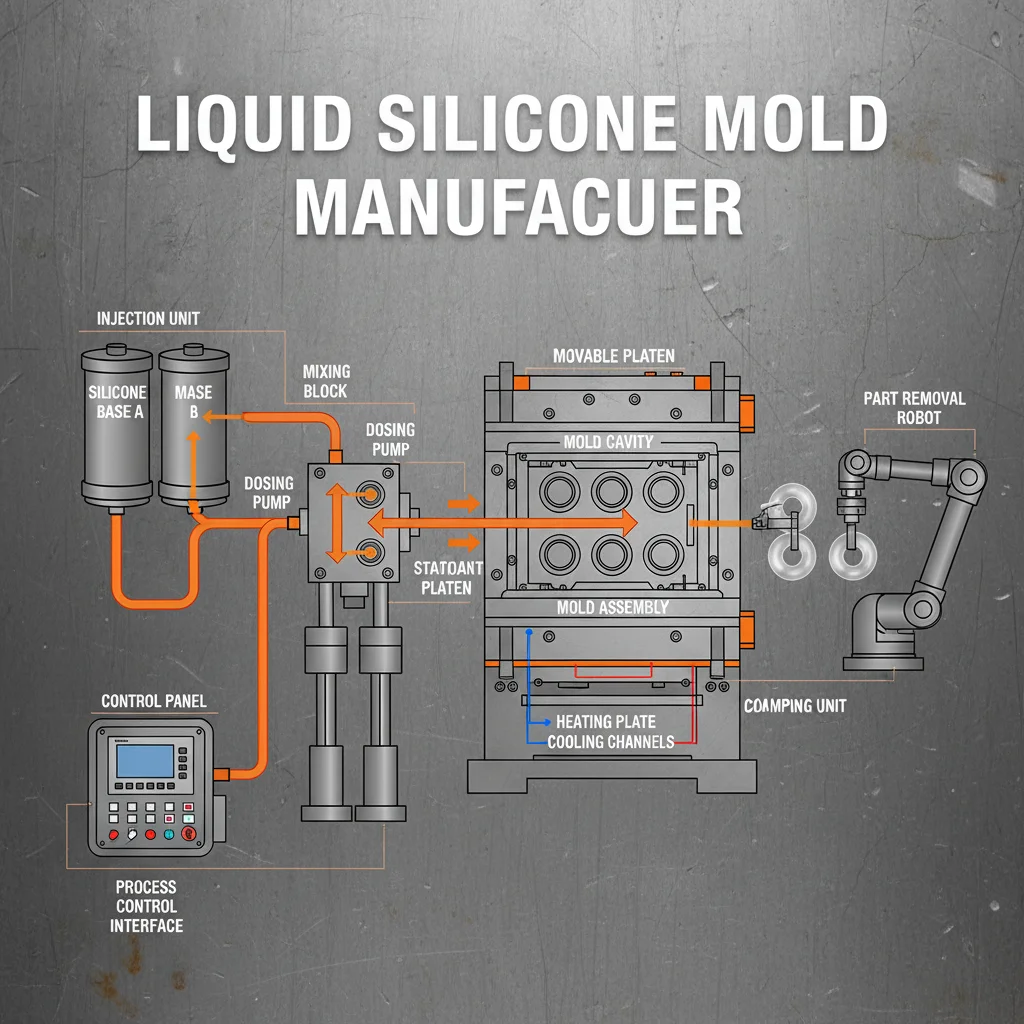
Guangdong Yingtai High Precision Technology Co., Ltd. specializes in OEM/ODM-grade ABS ESD7 product manufacturing and over 20 years of injection molding expertise. Based in Dongguan, China, our 35,000 m2 advanced facility integrates liquid silicone molding and plastic injection with a strict quality control system, thus ensuring product uniformity essential for ESD-sensitive assembly lines.
Understanding the full scope of ABS ESD7 involves appreciating how additive formulation, precise injection molding conditions, tooling design, and post-molding treatments collectively influence long-term product performance. Decisions grounded in operational reality rather than superficial specs yield better ROI and compliance assurance.
Next sections will dig into common industry pain points where ABS ESD7 effectively addresses persistent challenges, followed by detailed technical insights and procurement strategies to optimize your B2B sourcing decisions.
Navigating Industry Challenges: Why ABS ESD7 Often Becomes Essential
Manufacturing and assembly sectors frequently face challenges associated with static accumulation and discharge. Inadequate electrostatic control risks irreparable damage to sensitive circuits and components, invisible product degradation, or substantial warranty returns.
Electronics Assembly Lines: Unchecked static spark in production leads to transient faults or hard failures. Standard plastics used commonly lack consistent surface resistivity compliance, leading to costly recalls or line shutdowns.
Cleanroom Environments: Anti-static materials soften particulate build-up and dust attraction, minimizing contamination risk crucial for semiconductor or pharmaceutical device production.
Automotive Interior Parts: Components exposed to friction or environmental humidity variation can accumulate static charge, adversely impacting onboard electronics unless mitigated with conductive plastics.
Packaging & Handling: ESD-sensitive goods require protective packaging elements made from ESD-compliant ABS grades to maintain discharge safety during transportation and warehousing.
Common procurement pitfalls include sourcing non-ESD-verified ABS grades mistakenly marketed under “ESD-safe” labels without supporting certifications or inconsistent production audits. Cost-driven decisions without quality vetting often result in higher lifecycle expenses due to product failures and logistic bottlenecks.
Professionals recommend requesting in-depth data sheets—particularly surface resistivity metrics per ASTM D257 or IEC 61340 standards—and sample validation tests before committing to large order volumes. Additionally, considering suppliers’ manufacturing capacity, tooling adaptability, and regional regulatory compliance can save months of operational headaches.
Technical Features & Advantages of ABS ESD7
Feature
Description
Industry Benefit
Surface Resistivity (ASTM D257)
106 to 109 Ω/sq range
Effective static charge dissipation to prevent sparks and component damage
Tensile Strength (ISO 527)
40–45 MPa
High mechanical durability for structural parts and housings
Heat Resistance HDT @ 0.46 MPa
90–98°C
Suitable for environments with moderate thermal cycles without deformation
Processing
Injection molding, extrusion compatible
Enables precision part fabrication with tight tolerance control
UV Stability
Moderate with additive protection
Extended lifetime for outdoor or semi-exposed applications
Observational Insight: In our production lines, the blend ratios of conductive fillers are fine-tuned to ensure stable resistivity without compromising melt flow. Slight variations in moisture content during molding can affect surface resistivity, so consistent raw material pre-drying is essential for batch consistency.
Additionally, multi-shot molding techniques combining ABS ESD7 with non-ESD materials are gaining traction for multi-functional parts integrating rigidity and anti-static zones. This requires suppliers with advanced tooling and process control.
Selecting the right ABS ESD7 supplier entails more than reviewing material specs. Firms must assess:
Manufacturing Capability: Does the vendor have experienced injection molding lines with relevant ISO 9001 or IATF 16949 certifications?
Quality Assurance: Are resistivity tests performed regularly with traceable reports? How is in-process defect management handled?
Logistics Flexibility: Can the supplier coordinate container loads optimized for bulk plastic resins? How are lead times handled in seasonal rush periods?
Material Consistency: Are raw material batches validated for stable filler dispersion and moisture content?
OEM/ODM Capabilities: Does the supplier offer custom molding solutions or value-added assembly services?
In practice, procurement delays often stem from unclear specifications or last-minute design changes. Early engagement with the supplier’s technical team to finalize molding parameters and environmental requirements can avoid costly mold reworks or resins with incompatible additives.
Yingtai’s Advantage: Our integrated manufacturing system combines in-house resin compounding, precision mold development, and multi-stage injection molding, resulting in fewer supplier handoffs and tighter quality control over ABS ESD7 products.
Installation & Maintenance Considerations for ABS ESD7 Components
Once procured, the practical use of ABS ESD7 entails a few operational considerations:
Surface Treatment: In some cases, additional anti-static coatings may be applied to enhance performance after molding.
Environmental Controls: Maintain relative humidity around 40-60% in storage and assembly areas to stabilize surface resistivity.
Cleaning Protocol: Avoid harsh solvents that degrade ABS; use mild detergents or IPA wipes to preserve anti-static surfaces.
Mechanical Handling: Tools and fixtures should prevent scratching, which can disrupt anti-static uniformity.
For OEM assemblers, understanding the thermal expansion properties and proper torque settings of fasteners on ABS ESD7 parts reduces the risk of warping or stress fracture.
Certifications and Industry Standards Ensuring Performance
Suppliers of ABS ESD7 are expected to meet or exceed the following key certifications:
ISO 9001: Quality management system standard ensuring process consistency.
IEC 61340-5-1: Electrostatics—Protection of electronic devices from electrostatic phenomena.
UL 94 V-0 / V-1: Flammability ratings relevant to safety in electrical component housings.
RoHS Compliance: Restriction of hazardous substances for electronics manufacturing.
REACH: Chemicals regulation impacting material safety declarations.
Common certifications held by ABS ESD7 suppliers
Verification through third-party labs combined with supplier transparency—such as sharing SPC charts of resistivity and tensile tests—enhances trustworthiness and reduces production risks.
Buyer Frequently Asked Questions
Q1: How do I verify that ABS ESD7 meets my required electrostatic resistance standard?
Ask suppliers for surface resistivity test reports compliant with ASTM D257 or IEC 61340. Independent lab testing is recommended for critical volume orders.
Q2: What are the common processing challenges when molding ABS ESD7?
Due to conductive fillers, uniform dispersion is key. Molding temperatures must be tightly controlled to prevent filler segregation or excessive oxidation, which can affect ESD properties.
Q3: Can ABS ESD7 be used outdoors?
While ABS has moderate UV resistance, prolonged outdoor exposure requires UV stabilizers or protective coatings to maintain mechanical and ESD performance.
Q4: What is typical lead time for bulk ABS ESD7 orders?
Standard lead time can vary from 3 to 7 weeks depending on order size and tooling needs. Coordination early in the contract phase reduces delays.
Q5: Is OEM or ODM customization available?
Yes. We provide design support, molding prototype, and multi-component molding solutions tailored to your product specifications.
Customer Reviews and Procurement Experiences
James R., USA Procurement Manager
“Sourcing ABS ESD7 from Yingtai has been a game-changer. Their quality consistency reduced our rejects by nearly 15% compared to previous suppliers. The engineering team was hands-on with tooling advice, which sped up our launch schedule by three weeks.”
Get in Touch
If you have any camping barbeque equipment inquiry, please feel free to contact us.





 James R., USA Procurement Manager