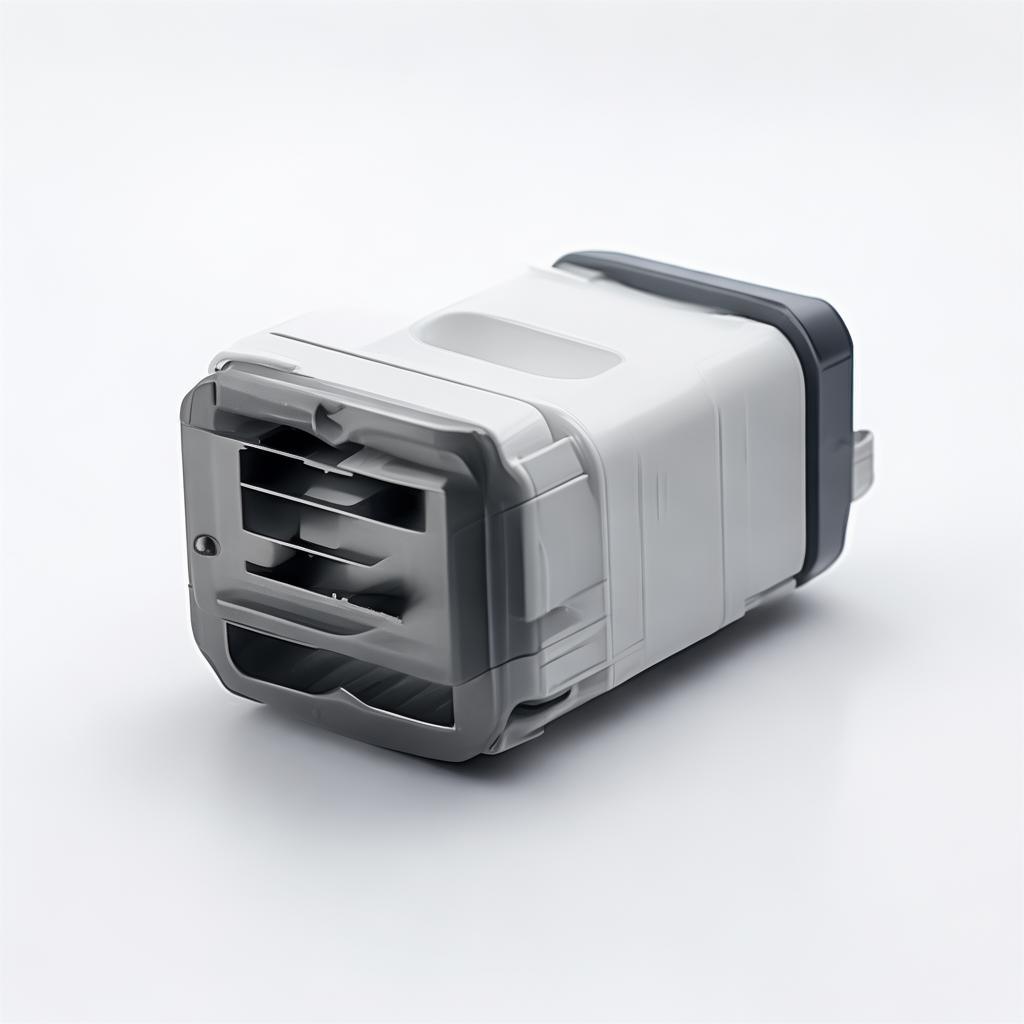
The combination of ABS (Acrylonitrile Butadiene Styrene) with PC (Polycarbonate) forms a hybrid thermoplastic blend widely regarded for its balance of strength, impact resistance, and durability . This composite material harmonizes the toughness and
Product Details
ABS PC Material: The Industrial Edge for Durable and Precision Applications
Understanding ABS PC Material: A Strategic Choice for Advanced Manufacturing
The combination of ABS (Acrylonitrile Butadiene Styrene) with PC (Polycarbonate) forms a hybrid thermoplastic blend widely regarded for its balance of strength, impact resistance, and durability. This composite material harmonizes the toughness and heat resistance of PC with the rigidity and ease of processing from ABS, resulting in an engineering plastic ideally suited for applications demanding consistent performance in demanding environments.
From the perspective of a procurement director or operations manager seeking materials that align with both production efficiency and Cost of Ownership (CoO), ABS PC delivers notable benefits. The material’s inherent chemical resistance and dimensional stability reduce post-processing complexities, lowering efforts needed for finishing. Furthermore, its compatibility with multiple manufacturing methods—especially injection molding and extrusion—enhances production throughput and reduces downtime related to tooling adjustments.
Technically, ABS PC can withstand temperatures up to approximately 115°C continuously with softening points around 230°C, making it a resilient choice in industries like consumer electronics housings, automotive interiors, and medical devices. Its flame retardant variants can meet UL 94 V-0 standards, reflecting considerations for safety compliance in regulated markets.
Operationally, engineers observe that the blend offers a favorable impact-modulus tradeoff, meaning components maintain toughness without excessive weight. This is particularly relevant for importers and distributors focusing on markets like the US and EU, where product regulations mandate strict performance thresholds for plastics used in electrical enclosures or automotive parts.
However, the nuances of ABS PC processing require understanding. Its sensitivity to moisture and thermal history influences final product quality—overdrying raw pellets and ensuring proper melt temperatures minimize voids and warpage. These factors often become procurement risks when manufacturers overlook supplier capabilities or lack precise process controls.
In the current global trade landscape, sourcing ABS PC from a capable manufacturer implies verifying certifications such as ISO 9001 quality management, RoHS compliance for environmental safety, and documented molds precision. These prerequisites ensure the material not only fits functional specifications but also meets delivery expectations with regard to batch consistency and lead times.
Compared to pure ABS or PC polymers, the ABS PC blend hits a sweet spot for customers requiring both aesthetic flexibility and mechanical reliability. It has emerged as a critical material in the trend toward miniaturization and integration of multi-component products in sectors like smart home appliances and telecommunications. Buyers increasingly seek OEMs who can offer the flexibility of custom formulations and support rapid prototyping, facilitated by advanced mold tooling and in-house laboratory testing that guarantees consistent resin grades.
Common Industry Challenges When Working with Thermoplastic Blends
Material Inconsistency: Variances in ABS PC formulations can lead to unexpected shrinkage or mechanical property deviations, complicating tight tolerance manufacturing.
Processing Sensitivity: Improper drying or temperature control during injection molding causes surface defects or internal stresses, threatening product reliability.
Supplier Transparency: Lack of detailed datasheets and process guidance from certain suppliers increases procurement uncertainty.
Compliance and Certification Gaps: Non-compliance with UL, RoHS, or FDA (for medical applications) can delay approvals and market entry.
Logistics Delays: Importers face risks in lead times due to container loading inefficiencies or customs clearance — particularly for large volume orders or time-sensitive deliveries.
Part Failure in Harsh Environments: Climate fluctuations affecting dimensional stability or UV exposure resistance can cause premature failure in outdoor or automotive applications.
Decoding the Technical Aspects and Advantages of ABS PC
Material Composition: ABS PC is a physically blended copolymer integrating the rigid styrene-acrylonitrile matrix with PC’s semi-crystalline toughness.
Mechanical Properties: Typically, ABS PC blends exhibit tensile strengths from 45 to 65 MPa (depending on formulation) and impact strengths exceeding 30 kJ/m2 under Izod testing—offering resilience against sudden shocks.
Thermal Resistance: Its heat deflection temperature averages around 95-115°C (measured at 0.45 MPa), and variants can be engineered for enhanced flame retardancy (UL94 V-0) for certified safety.
Chemical Resistance: Resistant to alkalis, fats, oils, and weak acids, yet sensitive to aromatic hydrocarbons and ketones—requiring attention when used in chemical exposure environments.
Processing Techniques: Injection molding remains the preferred method, supported by extrusion for sheet and profile applications. Mold temperature control and dry cycle regimes below 0.05% moisture content are critical for reproducible surface quality and dimensional fidelity.
Material Comparison: ABS PC versus Pure ABS and PC
In selecting industrial-grade engineering thermoplastics, understanding the trade-offs between ABS, PC, and ABS PC blends is key. Below is a summary reflecting real-world procurement considerations:
Criteria
ABS
Polycarbonate (PC)
ABS PC Blend
Impact Resistance
Good
Excellent
Very Good
Heat Resistance
Moderate (up to ~80°C)
High (~140°C)
Intermediate (~110°C)
Chemical Resistance
Good vs. Acids/Bases
Excellent
Balanced
Ease of Processing
High
Moderate (requires precision)
Good
Price Point
Lowest
Higher
Mid-range
Applications
Consumer goods, housings
Automotive, safety gear
Electronics covers, medical devices
In practice, ABS PC offers a blend of benefits addressing particular industrial specifications that neither pure material can sufficiently cover alone. This balance appeals to engineers seeking enhanced design freedom with moderate cost constraints.
Industrial Applications and Practical Use Cases of ABS PC Material
Consumer Electronics: Durable casings for smartphones, laptops, and peripherals where shock absorption and aesthetic finish matter.
Automotive Components: Interior trims, instrument panels, and functional connectors benefiting from heat resistance and flame retardant grades.
Medical Device Housings: Sterilizable, biocompatible enclosures, especially where moderate transparency and toughness are required.
Telecommunications: Structural parts for routers, modems, and network equipment demanding stable dimensional properties.
Industrial Controls: Enclosures and electrode covers where electrical insulation and mechanical protection are needed.
Integration into complex product assemblies calls for reliable supplier partners who understand batch traceability and material testing, including tensile, impact, and flammability certifications. Troubleshooting tips from manufacturing engineers often recommend iterative sampling to optimize injection parameters — particularly melt temperature and injection pressure — to minimize sink marks and residual stresses.
Procurement Insights and Selecting the Right ABS PC Material Supplier
Buyer diligence is crucial when commissioning ABS PC blends for high-volume production. Factors to prioritize include:
Certified Quality System: ISO 9001, RoHS, and UL certifications validate quality and compliance.
Material Data Transparency: Request detailed technical datasheets including melting point, mechanical tests, and chemical resistance profiles.
OEM/ODM Integration Support: Suppliers with engineering teams that assist with mold design and process optimization reduce risks.
Sample Provisioning: Early sample requests for in-house testing accelerate decision timelines and mitigate specification gaps.
Logistics & Lead Time: Clarify container loading strategies and estimated time-to-delivery tailored to production schedules.
After-Sales Technical Service: Engineering consultation and troubleshooting support help address unforeseen production anomalies.
Verifying supplier production capacity, such as Guangdong Yingtai’s 55 sets of injection molding machines and 20 precision mold processing units, offers assurance in scalability and quality uniformity. Understanding their vertical integration helps reduce procurement cycles and delivery delays.
Material Handling, Installation, and Logistics Considerations
For production managers or supply chain specialists:
Storage & Moisture Control: ABS PC granules require dry, temperature-controlled environments to prevent moisture uptake, which can cause hydrolytic degradation during processing.
Processing Window: Strict adherence to recommended melt and mold temperatures ensures stable dimensions and minimizes post-mold warpage.
Installation Insight: Parts molded from ABS PC may present moderate thermal expansion; dimensional allowances during assembly should factor this in, especially for tight-fitting electronic enclosures.
Maintenance & Cleaning: Recommended to avoid harsh solvents; mild detergents preserve surface finish and mechanical integrity.
Logistics: Optimizing container loading ratios reduces freight cost. Bulk orders benefit from just-in-time delivery to avoid inventory crowding and potential resin degradation.
Operational experiences reveal that pre-shipment inspection and controlled packaging also play a vital role in assuring intact product delivery, particularly in cross-border shipments where handling conditions vary.
Common Questions about ABS PC Material
Q1: What are the typical applications of ABS PC blends?
They are widely used in electronics housings, automotive interiors, medical device components, and industrial equipment enclosures due to their robustness and processing flexibility.
Q2: How do I ensure quality consistency when sourcing ABS PC?
Request certification of quality management systems, comprehensive material datasheets, and sample testing results from the supplier. Verifying mold precision and batch-to-batch traceability is also critical.
Q3: Are there flame retardant ABS PC options?
Yes, variants comply with UL 94 V-0 standards and similar certifications. Ensure your supplier clearly specifies fire performance attributes.
Q4: What processing precautions should be followed?
Maintain moisture levels below 0.05%, control melt temperatures precisely within supplier recommendations, and optimize injection pressures based on tool design to minimize defects.
Q5: How does ABS PC compare cost-wise to pure PC?
ABS PC typically offers a mid-range price point, balancing performance benefits and cost-effectiveness compared to the higher cost of pure polycarbonate resins.
Customer Feedback: Real-World Use and Satisfaction
Michael Stevens
Procurement Manager, Chicago Electronics
“Switching to an ABS PC blend from our previous ABS material dramatically improved the durability of our device casings without impacting molding cycle times. The supplier's process guidance was invaluable, saving us weeks in trial and error.”
Get in Touch
If you have any camping barbeque equipment inquiry, please feel free to contact us.



 Michael Stevens