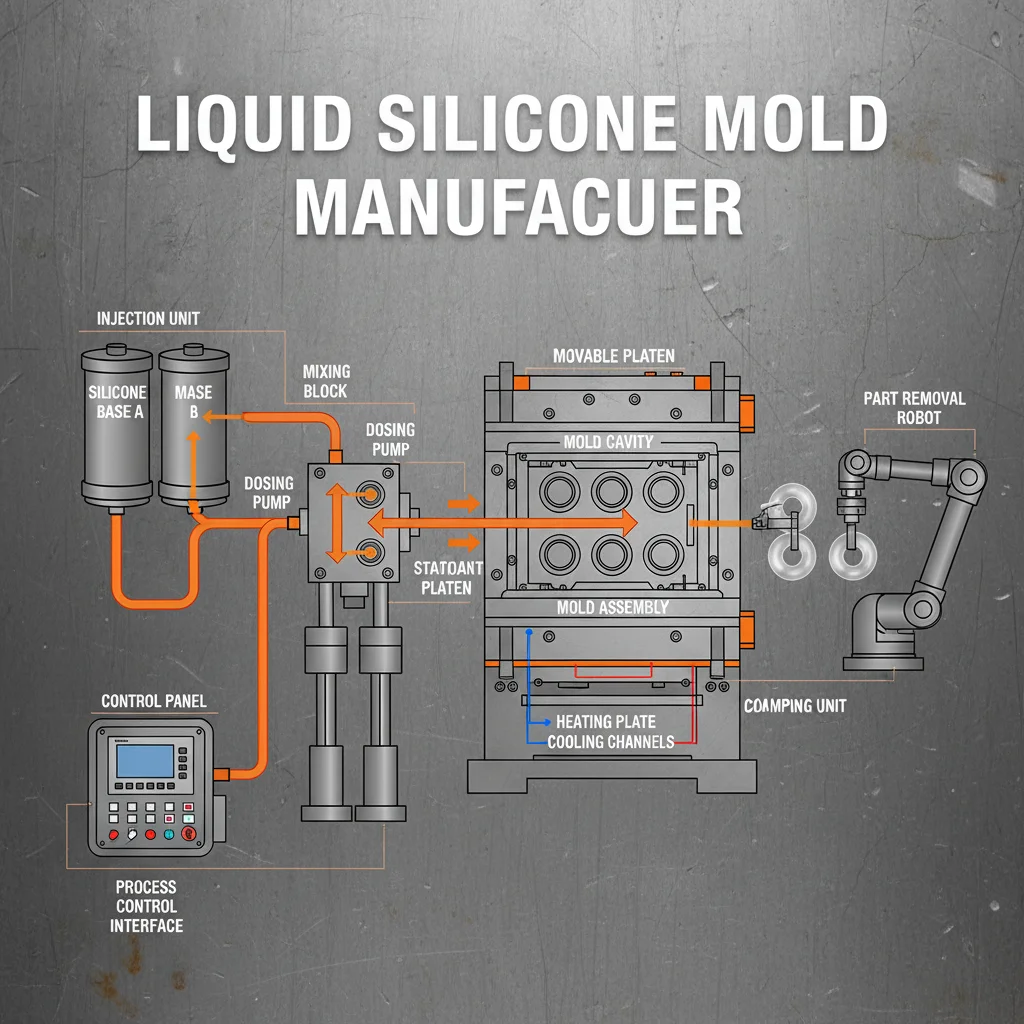
Injection moulding has reshaped industrial manufacturing landscapes—offering unparalleled control, scalability, and material versatility. For procurement and operations managers weighing manufacturing options, understanding its core benefits unlocks smarter sourcing and production decisions. In today's global
Product Details
The Advantage of Injection Moulding: Precision Meets Efficiency in Modern Manufacturing
Injection moulding has reshaped industrial manufacturing landscapes—offering unparalleled control, scalability, and material versatility. For procurement and operations managers weighing manufacturing options, understanding its core benefits unlocks smarter sourcing and production decisions.
Industry Pain Points and Production Challenges
In today's global manufacturing environment, rising material costs, stringent quality standards, and demand for reduced lead times challenge procurement and production teams alike. For components requiring intricate shapes, consistent dimensions, and durable performance—especially in sectors like medical devices, automotive, and consumer electronics—traditional fabrication methods often fall short.
Consider the challenges of injection molding alternatives: hand-finishing, machining, or compression moulding. These methods frequently deliver variable quality, higher labor costs, and limited repeatability. Meanwhile, global supply chains impose additional pressures on inventory and logistics efficiency, heightening the need for dependable manufacturing partners who leverage scalable, efficient processes.
Moreover, material versatility matters. When products require chemically resistant, thermally stable, or biocompatible properties—like those found in liquid silicone rubber (LSR) or high-performance engineering plastics—selecting the right manufacturing process impacts the entire product lifecycle.
Key Advantages of Injection Moulding
High Precision and Repeatability: Injection moulding excels at producing intricate parts with tight tolerances and virtually identical quality across thousands or millions of cycles. This consistency reduces scrap rates and supports just-in-time manufacturing.
Material Versatility: From polycarbonate (PC) and ABS to advanced materials like liquid silicone rubber (LSR), injection moulding accommodates a broad spectrum of polymers with tailored mechanical, thermal, and chemical properties.
Shorter Production Cycles: Automated, fast-cycle moulding machines significantly reduce overall lead times compared to machining or hand-crafted methods, giving buyers an edge in time-sensitive projects.
Cost-Effective for High Volume: While mould tooling represents upfront investment, the cost per part decreases dramatically as volume scales—ideal for OEM and ODM sourcing in automotive, consumer, or medical sectors.
Reduced Post-Processing: Injection moulded parts typically require minimal secondary processing, cutting labor and logistic overhead while improving production throughput.
Integration of Complex Features: Multi-cavity tools and overmoulding allow combining materials and components in one process—enhancing product functionality and reducing assembly complexity (see OEM/ODM factory capabilities).
Improved Surface Finish: Injection moulding delivers consistent surface texture and aesthetics, advantageous for consumer-facing components or precision industrial parts.
Environmental and Waste Benefits: Advanced mould tool design and efficient process parameters help minimize raw material waste and energy consumption — important considerations for sustainable manufacturing.
Operational Insight:Many procurement managers report noticeable decreases in installation time and fewer quality issues when switching from compression moulding to precision injection moulding, especially in exterior sealing and electronic connector housing.
Technical Insights and Material Compatibility
Injection moulding's effectiveness hinges on understanding polymer behaviors under elevated temperature and pressure. For example, liquid silicone rubber (LSR) requires specialized injection equipment due to its low viscosity and curing characteristics. Guangdong Yingtai High Precision Technology Co., Ltd., equipped with over 55 LSR moulding machines and precision mould tooling, exemplifies industry leadership in this domain.
Material selection remains paramount. Engineering plastics such as polyethylene (PE) or polypropylene (PP) provide chemical resistance for drainage systems, whereas thermoplastic elastomers and LSR meet standards like CE certification for biocompatibility in medical seals.
Material
Key Properties
Typical Applications
Industry Standards
Liquid Silicone Rubber (LSR)
Biocompatible, heat resistant, flexible
Medical seals, soft-touch consumer goods, automotive gaskets
Note: Advanced injection moulding demands precise control of process parameters to avoid defects such as flash, sink marks, or warpage. Utilizing state-of-the-art CAE simulation, combined with expert rheological data of materials, reduces trial runs and shortens time-to-market — a core strength of experienced manufacturers like Guangdong Yingtai.
Procurement Guidance: What to Look for in Injection Moulding Suppliers
For purchasing and operations managers, supplier evaluation is as critical as the injection moulding process itself. Here are actionable points when selecting a manufacturing partner:
Technical Expertise: Verify factory capabilities in mould design, tooling maintenance, and multicomponent injection moulding, especially for materials like LSR.
Certifications and Compliance: Demand up-to-date ISO 9001, CE certifications, and relevant product-specific standards (e.g., FDA for medical uses).
Supply Chain Transparency: Look for efficient material sourcing, stable lead times, and flexible logistics solutions including container loading optimization to reduce freight costs.
Customization and OEM/ODM Experience: Evaluate the supplier’s ability to develop tailored solutions, rapid prototyping, and volume scalability.
Quality Control Systems: Assess inspection capabilities and integration of digital quality monitoring tools (e.g., inline pressure and temperature tracking).
After-Sales Support: Confirm producer’s commitment to warranty, replacement parts, and technical assistance post-delivery.
Don’t hesitate to request factory audits or samples, and always align procurement timelines with realistic lead times—typically 4 to 8 weeks for injection moulded parts, depending on complexity and volume.
Frequently Asked Questions
Q: How does injection moulding compare to compression moulding for silicone parts?
Injection moulding offers higher precision and faster cycle times than compression moulding, with improved control over part consistency and less manual labor. However, injection tooling can be more expensive upfront, making it better suited for medium to high volumes.
Q: What are common defects in injection moulding and how are they mitigated?
Typical defects include warpage, flash, voids, and sink marks. They can be minimized through optimizing mould design, injection parameters, material selection, and employing CAE simulations before production.
Q: Can injection moulding handle multi-material parts?
Yes, multi-shot injection moulding or overmoulding techniques allow integrating different polymers or combining rigid and soft components in a single production step — enhancing product performance and aesthetics.
Q: What lead times should I expect for injection moulding orders?
Typical lead times are 4–8 weeks depending on tooling complexity, order size, and material availability. Factors such as expedited prototyping or post-processing requirements can affect timelines.
Q: How does Guangdong Yingtai High Precision Technology ensure product quality?
Yingtai applies ISO 9001 quality systems, advanced testing instruments, and a professional team over 500 strong to maintain process control from mould development through to finished products. Continuous investment in equipment and skilled personnel guarantees consistent output meeting international standards.
Real-World Buyer Experiences
Eric Murray, Procurement Manager, Midwestern Medical Supply
“We shifted our medical seal production to Yingtai’s LSR injection moulding. The repeatability and material biocompatibility have cut our QC fails by nearly half. Lead times matched what was promised. Highly recommend for healthcare-grade silicone parts.”
Get in Touch
If you have any camping barbeque equipment inquiry, please feel free to contact us.



 Eric Murray, Procurement Manager, Midwestern Medical Supply