

The Advantages of 5 Axis CNC Machining: Precision Meets Efficiency
Insightful guide for procurement managers & manufacturing professionals considering advanced CNC technology
Industry Pain Points in Precision Manufacturing
High-precision components, especially in aerospace, medical, automotive, and electronics industries, come with very tight tolerances. Traditional machining methods often hit operational snags like limited tool access, slow cycle times, and inconsistent finishes. For purchasing managers and technical engineers, these can translate directly into increased costs and delayed deliveries—two factors that invariably affect project profitability and supply chain reliability.
Complex part geometries demand multiple setups on conventional 3-axis CNC machines, raising the chance of human error during repositioning and resulting in dimensional inaccuracies. It can increase inspection workloads and material waste, further inflating production budgets. Add to that, the challenge of handling exotic alloys or composites without compromising surface integrity or structural strength, especially when prototyping or ramping to OEM-level production.
From a supply chain perspective, long lead times coupled with inconsistent supplier capabilities often complicate negotiations and procurement decisions. Identifying a manufacturer who harnesses advanced machining technology to optimize throughput, quality, and flexibility is crucial to stay competitive — and this is where 5 axis CNC machining gains a pivotal role.
Technical Deep Dive: What is 5 Axis CNC Machining?
Five-axis computer numerical control (CNC) machining refers to equipment capable of simultaneously moving a cutting tool or part along five different axes. Typically, X, Y, and Z linear axes are complemented by two rotational axes (A and B or A and C), enabling complex angular part orientation without manual intervention.
This multidimensional flexibility allows a single machine setup to access almost any side of the part in one go, eliminating the need for multiple fixture changes. Besides improving positional accuracy to within micrometers, it reduces cumulative tolerance stack-up often seen in traditional sequential machining.
The advanced CAM software coupled with sensor feedback optimizes tool paths, adapts cutting speeds, and controls feed rates in real-time. Milling intricate components like turbine blades, medical implants, or injection molds becomes both feasible and repeatable at volume. Operation complexity naturally demands skilled operators and maintenance teams familiar with dynamic calibration and multi-axis synchronization.
Key Advantages of 5 Axis CNC Machining
- Reduced Setup Times: Multi-axis access dramatically cuts fixture changes, often from several hours to a fraction, improving overall plant throughput.
- Enhanced Geometric Complexity: Capable of producing intricate contours and undercuts not possible with 3-axis systems without secondary operations.
- Improved Surface Finish Quality: Continuous tool engagement and optimized tool orientation lower tool marks and surface roughness, reducing polishing or post-processing needs.
- Minimized Human Errors: Fewer machine setups limit repositioning mistakes—critical for components requiring tight ISO 9001 or aerospace AS9100 tolerances.
- Shorter Lead Times and Cost Savings: Faster cycle times and fewer setups translate into reduced production costs, supporting lean manufacturing principles and Agile supply chains.
- Material Flexibility: Optimized cutting strategies suit hard metals (e.g., titanium, Inconel), composites, and high-performance plastics with less tool wear and less heat stress.
- Scalable for Prototyping and Production: Same machine capabilities support rapid prototyping and full-scale serial production, aiding OEMs and ODM factories.
Note: While 5 axis machining requires a higher capital investment and a steeper learning curve than simpler CNC options, the operational return through quality improvements and cycle time reductions usually justifies the expense within medium to high complexity part runs.
| Feature | 3 Axis CNC | 5 Axis CNC |
|---|---|---|
| Axis Movement | X, Y, Z linear | X, Y, Z + 2 rotary |
| Setup Complexity | Multiple fixtures required | Single setup suffices |
| Machining Time | Longer total cycle time | Shorter cycle times |
| Complex Geometries | Limited undercuts | Can machine intricate features |
| Tolerance | Depends on multiple setups | Micron-level accuracy |
Typical Industry Applications
5 axis cnc machining 5 axis cnc machining parts cnc multi-axis machining
5 axis machining unlocks possibilities in sectors demanding high precision and complicated part profiles:
- Aerospace components: Airfoil parts, engine mounts, and lightweight structural brackets typically require multi-surface machining and tight finish standards.
- Medical devices: Surgical instruments, orthopedic implants, and micro-fluidic components benefit from fine features and reliable surface finishes critical for patient safety.
- Automotive: Turbocharger housings, transmission parts, and mold inserts for plastic components leverage the speed and flexibility of 5 axis machining to meet tight production schedules.
- Consumer electronics: Housing casings, connector parts, and precision mechanical assemblies require consistent quality at scale.
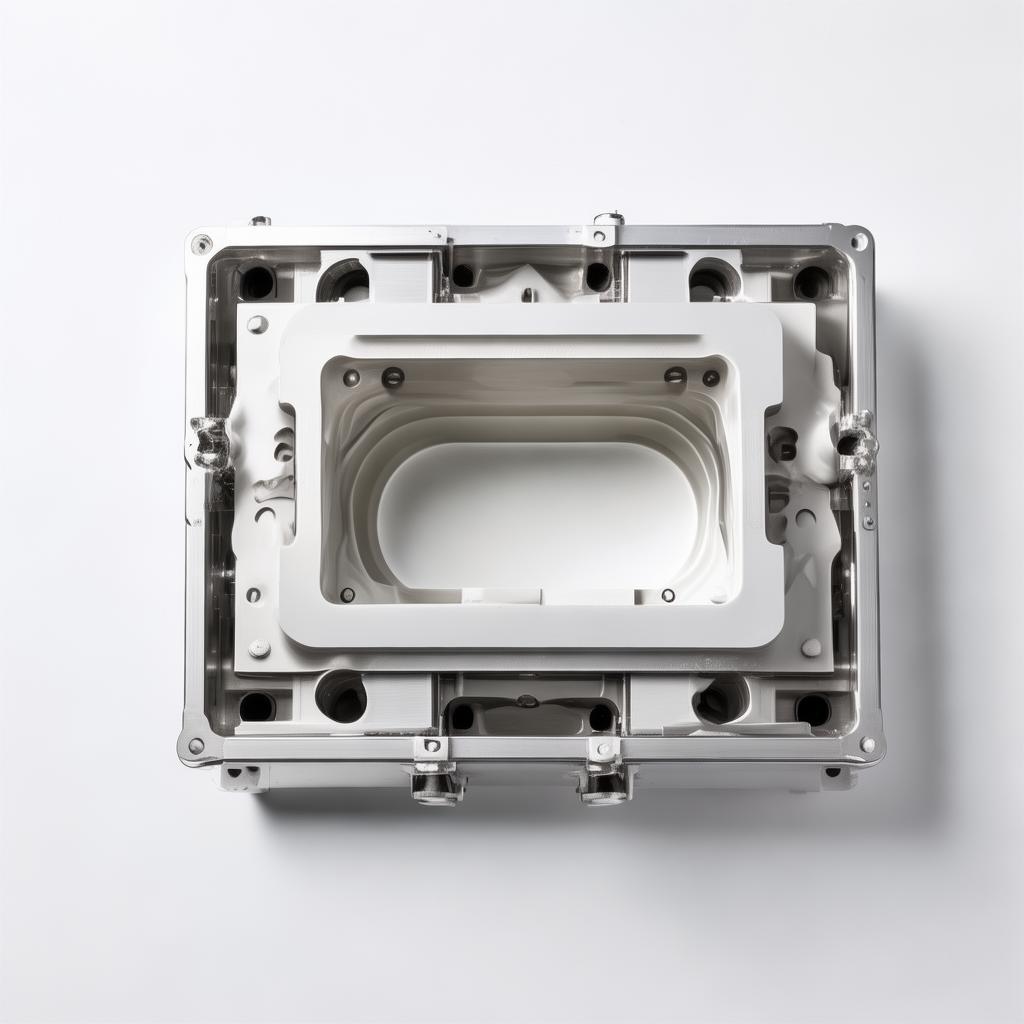
- Mold making and tooling: High-quality molds for injection molding demand undercuts and complex curvature machining achievable in a single setup.
The ability to machine hard-to-cut materials like titanium alloys or Inconel – common in aerospace and medical – with minimal tool degradation boosts overall manufacturing ROI. It’s a key reason why manufacturers with 5 axis capabilities report shorter turnaround times and fewer costly part rejections.
Procurement & Supplier Evaluation Tips
For procurement professionals eyeing 5 axis CNC machined parts and suppliers, a few points can reduce risk and enhance outcomes:
- Assess tooling & software sophistication: Advanced CAM software and quality tooling directly impact part precision and cycle time efficiency.
- Verify operator experience: Skilled machinists familiar with machine-specific controls minimize set-up errors and troubleshooting delays.
- Request sample parts: Examine surface finish, dimensional accuracy, and material properties to validate capability claims.
- Confirm quality certifications: ISO 9001, AS9100, or Nadcap certifications signal adherence to rigorous standards fundamental for aerospace/medical sectors.
- Check manufacturing footprint: Close proximity or good logistics support reduces delivery risks; Guangdong Yingtai High Precision Technology Co., Ltd. offers reliable export experience from Dongguan, China, servicing USA and global markets.
- Discuss lead times transparently: High-complexity parts may require special scheduling; early communication reduces supply chain disruptions.
Keeping these criteria front and center when requesting quotes or walking factory floors ensures that chosen partners deliver measured commercial and technical advantages.
Maintenance and Logistics Considerations
Higher-specced equipment naturally demands thoughtful upkeep to maintain accuracy and uptime. Regular calibration, spindle inspection, and software updates are essential. Unexpected tool holder wear or spindle imbalance can degrade part quality, leading to costly scrap or rework.
From a logistics angle, 5 axis machined parts often arrive as finished to print, reducing the need for secondary finishing onsite. That said, parts with tight tolerances frequently require careful packaging to avoid transit shocks that might cause micro-distortions or surface blemishes.
When importing from regions like China, procurement teams take note of customs clearance timeframes and ensure packing meets import regulations for sensitive or aerospace-grade components. At Yingtai, for example, experience exporting complex silicone overmolded and precision CNC components enriches troubleshooting and documentation support during customs inspection.
Common FAQs About 5 Axis CNC Machining
- Q: Is 5 axis CNC more cost-effective for low volume runs?
- Not always. The set-up and programming complexity make it better suited for medium to high complexity or volume parts. For simple geometries with few units, a 3-axis machine might be more economical.
- Q: What materials are best suited for 5 axis machining?
- Metals such as aluminum, stainless steel, titanium, and nickel alloys are frequently machined. Some composites and plastics also benefit, especially for precision molds or aerospace components.
- Q: Can 5 axis machining produce complex internal cavities?
- Yes, within machine size and tool length limits. Often combination with electrical discharge machining (EDM) is used to reach very deep or intricate cavities.
- Q: How does 5 axis CNC support OEM/ODM manufacturing?
- Equipment and software flexibility enables quick design changes, prototype iteration, and manufacturing scale-up, making it ideal for custom parts and new product launches.
- Q: What should buyers watch for when selecting 5 axis CNC suppliers?
- Look beyond machine specs to operator expertise, quality management systems, post-machining inspection methods, and export logistics experience to avoid hidden delays or quality issues.
Customer Reviews: Real Procurement Experiences

"Working with Guangdong Yingtai for our aerospace prototypes has been a game changer. Their 5 axis machining capability shortened our cycle times and the delivered parts met all AS9100 dimensions without a single rework. Communication on export logistics was clear, making overseas sourcing smooth."

"The precision and surface finish of 5 axis machined mold components from Yingtai helped reduce our downstream finishing labor by 30%, a tangible cost saving. Their technical team’s understanding of digital thread milling was evident throughout the project lifecycle."

"For our automotive components, Yingtai’s 5 axis CNC service delivered high hardness materials like Inconel with surprisingly low lead time. The parts met all dimensional requirements and included tight tolerance holes that were impossible to machine on 3-axis."
Get in Touch With Guangdong Yingtai High Precision Technology
Located in the heart of Dongguan’s industrial hub, Guangdong Yingtai High Precision Technology Co., Ltd. pairs 20+ years of expertise in precision manufacturing with extensive 5 axis CNC machining capabilities—ideal for OEM/ODM collaborations in aerospace, medical, and electronics manufacturing.
Address: No. 359 Chang'an Bubugao Road, Chang'an Town, Dongguan City, Guangdong Province, ChinaPhone: (Miss Zhang) +86 17722437688
Fax: +86 0769-83666863
Email: zmm@yingtai168.com / lh@yingtai168.com
WhatsApp: +86 17722437688
Website: https://www.ytplasticmold.com/contactus/