Guangdong Yingtai High Precision Technology Co., Ltd. | OEM/ODM Custom Manufacturer | ISO & FAA Compliant Aerospace bolts are not just ordinary fasteners; they are mission-critical components designed to withstand extreme environments where failure
Product Details
Precision Aerospace Bolts – Engineered for Critical Performance & Reliability
Guangdong Yingtai High Precision Technology Co., Ltd. | OEM/ODM Custom Manufacturer | ISO & FAA Compliant
Understanding Critical Challenges in Aerospace Fastener Procurement
Aerospace bolts are not just ordinary fasteners; they are mission-critical components designed to withstand extreme environments where failure is not an option. Purchasers and engineers face unique hurdles sourcing bolts that balance mechanical strength, corrosion resistance, and extreme temperature tolerance—all while meeting stringent aerospace standards like AS9100 and FAA certifications.
One common pitfall we observe in the procurement process is the underestimation of material traceability and batch consistency. Inconsistent alloy composition or subpar heat treatment compromises performance and safety, which has prompted supply chain managers to prioritize suppliers with verifiable quality control systems.
Lead time unpredictability often disrupts critical maintenance and production schedules. Many buyers report delays caused by overseas manufacturing bottlenecks and inadequate logistics planning. This has heightened the need for transparent, reliable shipping and warehousing strategies—especially given the global nature of aerospace supply chains.
Installation scenarios introduce their own constraints. Bolts must integrate seamlessly with precision-machined aircraft components, often requiring custom OEM/ODM capabilities to meet unique specification regimes. Not all suppliers adapt to such needs, leaving buyers to juggle complex revision cycles and tooling updates.
In short, aerospace procurement professionals demand solutions combining technical superiority, supply chain transparency, and responsive customization options.
Technical Specifications & Material Standards for Aerospace Bolts
Aerospace bolts must meet rigorous technical parameters. Commonly used alloys include 17-4 PH stainless steel for its excellent strength-to-weight ratio and corrosion resistance, and Titanium Grade 5 (Ti-6Al-4V) where superior strength and light weight are paramount.
Heat treatment processes typically follow AMS 2759 or AMS 2770 standards to ensure durability and fatigue resistance under cyclic aerodynamic loads.
Specification
Value/Standard
Remarks
Material Grade
17-4 PH / Ti-6Al-4V / Inconel 718
Selected based on environment and load requirements
Tensile Strength
Up to 195 ksi (1344 MPa)
Ensures fracture resistance under stress
Thread Standards
NASM / AN / MS Standards
Precision thread geometries for aerospace compatibility
Surface Treatment
Cadmium plating / Passivation / Dry film lubricants
Note: Each batch undergoes thorough destructive and non-destructive testing (NDT) including magnetic particle inspection (MPI), ultrasonic testing (UT), and dimension verification to comply with aerospace manufacturing codes.
What Sets Our Aerospace Bolts Apart?
Robust OEM & ODM Capabilities: Our in-house mold design and CNC machining help deliver bespoke bolts tailored to your exact specs, minimizing redesign cycles.
Stringent Quality Assurance: We maintain a factory intellectual manufacturing system integrating 100% traceability from raw material to finished fastener.
Advanced Material Science: Leveraging decades of metallurgical expertise, we optimize heat treatments and surface finishes to boost lifecycle durability.
Fast & Transparent Lead Times: Aware of aerospace supply chain imperatives, we proactively manage inventory and shipping to reliably meet deadlines.
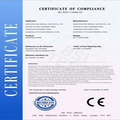
Compliance & Certification: We align with global aerospace standards including AS9100, EN 9100, and OEM-specific quality mandates ensuring regulatory peace of mind.
After-Sales Engineering Support: Our export directors and technical engineers offer consultative support on installation, torque specifications, and maintenance regimes.
Our customers routinely remark on the reduced downtime and maintenance intervals achieved by integrating our precision aerospace fasteners into their assemblies. This operational benefit translates into measurable ROI improvements often overlooked in initial vendor assessments.
Application Scenarios & Installation Insights
Aerospace bolts serve in critical load-bearing and fastening roles throughout aircraft structures from wing assemblies and landing gear to engine components and avionics mounts. The exact environmental stresses vary—some bolts must endure high thermal gradients near engines, while others face constant vibration and moisture exposure in fuselage sections.
Key Application Constraints:
Precision Fit: Bolts must comply with tight dimensional tolerances (±0.01 mm) to prevent structural fatigue or loosening.
Thread Engagement: Proper nut engagement length avoids stripping or galling under torque.
Corrosion Protection: Critical in salt-laden marine atmospheres or hydraulic fluid exposure.
Stress Distribution: Uniform load transfer achieved by correct bolt preload minimizes micro-movements.
Installation Tips from Our Technical Team:
Always verify bolt cleanliness to prevent grit-induced thread damage.
Use calibrated torque wrenches following OEM specifications to ensure proper clamping force.
Apply compatible lubricants where required to reduce galling without compromising corrosion resistance.
Consider environmental factors (temperature, humidity) when selecting coatings to maintain bolt integrity over time.
Best Practices for Sourcing and Evaluating Aerospace Bolt Suppliers
Choosing the right supplier is pivotal—faulty fasteners can cause production delays or, worse, in-service failure. Here’s what successful procurement directors recommend:
Request full material and process documentation including heat treatment logs, chemical composition certificates (e.g. EN 10204 3.1/B), and NDT results.
Evaluate supplier's operational capacity and equipment; modern CNC machining centers and in-house heat treatment facilities improve consistency.
Prioritize suppliers offering on-demand OEM/ODM design customization to avoid long redesign lead times.
Insist on sample testing under actual working conditions or using third-party labs to confirm mechanical properties.
Ensure supplier’s logistics partners provide track-and-trace for international shipments to foresee and mitigate delays.
Explore long-term partnership potentials to benefit from volume pricing and supply chain integration.
Warning: Cheap, non-certified fasteners posing as aerospace grade can incur considerably higher total costs via early failures and rework. It pays to invest upfront in reliable sourcing.
Frequently Asked Questions
Q: What standards certify aerospace bolts for commercial aircraft?
A: Primary certifications include AS9100 for quality management and compliance with federal standards such as the FAA’s technical orders and specifications NASM 25027/25028 (Mil-Specs equivalents). These ensure bolts meet mechanical, chemical, and traceability requirements.
Q: How long are typical lead times for customized aerospace bolt orders?
A: Standard catalog items often ship in 2–4 weeks. Custom OEM/ODM projects generally require 6–12 weeks depending on tooling and batch size. Pre-agreement on supply schedules helps avoid production bottlenecks.
Q: Can you explain the difference between titanium and stainless steel aerospace bolts?
A: Titanium bolts offer superior strength-to-weight ratios and corrosion resistance, preferred in weight-critical zones such as wing spars. Stainless steel, like 17-4PH, balances cost and robustness for less weight-sensitive areas with high toughness needs.
Q: Are your aerospace bolts available with custom surface treatments?
A: Yes, options include cadmium plating for corrosion protection, phosphate coatings for improved lubricant adherence, and dry film lubricants for environments sensitive to contamination.
Q: What inspection procedures do bolts undergo before shipment?
A: Our bolts are subject to dimensional inspection via coordinate measuring machines (CMM), mechanical testing for tensile and hardness, NDT such as ultrasonic or magnetic particle inspection, plus batch traceability audits.
Q: Do you support logistics planning for international aerospace shipments?
A: Absolutely. We coordinate with freight forwarders experienced in aerospace supply chain handling, optimizing container loading and customs documentation for seamless delivery.
Customer Testimonials
Mark Jensen, Procurement Manager - GE Aviation, USA
"We’ve partnered with Yingtai for over four years. Their aerospace bolts consistently meet our precise requirements. The technical support during custom development saved us weeks in timelines, and their supply reliability has greatly reduced our maintenance downtime."
Get in Touch
If you have any camping barbeque equipment inquiry, please feel free to contact us.