By Michael Chen , Export Director at Guangdong Yingtai High Precision Technology Co., Ltd. In today's fiercely competitive manufacturing landscape, procurement directors and operations managers often find themselves navigating a complex maze when sourcing
Product Details
Precision Aluminium Die Casting Components: Trusted Partner for Industrial Excellence
By Michael Chen, Export Director at Guangdong Yingtai High Precision Technology Co., Ltd.
Industry Challenges and Procurement Pitfalls
In today's fiercely competitive manufacturing landscape, procurement directors and operations managers often find themselves navigating a complex maze when sourcing aluminium die casting components. The push for tighter tolerances, reduced cycle times, and superior surface finish coincides with vendor reliability concerns and fluctuating raw material costs. Sourcing from overseas suppliers, especially for bulk orders destined for North America, adds layers of complexity involving quality assurance, compliance, and lead time management.
One recurring issue we observe in the market is the misconception around “lowest price” versus “total cost of ownership.” Aluminium die cast parts might appear economical upfront but end up costing more due to warping, porosity, or inconsistent mechanical properties that cause costly reworks or operational downtime. The reverse is equally true: premium prices don’t always guarantee consistent quality or steady deliveries.
Variability in casting porosity leading to potential leaks or structural weakness
Inadequate tooling resulting in dimensional inaccuracy and inconsistent batch-to-batch tolerances
Extended lead times caused by inefficient tooling designs or suboptimal production workflows
Lack of transparent quality certification and test reporting from some vendors
Poor understanding of installation conditions reducing component longevity
When procuring these components, technical engineers should demand detailed process insights including die maintenance schedules, defect rate reports, and real operational cycle times — not just the glossy brochures. Buyers should also factor in the whole supply chain implications such as container loading optimization and packaging standards, which directly impact landed cost and damage rates.
Material and Process Advantages of Aluminium Die Casting
Aluminium die casting stands out as a preferred manufacturing method when precision, strength, and lightweight characteristics intersect — especially in automotive, aerospace, and consumer electronics sectors. The high-pressure die casting process delivers intricate shapes with excellent dimensional accuracy and is cost-effective for medium to high-volume runs.
Why aluminium? Its naturally enhanced corrosion resistance, thermal conductivity, and strength-to-weight ratio are key reasons. Furthermore, aluminium alloys like ADC12, A380, and AlSi10Mg fulfill various mechanical and surface finish requirements across industries.
The die casting process itself offers several noteworthy benefits:
Repeatability: Automated injection under high pressure ensures consistent part quality and dimensional stability.
Thin walls capability: Enables lightweight designs without compromising structural integrity.
Excellent surface finish: Minimal post-processing needed, which lowers finishing costs and accelerates time to market.
Complex geometries: Fine details, internal cavities, and undercuts are achievable with advanced tooling.
Material efficiency: Reduced scrap rates and recyclable aluminium reduce environmental footprint and raw material costs.
Integration readiness: Components can be designed for assembly with machined inserts or surface treatments such as anodizing or painting.
Note: Despite these benefits, careful mold design, including optimization of gate locations and cooling channels, strongly influences final quality and rejection rates. Our engineering team always recommends prototype trials paired with CAE flow analyses to fine-tune these parameters early.
Technical Specifications & Quality Standards
Understanding the technical nuances is essential before finalizing supplier contracts. Here is a representative technical profile for our aluminium die casting components:
Parameter
Specification
Comment
Alloy Type
ADC12 / A380 (Optional)
Common alloys with good mechanical and castability
Tensile Strength
190-260 MPa
Depends on alloy and heat treatment
Dimensional Tolerance
±0.05mm to ±0.2mm
Based on casting size and complexity
Surface Finish
Ra 1.6 – 3.2 μm
Suitable for direct painting or anodizing
Heat Treatment
T5 / T6 Feasible
Improves mechanical strength and hardness
Testing Standards
ISO 9001:2015, ASTM B85
Ensures process and material compliance
We implement rigorous process control through Statistical Process Control (SPC) protocols, and each batch undergoes dimensional inspection using Coordinate Measuring Machines (CMM). Additionally, defects such as shrinkage porosity and cold shuts are monitored via X-ray and ultrasonic testing to ensure component integrity.
Important Supplier Evaluation Tips: Request full material certification reports and inspection records ahead of purchase decisions. Also, check if your supplier maintains internal tooling maintenance logs to reduce risks of inconsistency caused by tooling wear.
Typical Application Scenarios
Aluminium die casting components are the backbone of many critical applications across industries where lightweight strength and precision count:
Automotive Industry: Engine blocks, transmission housings, chassis components, and heat sinks — benefiting from aluminium's thermal conductivity and corrosion resistance.
Aerospace: Structural airframe parts, brackets, and housings where weight reduction is vital and dimensional precision directly affects aerodynamic performance.
Electronics: Heat dissipation housings for LED lighting, power electronics casings, and consumer device frames.
Industrial Equipment: Machine bases, pump housings, valve bodies optimized for durability under thermal and mechanical stresses.
Renewable Energy: Components for solar tracking systems and electric vehicles requiring corrosion-resistant, lightweight parts.
The broad utility stems not just from the alloy properties but the high repeatability and finishing quality that the die cast process brings to these components.
For procurement managers specifically: consider how component design integration can leverage aluminium die casting’s capabilities for thin sections and complex details to reduce machining steps and speed up assembly.
Our Factory Strength & OEM/ODM Services
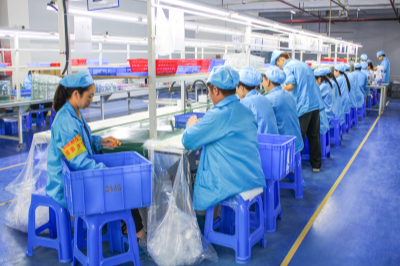
Yingtai's 35,000 Sqm Modern Industrial Park in Dongguan
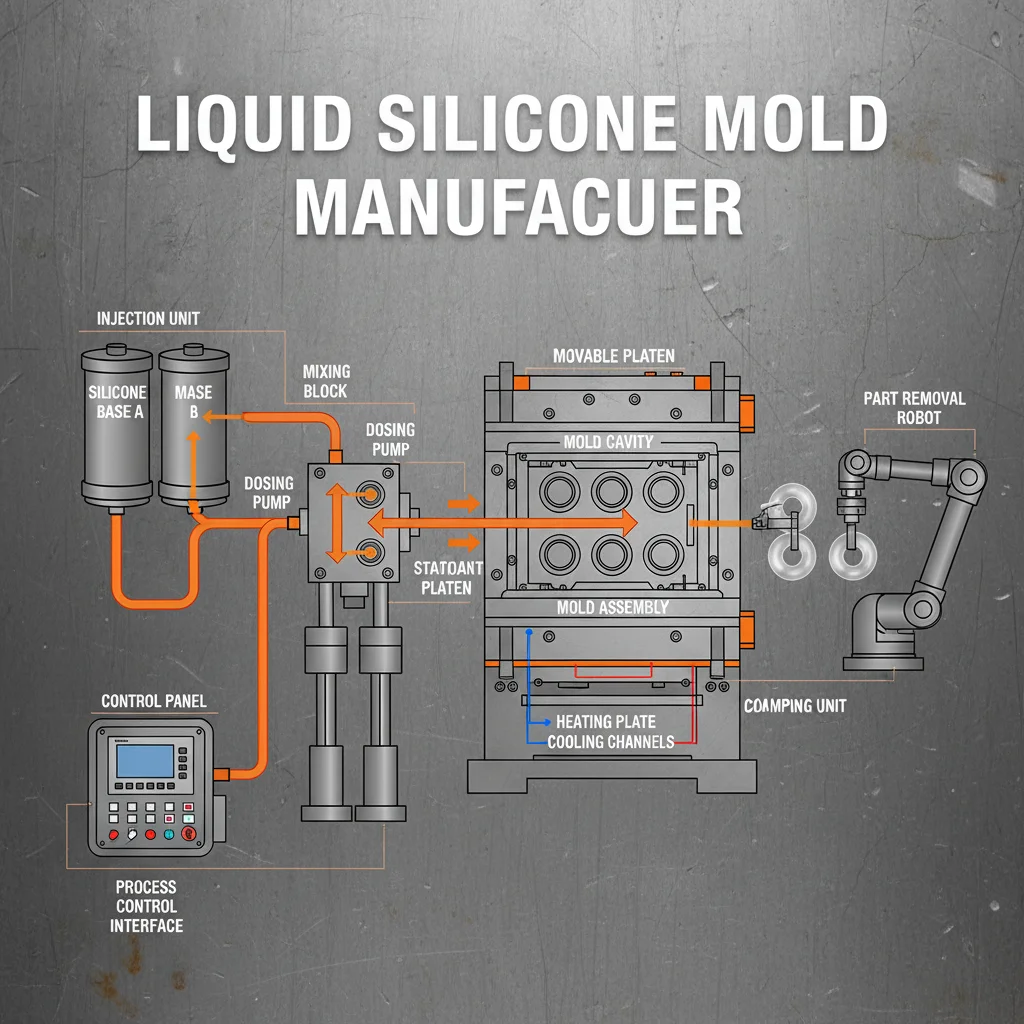
Rooted in Dongguan’s manufacturing hub, Guangdong Yingtai High Precision Technology Co., Ltd. built its reputation with over 20 years of OEM and ODM manufacturing experience, primarily in precision mould processing and customized products. Although known for liquid silicone and plastic injection molding capabilities, our aluminium die casting division has leveraged this technical foundation to provide end-to-end solutions including mold development, casting, machining, surface finishing, and assembly.
Key facts about our capabilities:
Advanced facilities: Equipped with multiple state-of-the-art high-pressure die casting machines and fully integrated CMM inspection labs.
Vertical integration: Complete industry chain from tooling fabrication to finished product assembly ensures strict quality control and short turnaround.
Experienced technical team: Over 500 skilled personnel including metallurgists, CNC programmers, and QC engineers focused on continuous process improvement.
Compliance & certifications: ISO 9001:2015 quality management, RoHS, and REACH compliance to meet stringent export requirements.
OEM & ODM Services: We specialize in working closely with clients to tailor alloy selection, casting parameters, and secondary operations for best fit-to-function.
Partnering with an experienced factory like ours reduces risks linked to tooling inaccuracies and process deviations, common in less mature suppliers.
Logistics, Lead Times & Shipping Insights
Cross-border B2B buyers need pragmatic insights on procurement timing and shipment handling to avoid bottlenecks:
Typical lead times: For small to medium sized die casting orders, tooling development averages 30-45 days. Production batches take 15-30 days depending on order quantity.
Container loading: Optimized packaging ensures maximized container space usage and secure transit — minimizing damage and freight claims.
Customs compliance: We provide comprehensive export documentation including material certificates and test reports to facilitate smooth customs clearance.
Inventory strategies: Just-in-time or buffer stock programs can be arranged per client needs to better manage cash flow and supply chain resilience.
Communication: Dedicated logistics coordinators maintain transparency on shipment status, including container tracking and arrival estimates.
Practical procurement tip: Combining aluminium die casting parts with other plastic or silicone components from our factory often enables consolidated shipping, reducing overall freight expenses and simplifying customs processes.
Important: Allow sufficient buffer in your production schedule for customs delays or unforeseen shipping events, especially during high-demand seasons.
Buyer FAQs
What alloys can you cast for aluminium die casting parts?
We primarily use ADC12 and A380 alloys, as they offer a good balance of mechanical strength and castability. Custom alloy blends are possible depending on application requirements.
Can you provide surface treatments like anodizing or powder coating?
Yes, after casting and machining, we handle several surface finish processes either in-house or through trusted partners, including anodizing, powder coating, and plating.
What quality control measures are in place?
Every batch undergoes dimensional inspection with CMM, porosity checks using non-destructive testing, plus mechanical testing per ASTM standards. We maintain detailed quality records traceable to raw batch data.
What is your minimum order quantity (MOQ)?
Our MOQ depends on tooling complexity but typically starts around 500-1000 pieces. OEM/ODM custom orders may have different MOQ after project evaluation.
Can you support engineering consultation for product design?
Absolutely. Our technical engineers collaborate early with procurement and design teams to optimize casting feasibility, tooling costs, and performance standards.
Customer Reviews
John Miller, Procurement Manager at MidWest Automotive
“Yingtai’s aluminium die casting components reduced our finish machining time by 15%. Their process expertise helped optimize part design early, avoiding costly rework. Delivery was on point with clear communication throughout.”
Get in Touch
If you have any camping barbeque equipment inquiry, please feel free to contact us.