For procurement managers and technical engineers sourcing top-tier aluminium components, understanding the die casting process is essential for quality assurance, cost-efficiency, and supply chain stability. This page dives into the core workings of aluminium
Product Details
Aluminium Die Casting Process: Precision, Efficiency & Global Supply
For procurement managers and technical engineers sourcing top-tier aluminium components, understanding the die casting process is essential for quality assurance, cost-efficiency, and supply chain stability. This page dives into the core workings of aluminium die casting, highlighting operational insights, manufacturing challenges, and expert guidance tailored to international B2B trade.
Industry Challenges in Aluminium Die Casting
Aluminium die casting stands as a cornerstone for producing intricate, high-volume metal components essential to sectors such as automotive, aerospace, consumer electronics, and industrial equipment. Yet, navigating this manufacturing method is complex. Sourcing managers often encounter:
Balancing cycle time efficiency with precision tolerance — minimal process deviations can cascade into costly assembly failures.
Controlling porosity and shrinkage defects which critically impact component strength and lifespan.
Achieving material consistency, particularly with aluminium alloys like ADC12 and A380, to satisfy ISO 9001 and IATF 16949 standards demanded by OEMs.
Managing lead time fluctuations from tool production through to mass casting, especially when collaborating with OEM/ODM manufacturers overseas.
Ensuring logistics readiness including international container loading efficiency, customs clearance, and packaging for fragile die-cast products.
Operations managers must also wrestle with ongoing maintenance issues — from die cracking to die life optimization — which demand a deep understanding of metallurgy and tooling dynamics. A superficial grasp of die casting risks missing cost-saving and quality-improving opportunities inherent in process fine-tuning.
Technical Process Overview: How Aluminium Die Casting Works
Die casting uses high-pressure to inject molten aluminium into intricately machined steel molds, producing complex shapes with excellent dimensional accuracy. The process unfolds through these key stages:
Molten Aluminium Preparation: Aluminium alloys (commonly A380, A384, ADC12) are melted to around 650°C in crucibles or induction furnaces.
High-Pressure Injection: A hydraulic piston or screw forces molten metal into the closed die cavity at pressures up to 10,000 psi, ensuring complete filling.
Rapid Cooling and Solidification: The die’s cooling channels circulate water or oil to extract heat, solidifying the casting in under a minute.
Die Opening and Ejection: Once set, ejector pins release the casting, which undergoes trimming and finishing for flash removal and dimensional verification.
We recommend considering factors like gate design, venting, and die lubrication to reduce gas entrapment and surface blemishes. Productivity thrives on well-maintained dies coupled with real-time process monitoring — both of which reduce scrap rates and maintain ISO/TS 16949-certified quality levels.
Process Step
Key Parameters
Common Issues
Melting
Temperature Range: 640–680°C Alloy Selection
Oxidation, Impurities
Injection
Pressure: 5000–10000 psi Injection Speed
Porosity, Cold Shuts
Cooling
Cooling Rate, Die Temp Control
Warping, Surface Cracks
Ejection
Ejector Force, Timing
Part Sticking, Die Damage
Benefits of Aluminium Die Cast Components
Opting for aluminium die casting delivers a range of operational and performance advantages coveted by dispersed global manufacturers and OEM clients:
High Dimensional Accuracy: Typical tolerances within ±0.1 mm provide excellent fit-and-function for precision assemblies.
Complex Geometry Capability: Allows intricate designs with thin walls (down to 1.5mm) and fine surface details impossible via machining alone.
Superior Mechanical Strength: Aluminium alloys used offer strong tensile and yield strengths with good corrosion resistance ideal for structural applications.
Thermal & Electrical Conductivity: Lends itself to heat sinks and electrical housings requiring rapid dissipation.
Cost-effectiveness: High-volume production reduces per-part costs compared with CNC machining or sand casting alternatives.
Surface Finish Excellence: Enables post-processing including anodizing, powder coating, and plating for aesthetic and durability reasons.
For procurement teams analyzing supplier quotes, note die casting's fast cycle times and repeatability can realize workflow efficiencies and supply chain resilience crucial under Just-In-Time production models.
Material & Method Comparisons: Aluminium Die Casting vs Alternatives
The selection between aluminium die casting and other manufacturing approaches demands appreciation of several trade-offs. Below we distill a brief comparison of aluminium die casting vis-à-vis alternative forming methods.
Understanding these distinctions helps purchasing specialists avoid costly mismatches between production methods and product requirements — especially for high-precision, safety-critical components.
Factory Capabilities & Certifications
Guangdong Yingtai High Precision Technology Co., Ltd., based in Dongguan’s Changan Town, builds on 20+ years experience mastering industrial manufacturing with a robust 35,000 m² plant featuring:
55+ advanced liquid silicone molding machines
80+ automatic plastic injection units
20+ solid silicone hydraulic presses and 30+ precision mold processing tools focusing on aluminium & plastic composites
Full in-house mold development to finished product integration – enabling agile production and rapid tooling changes
High-end custom solutions for automotive electronics, consumer goods, smart wearables, and industrial electronics
Our factory complies with international quality standards including ISO 9001, IATF 16949 (automotive), and maintains CE and RoHS certifications wherever applicable. Years of export experience underpin our understanding of international compliance rules and container logistics optimization — a key factor for USA and European B2B clients seeking reliability.
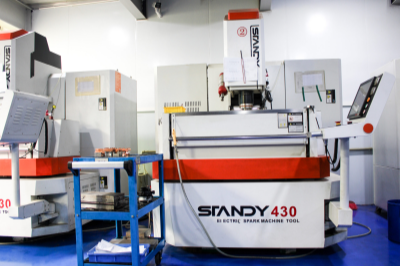
State-of-the-art aluminium die casting lines at Guangdong Yingtai
Want to assess our production equipment and quality assurance capabilities for your next project?Request a factory tour or audit from our export director.
Procurement Guidance & Risk Mitigation for Aluminium Die Casting
Selecting the right supplier goes beyond cost comparison. Here are frontline insights for procurement directors and purchasing managers seeking *trustworthy partners* in aluminium die casting:
Supplier Certification Verification: Demand evidence of ISO/IATF certifications alongside material traceability documentation, especially for automotive or aerospace parts.
Sampling & Prototyping: Insist on pre-production samples or pilot runs verified with coordinate measuring machines (CMM) to confirm tolerance adherence.
Critical Feature Inspection: Establish first article inspection (FAI) protocols and maintain ongoing inline quality checks to catch early deviations.
Lead Time Clauses: Negotiate clear delivery timelines and contingency plans, considering tooling manufacturing lead times of 4–6 weeks typically.
Material & Process Transparency: Understand alloy specifications, heat treatment (T5/T6 tempering), and surface finish processes upfront.
Packaging & Logistics Coordination: Verify packaging methods compatible with container loading specifications, minimizing damage during sea and air freight.
Missing one of these considerations can trigger costly quality disputes or delay commitments, especially in just-in-sequence manufacturing environments.
Need tailored procurement assistance or quotes for OEM aluminium die cast parts?Contact Miss Zhang, Export Director for rapid solution planning.
Buyer FAQ
Q: What aluminium alloys are typically used in die casting?
Commonly used alloys include ADC12, A380, and A384, chosen for their casting fluidity, mechanical properties, and corrosion resistance.
Q: How long does it take to produce tooling for die casting?
Typical lead time for steel die tooling ranges from 4 to 6 weeks, varying by complexity and mold size.
Q: Can aluminium die casting parts be post-processed for enhanced durability?
Yes, surface treatments such as anodizing, powder coating, and chromate conversion coatings are commonly applied to improve corrosion resistance and aesthetics.
Q: What factors affect the cost per part in die casting?
Key factors include: production volume, alloy selection, complexity of part geometry, tooling costs, and required surface finish operations.
Q: How is porosity controlled during the casting process?
Proper die venting, optimized injection velocity, and controlled melt temperature are essential to minimize gas entrapment and reduce porosity.
“Partnering with Guangdong Yingtai improved our supply reliability dramatically. The quality consistency and adherence to IATF16949 standards gave us peace of mind for complex automotive components. Their responsiveness to tooling modifications kept our ramp-up agile.”
Get in Touch
If you have any camping barbeque equipment inquiry, please feel free to contact us.