Guangdong Yingtai High Precision Technology Co., Ltd. | Your Trusted Aluminium Die Manufacturer & Exporter Manufacturing high-precision aluminium dies demands more than just a quality alloy and machining capability. Across the USA and global
Product Details
Aluminium Die Solutions – Precision Molds Built for Industrial Excellence
Guangdong Yingtai High Precision Technology Co., Ltd. | Your Trusted Aluminium Die Manufacturer & Exporter
Industry Challenges in Aluminium Die Manufacturing
Manufacturing high-precision aluminium dies demands more than just a quality alloy and machining capability. Across the USA and global B2B export markets, procurement leaders face recurring hurdles that complicate project timelines and inflate costs.
Tool durability, dimensional accuracy, and heat dissipation remain stringent criteria for automotive, consumer electronics, and aerospace OEMs. Yet many face latent quality issues due to:
Insufficient alloy grade selection and inconsistent material sourcing
Suboptimal CNC machining and EDM parameter controls leading to premature wear
Lack of integrated mold design aligned with injection molding or die casting processes
Logistics and customs bottlenecks impacting lead times and delivery reliability
Communication gaps with overseas suppliers obscuring production visibility and risk mitigation
These challenges translate into costly reworks, delays in assembly lines, and increased supplier churn. From an operational standpoint, it’s common to see monthly downtime caused by quality defects or tooling issues when partnering with less specialized manufacturers.
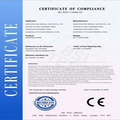
Practical advice: Engage with aluminium die manufacturers who demonstrate proven expertise and maintain ISO 9001 and CE certifications for quality management and product safety. Transparent factory processes are not optional—they are critical to mitigate risks.
Technical Insights: Aluminium Die Production & Materials
At Guangdong Yingtai High Precision Technology Co., Ltd., our aluminium dies are engineered using high-grade 6061-T6 and 7075-T6 aluminium alloys, selected for optimal strength-to-weight ratio, thermal conductivity, and machinability. These alloys meet demanding standards like ASTM B209 for aluminium plate and sheet materials.
The manufacturing workflow combines advanced CNC machining with electrical discharge machining (EDM) to achieve tight tolerances within ±0.005 mm. This precision is essential for complex mold cavities commonly used in injection molding and die casting.
Material
Tensile Strength (MPa)
Thermal Conductivity (W/m·K)
Common Applications
6061-T6 Aluminium
290
167
General die casting, automotive parts
7075-T6 Aluminium
570
130
High wear resistance molds, aerospace components
Notably, our in-house heat treatment facilities improve surface hardness and mitigate deformation risks under cyclic thermal loads, a crucial factor for die longevity in high-volume manufacturing environments.
When selecting aluminium dies, engineers should consider surface finishes like nitriding or anodizing to enhance corrosion resistance and release properties. Yingtai integrates these finishes into our production flow, strengthening the lifespan of molds exposed to aggressive plastic melts or cast alloys.
Industry insight: According to a recent Grand View Research report on precision molding, precision dies with advanced surface coatings reduce cycle time variations and maintenance frequency by 15-20% in automotive injection molding setups.
Key Advantages of Our Aluminium Dies
Our clients value aluminium dies from Yingtai for their balance of quality and efficiency, especially when scaling production swiftly. Here are the core strengths our dies bring to global buyers:
Heavy-duty construction built to withstand tens of thousands of molding cycles while maintaining dimensional stability.
Rapid tooling turnaround – average tool lead times of 15 to 25 days support aggressive time-to-market demands.
Precision machining accuracy enables intricate cavity features suited for thin wall injection molding and complex castings.
Integrated thermal management with conformal cooling channels optimizes cycle times and reduces warpage.
Custom finishing options tailored for specific resin or alloy compatibility to minimize adhesion and improve release.
OEM/ODM collaboration for tailored tooling development, supported by 3D design validation and CAE simulation integrations.
At the operational level, clients often cite fewer quality hold-backs due to precise dimensional repeatability. Our aluminium dies are already proven for export with multiple Fortune 500 subcontractors in sectors like smart appliances and automotive components.
Worth noting: While aluminium dies cannot match hardened steel dies in extreme abrasion resistance, they offer a valuable compromise for projects prioritizing speed, cost control, and flexibility. Many production managers use aluminium dies for pilot runs and medium-volume manufacturing before transitioning to steel tooling.
Consumer Electronics: Housings for smartphones, wearables, and connectors benefiting from smooth surface finishes and complex cavity shapes.
Aerospace Fittings: Lightweight precision cast parts for interiors and small assemblies.
Household Appliances: Components like thermostat dials, panels, and housings with rapid tooling requirements.
Medical Devices: Prototype tooling for ABS and PC components while awaiting hardened-steel mold approval.
For example, an American smart appliance manufacturer reduced first article inspection failures by 40% using Yingtai’s aluminium dies with CNC-optimized cavity polishing and conformal cooling design.
Buyer’s Guide: Procurement & Supplier Evaluation
Selecting the right aluminium die supplier demands more than initial cost quotes. Here’s a checklist of critical considerations procurement directors and engineers should apply:
Material Certifications: Verify alloy grade documentation and traceability, ideally complying with ASTM or equivalent standards.
Manufacturing Capability: Assess factory equipment, including CNC centers, EDM units, and heat treatment ovens. A modern industrial park and in-house tooling machines are favorable.
Technical Support: Strong design collaboration using 3D CAD and CAE simulations to preempt mold flow or shrinkage issues.
Quality Assurance: Look for ISO 9001 or IATF 16949 certification and adherence to documented inspection protocols (CMM, roughness testers).
Logistics Experience: Confirm expertise in export compliance, container loading optimization, and responsive shipping plans to avoid costly delays.
Service Terms: Transparent warranty clauses covering tooling defects and clear OEM/ODM options for custom specifications.
Remember, overseas sourcing often masks hidden costs in the form of retooling, communication lag, or customs issues. Wherever possible, request prototype samples and physical tool photos early in the supplier evaluation process.
Procurement tip: Build a relationship with your supplier’s export manager and production team. Regular updates minimize surprises on delivery and tooling conditions, especially for long-run projects.
Factory Capabilities & Certifications
Yingtai factory’s modern facility in Dongguan spans 35,000 m², equipped with cutting-edge CNC machining centers, EDM machines, and precision inspection tools. Our capabilities include:
55 CNC liquid silicone molding machines supporting multi-component production
80 automatic plastic injection molding units with tight process controls
Advanced heat treatment and surface finishing for aluminium tooling
Over 30 precision mold processing devices enabling complex cavity creation
20+ AR-certified quality test instruments ensuring defect-free molds
We hold these industry certifications with strict compliance:
ISO 9001: Quality ManagementCE: Product SafetyRoHS: Environmental Standards
Our export team has successfully supported international shipments for industries requiring strict regulatory compliance — including aerospace, automotive, and medical sectors. We offer turnkey tooling solutions from design, prototyping, production to packaging.
Frequently Asked Questions
Q1: What is the typical lead time for aluminium die manufacturing?
Our standard lead time ranges from 15 to 25 working days, depending on die complexity and volume. OEM/ODM customizations may extend this by 5 to 10 days due to design validation.
Q2: How long does an aluminium die last compared to steel dies?
Aluminium dies typically serve for 20,000 to 50,000 molding cycles while maintaining stable dimensions. Steel dies can exceed 500,000 cycles but come with significantly higher tooling costs and longer lead times.
Q3: Can Yingtai handle OEM/ODM die design requests?
Yes, we collaborate closely with clients on OEM/ODM tooling. Our experienced engineering team leverages CAD/CAE technologies to optimize designs and ensure production feasibility aligned with your product specs.
Q4: What logistics and shipping options are available?
We offer FOB, CIF, and DDP shipping terms tailored to your location. Our export team specializes in container load optimization and customs clearance coordination to facilitate smooth delivery.
Q5: How to maintain aluminium dies for best performance?
Regular cleaning, applying anti-corrosion coatings, and scheduling preventive maintenance every 5,000 cycles are recommended. We provide detailed maintenance guides with each tooling shipment.
Customer Reviews & Real-World Feedback
Michael Roberts, Procurement Manager, Texas
"Switching to Yingtai’s aluminium dies cut our tooling lead time by nearly one third compared to previous suppliers. Their technical team anticipated key thermal stresses, reducing our first-run rejects significantly."
Verified Buyer
Get in Touch
If you have any camping barbeque equipment inquiry, please feel free to contact us.