Enhancing Durability, Aesthetics, and Functional Performance for Industrial Applications Aluminum's prevalence in sectors like automotive manufacturing, aerospace, construction, electronics, and consumer goods hinges on its impressive strength-to-weight ratio. Yet, proper surface treatment remains a
Product Details
Precision Aluminum Surface Treatment Solutions
Enhancing Durability, Aesthetics, and Functional Performance for Industrial Applications
Industry Pain Points in Aluminum Surface Treatment
Aluminum's prevalence in sectors like automotive manufacturing, aerospace, construction, electronics, and consumer goods hinges on its impressive strength-to-weight ratio. Yet, proper surface treatment remains a critical challenge that can directly impact product longevity and operational reliability. Common pain points faced by purchasing and operations managers include:
Corrosion and Oxidation: Untreated aluminum surfaces quickly develop oxide layers that degrade mechanical properties and appearance, especially in humid or corrosive environments.
Inconsistent Finish Quality: Variability in anodizing or coating processes leads to batch inconsistencies, resulting in rework, warranty claims, and delayed shipments.
Adhesion Failures: Improper pre-treatment or surface roughness can cause coating delamination or peeling under mechanical stresses.
Supply Chain and Lead Time Risks: Many suppliers struggle with capacity bottlenecks, insufficient testing procedures, or lack of compliance with ASTM or ISO standards.
Environmental Regulations Compliance: Processes involving chromium or heavy metals are increasingly regulated, pushing manufacturers to source environmentally friendlier alternatives.
For procurement leaders, these issues often manifest as unexpected cost overruns and disrupted project timelines. Recognizing the operational risks associated with subpar surface treatment is the first step toward mitigating potential quality and logistic setbacks.
Understanding the technical distinctions of surface treatments is vital for engineering professionals and buyers aiming for optimal performance. The most prevalent methods include:
Technique
Description
Primary Benefits
Typical Standards
Anodizing (Electrochemical Oxidation)
Creates a controlled oxide layer thickened electrolytically to enhance corrosion and wear resistance.
Improved surface hardness
Enhanced UV and corrosion resistance
Customizable coloration
ASTM B580, ISO 7599, MIL-A-8625
Powder Coating
Thermally applied dry powder that forms a protective and decorative film after curing.
Thicker, uniform coatings
Superior impact resistance
Environmentally friendly application
ASTM D3359, ISO 2409
Electroplating (Chromium, Nickel)
Depositing metallic layers on aluminum to enhance corrosion resistance and appearance.
Improved wear and chemical resistance
Enhanced decorative finish
RoHS Compliance, REACH
Chemical Conversion Coating (Chromate, Non-Chromate)
Aluminum surface is chemically treated to develop a corrosion-resistant, paint-adhesive layer.
Enhanced paint adhesion
Temporary corrosion prevention
MIL-DTL-5541, ISO 4520
Each method demands precise operational control and verification to ensure compliance with international quality standards and industry-specific certifications like ISO 9001, RoHS, and REACH. For example, anodizing thickness must be verified by an optical or magnetic gauge to confirm protection levels, especially for aerospace or military-grade components.
Application Scenarios and Material Considerations
Aluminum surface treatments vary significantly based on final application demands. The following outlines typical environments and usage cases guiding selection of surface processes:
Automotive Exterior Parts: Facing extreme weather, UV exposure, and abrasion, requiring hard anodizing coatings or powder coatings with UV stabilizers.
Aerospace Structural Components: Demanding aerospace-grade anodizing with tight thickness tolerances and corrosion resistance compliant with MIL-A-8625.
Architectural Facades and Window Frames: Often powder-coated with weather-resistant finishes; color fade resistance is a key procurement criterion.
Consumer Electronics Housings: Anodized aluminum preferred for premium durability, texture options, and color aesthetics.
Industrial Machinery and Equipment: Chemical conversion coatings combined with primer applications promote adhesion and corrosion protection.
Engineering teams often weigh material temper grades (e.g., 6061-T6 vs. 7075-T73) alongside surface treatments to meet wear and mechanical stress targets. For instance, aerospace parts made of 7075 aluminum typically require more robust anodizing protocols due to higher tensile stresses during service.
Operational Insight: During acceptance inspections, instead of relying solely on surface gloss or color, it's prudent to perform adhesion tape tests and corrosion salt spray tests (ASTM B117) to verify long-term performance and prevent costly downstream failures.
Buyer’s Guide and Procurement Insights
Selecting a reliable aluminum surface treatment supplier requires careful consideration well beyond price. Common pitfalls encountered during procurement include:
Ignoring Lead Time Variability: Surface treatments often introduce additional process time; factoring in wet cycles, curing, and quality verification is essential to avoid project delays.
Overlooking Certification Checks: Validate supplier certifications tied to specific treatment methods and relevant compliance audits (e.g., ISO 45001 for occupational safety).
Insufficient Sampling and Testing: Request production samples and independent lab reports rather than trusting only supplier-provided datasheets.
Misunderstanding OEM/ODM Capabilities: Partnering with a supplier offering tailored mold development and process optimization can significantly reduce nonconformity rates and tooling defects.
Logistics and Packaging Gaps: For cross-border shipments, proper packaging to prevent surface dents or moisture ingress in containers is critical; otherwise, you may face rejection at customs or on-site damage.
In practice, procurement managers benefit from engaging with technical engineers during supplier evaluations. This cross-disciplinary collaboration helps anticipate installation challenges and confirms the supplier’s process monitoring systems (e.g., statistical process control, SPC) are robust.
Certifications & Factory Capabilities
Guangdong Yingtai High Precision Technology Co., Ltd., located in Dongguan, is a reputable player in the surface treatment and precision manufacturing landscape. Our factories leverage:
Advanced equipment including 80+ plastic injection molding machines, precision mold processing centers, and liquid silicone molding capabilities.
Full industry chain integration allowing rapid mold development, prototype trials, and volume production under one roof.
Strict quality management systems compliant with ISO 9001 for consistent batch-to-batch quality control.
Environmental compliance aligning with global standards such as RoHS and REACH to ensure sustainable and safe processing.
Robust testing instruments enabling precise measurements for thickness, adhesion, corrosion resistance, and surface roughness.
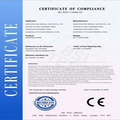
Some key certifications enabling trusted aluminum surface treatment solutions.
Our export team is experienced in navigating U.S. and international customs, container optimization, and overseas logistics, ensuring your aluminum components arrive on time and intact.
Frequently Asked Questions
Q: What are the main differences between anodizing and powder coating for aluminum parts?
Anodizing creates an integral oxide layer by electrochemical means, providing enhanced corrosion resistance and surface hardness with a natural metallic appearance. Powder coating applies a physical polymer-based layer that offers thicker, more uniform coverage with a wider range of color and texture options. Each suits different environmental and aesthetic requirements.
Q: How long does the aluminum surface treatment process usually take?
Treatment duration depends on method complexity and batch size — anodizing cycles can take from 30 minutes to several hours including preparation and sealing, while powder coating involves curing stages typically lasting 20 to 40 minutes. Lead times must also consider quality inspections and logistics.
Q: Are environmentally friendlier alternatives to chromate conversion coatings available?
Yes. Non-chromate chemical conversion coatings and trivalent chromium (Cr3+) treatments have emerged as safer, ROHS-compatible alternatives offering comparable corrosion protection without toxic hexavalent chromium (Cr6+).
Q: Can Yingtai handle OEM/ODM surface treatment projects?
Absolutely. Our full-service factory provides custom mold-making, process design, and surface treatment integration tailored to OEM specifications, enabling streamlined one-stop sourcing.
Q: What are key criteria to evaluate a surface treatment supplier?
Besides price and capacity, verify certifications, process reproducibility, testing capabilities, responsive communication, and onsite audit availability. The ability to scale and offer sound technical support mitigates supply chain risks drastically.
Customer Reviews and Testimonials
James Miller Procurement Manager, Chicago
“We switched to Yingtai’s anodizing services last year. The consistency of the coating thickness and color matched our aerospace-grade requirements perfectly. Crucially, their on-site quality control reduced batch rejection rates noticeably compared to previous vendors.”
Get in Touch
If you have any camping barbeque equipment inquiry, please feel free to contact us.




 James Miller Procurement Manager, Chicago