Your Reliable Partner in OEM & ODM Bellows Vacuum Cup Manufacturing for International B2B Trade In industrial automation and manufacturing ecosystems, bellows vacuum cups are indispensable components that enable secure, adaptable gripping and flawless
Your Reliable Partner in OEM & ODM Bellows Vacuum Cup Manufacturing for International B2B Trade
Bellows Vacuum Cup: Introduction & Industry Overview
In industrial automation and manufacturing ecosystems, bellows vacuum cups are indispensable components that enable secure, adaptable gripping and flawless handling of various workpieces.
Their accordion-like flexible design—comprised typically of multi-folded bellows structures—offers exceptional adaptability across uneven or fragile surfaces. This elasticity improves suction reliability while accommodating complex geometries. Unlike flat vacuum cups, bellows vacuum cups excel under dynamic production conditions where surface conformity is critical.
The global demand for bellows vacuum cups correlates strongly with the growth of automation, robotics, and precision assembly industries, especially across sectors like automotive, electronics, food packaging, and glass handling. According to market reports on liquid silicone rubber (LSR) components—customarily used in quality bellows cups—the market is projected to reach multi-billion dollar valuations by the 2030s due to rising adoption of precision injection molding technologies that enhance performance and reduce defects (【Liquid Silicone Rubber Market Size Report, 2030 - Grand View Research】).
From a procurement perspective, buyers focus not only on the mechanical reliability of vacuum cups but also on factors like chemical resistance, operational temperature range, wear life, and easy integration with gripper tooling. Bellows vacuum cups manufactured with advanced liquid silicone rubber exhibit excellent UV resistance, chemical inertness, and compliance with standards such as ISO9001 and CE certification. This ensures they maintain suction efficiency over long production runs—even in challenging environments.
International buyers increasingly favor OEM/ODM partnerships with established manufacturers capable of delivering fast lead times, custom sizes, and specialized materials meeting exacting specifications. Guangdong Yingtai High Precision Technology Co., Ltd., embedded in Dongguan's industrial hub, exemplifies such a partner—with over two decades offering turnkey manufacturing inclusive of mold design, liquid silicone molding, and precision finishing.
Practically speaking, bellows vacuum cups reduce downtime compared to traditional suction components because their flexible bellows design cushions against shock loads during pick-and-place processes. This also lowers regripping failures on textured surfaces or irregularly shaped parts. Experienced engineering teams take note: customizing bellows height and lip profile directly impacts gripping force and cycle speed—and avoidable errors here can compromise end-effector reliability.
Whether sourcing small-volume prototypes or scaling to hundreds of thousands in container shipments, understanding the subtleties of silicone formulation, mold venting, and injection parameters is critical in managing incoming quality and reducing scrap. Recent insights from advanced simulation and AI-assisted process controls continue to enhance predictability and efficiency in manufacturing bellows vacuum cups (see research on AI & digital twin in injection molding [arXiv Research]).
In sum, bellows vacuum cups are far more than commodity suction pads. Buying with a technical mindset—appreciating material science, design intricacies, and supply chain robustness—delivers measurable operational advantages. The following sections dive deeper into these realities encountered during procurement, production, and field deployment.
Common Operational Challenges in Bellows Vacuum Cup Usage
While bellows vacuum cups bring superior flexibility, their use is not without challenges. Managers and technical engineers often face:
Material Fatigue & Seal Integrity: Repeated flexing can cause micro-tears, especially if incompatible with harsh chemicals or extreme temperatures.
Surface Contamination & Abrasion: Dust or particles trapped inside folds can degrade vacuum sealing or accelerate wear on silicone surfaces.
Mismatched Bellows Dimensions: Oversized bellows may impede cycle speed; undersized may reduce gripping reliability on textured surfaces.
Installation & Alignment: Even minor misalignment on mounting adapters or end effectors can result in vacuum loss or inconsistent suction.
Supply Chain Delays: High-precision mold tooling and custom materials can extend lead time—requiring careful demand forecasting.
Practical experience advises frequent inspection and cleaning during routine maintenance—removing debris in bellows folds using compressed air or soft brushes works well. Procurement teams should also review batch QC reports for tensile strength and elongation retention after accelerated aging tests. Overlooking these parameters invites premature failures.
Finally, logistics teams must consider packaging that avoids deformation in transit. Bellows vacuum cups are flexible but maintain structural resiliency best when nested properly with protective cushioning to prevent folding or pressure marks.
Technical Features & Material Comparison
A bellows vacuum cup's heart lies in its material and structural design. Here’s a comparative look at usual materials:
Feature
Liquid Silicone Rubber (LSR)
Thermoplastic Elastomer (TPE)
Nitrile Rubber (NBR)
Chemical Resistance
Excellent; resists oils, greases, solvents
Moderate; susceptible to some solvents
Good; petroleum resistant but less heat stable
Temperature Range
-60°C to 230°C (high heat stability)
-50°C to 150°C
-25°C to 120°C
Flexibility & Elasticity
Superior; maintains elasticity after repeated cycles
We recommend LSR-based bellows vacuum cups for high-reliability industrial automation applications where durability, heat resistance, and chemical exposure are concerns. They also comply more easily with stringent quality standards including CE and ISO 9001 certifications, marking them fit for demanding export markets.
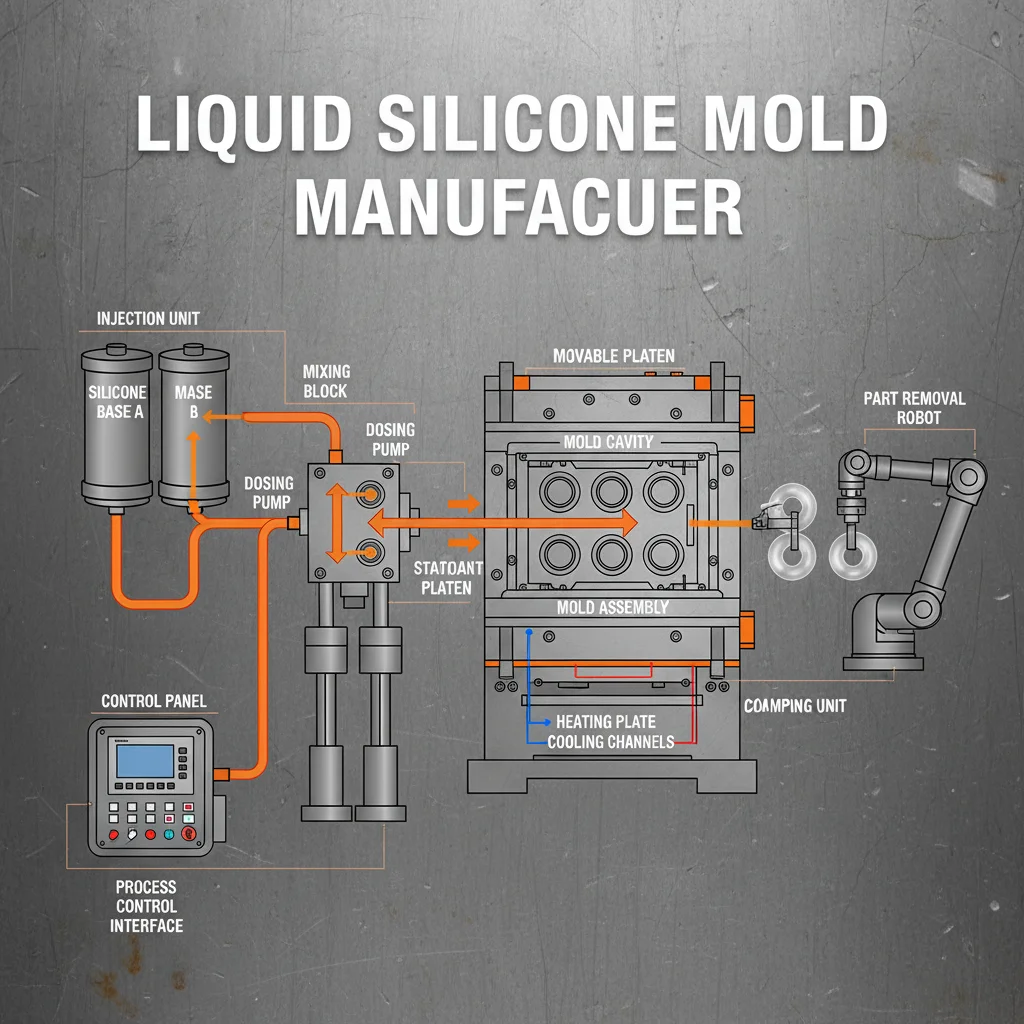
The liquid silicone injection molding process—optimized with advanced mold venting and rheological controls—ensures minimal flash, better cavity filling, and dimensional precision. Precision mold manufacturing, as seen in Yingtai’s 55+ LSR molding machines line, confirms they can scale to mass production with repeatability.
Core Application Scenarios for Bellows Vacuum Cups
These vacuum cups deliver consistent performance across diverse industrial contexts. Common use cases include:
Automotive Assembly Lines: Handling metal stamped parts, curved glass panels, and painted trims where surface irregularities demand bellows flexibility.
Glass Handling & Furniture Manufacturing: Safe suction on flat and mildly curved glass or wooden surfaces reduces damage and rework.
Food Packaging Equipment: Contact-safe suction for bags, pouches, and flexible films, leveraging FDA-compliant silicone materials.
Robotics & Pick-and-Place Automation: Versatile gripper end effectors with customizable bellows function well over irregular workpieces or textured objects.
Integrating the fitting size, bellows height, and lip profile to end effector design is crucial for optimizing cycle time, suction force, and product handling reliability.
Procurement Guide & Supplier Evaluation Tips
Selecting a dependable bellows vacuum cup supplier involves more than price comparison. Procurement directors, purchasing managers, and technical engineers should verify:
Compliance & Certifications: ISO 9001, CE, RoHS, and relevant FDA certifications for food-grade or medical uses.
Material Traceability: Confirm full batch traceability and documentation of raw silicone materials.
Mold Design & Tooling Quality: Request details on mold manufacturing processes, including venting design to minimize flash and defects.
Production Capacity & Scalability: Factory equipment and tooling numbers to match volume needs; consider machine uptime and shift patterns.
OEM/ODM Flexibility: Ability to customize dimensions, shore hardness, and integrate multiple components (e.g., overmolding with plastics).
Lead Times & Logistics: Lead time transparency including tooling development, sampling, production, and container loading arrangements.
Quality Control & Testing: In-house testing: tensile strength, elongation, UV resistance, and cyclic life testing protocols.
Keep in mind that high-quality suppliers aim to reduce total cost of ownership by delivering defect-free vacuum cups that maintain suction strength longer, which ultimately saves on maintenance and replacement downtime.
When discussing contracts, also verify warranty and after-sales support policies.
Frequently Asked Questions (FAQ)
What materials are typically used for bellows vacuum cups?
Liquid silicone rubber (LSR) is most common due to its flexibility, chemical resistance, and heat stability. Alternatives include TPE and nitrile rubber but with trade-offs.
How do bellows vacuum cups differ from flat suction cups?
Bellows cups have a corrugated, expandable design that better adapts to uneven or rough surfaces, providing more consistent vacuum sealing.
What are typical operational temperature ranges?
LSR bellows cups typically withstand -60°C to +230°C, suitable for most industrial environments, including sterilization processes.
How should I maintain bellows vacuum cups?
Regular inspection for wear or deformation, cleaning debris from bellows folds, and avoiding prolonged exposure to reactive chemicals will extend service life.
Can vacuum cups be customized?
Yes. Suppliers offering OEM/ODM services can adjust dimensions, hardness, and material hardness to meet specific gripping and operational requirements.
Customer Testimonials & Reviews
James Miller, Procurement Manager – Automotive Sector, Detroit, USA
"Switching to Yingtai's bellows vacuum cups significantly enhanced our assembly line's reliability. The cups adapt smoothly to complex metal parts with negligible suction loss over a full shift."
Get in Touch
If you have any camping barbeque equipment inquiry, please feel free to contact us.