Cnc Custom Parts Milling Services
By James Morgan , Export Director – Guangdong Yingtai High Precision Technology Co., Ltd. Precision matters. In industrial manufacturing, OEM supply chains, and highly specialized equipment, precise custom parts shape the quality, durability, and

Product Details

Precision CNC Custom Parts Milling Services – Expertise for Complex Manufacturing Needs

By James Morgan, Export Director – Guangdong Yingtai High Precision Technology Co., Ltd.

Understanding CNC Custom Parts Milling Services: Operational Excellence at Scale

Precision matters. In industrial manufacturing, OEM supply chains, and highly specialized equipment, precise custom parts shape the quality, durability, and efficiency of the end product. CNC custom parts milling services stand at the crossroads of innovation and operational execution, providing manufacturers with the ability to produce components tailored precisely to their unique specifications.

Over the last 20 years, the milling process has evolved from rudimentary machine setups to fully integrated numerical control centers. Today’s CNC milling applies computer-driven tools to craft complex geometries in metals, plastics, composites, and advanced materials with unmatched repeatability and tolerance controls. This technological evolution empowers industries ranging from aerospace, automotive, medical devices, to consumer electronics with robust parts designed for rigorous performance.

Yet, beyond technology, sourcing dependable custom milling services requires thorough understanding of production workflows, material behavior, and supply chain intricacies. For instance, selecting a supplier must consider not just the milling machine capabilities — such as 3-axis vs 5-axis machining centers — but also tooling expertise, quality management certifications like ISO 9001, and tight process controls that mitigate risks including thermal distortion and surface finish inconsistencies.

Our facility in Dongguan, Guangdong Province integrates over 30 precision machining centers, ranging from high-RPM vertical mills to horizontal centers equipped for deep cavity parts. With an established production park of 35,000 square meters housing automated tool-change systems and real-time QC inspection instruments, Guangdong Yingtai High Precision Technology Co., Ltd. ensures every custom part delivered meets exacting design criteria, with industry-typical tolerances as tight as ±0.01 mm where required.

Material versatility is central in milling services. We frequently work with aerospace-grade aluminum alloys, stainless steels (304, 316), engineering plastics (PEEK, PTFE), and specialty metals like titanium. Each material demands specific machining parameters — feed rates, spindle speeds, coolant application — monitored by skilled machinists and CNC programmers versed in CAD/CAM software workflows such as Autodesk Fusion 360 and Mastercam.

To underscore the benefits, consider aerospace component manufacture: a single complex bracket may undergo multi-stage milling, precise drilling, and surface treatments, all requiring programmatically controlled toolpaths to maintain tolerance accumulation within stringent FAA and AS9100 standards. Meanwhile, in consumer electronics, aluminum heat sinks need not only dimensional precision but also surface finishes optimized for thermal conductivity and aesthetics.

In short, CNC custom parts milling is both an art and a science — one where capabilities, materials, and quality systems intersect to deliver operational performance that directly impacts downstream assembly, product lifecycle, and total cost of ownership.

Insight: "Many procurement managers underestimate installation alignments related to surface flatness and repeatability — engaging partners with integrated measurement systems reduces unexpected returns by as much as 15% during first assembly."

— From Yingtai Production Manager

Common Industry Pain Points in CNC Custom Milling

  • Material Compatibility Challenges: Variations in raw material batches can affect machinability. Inadequate supplier material testing leads to inconsistent surface finishes or premature tool wear.
  • Tolerance Stack-Up Risks: Without precise fixture design and process controls, assembled parts may not fit correctly, introducing rework cycles or scrapped batches.
  • Long Lead Times and Unpredictability: Complex parts requiring multi-axis machining often suffer delays due to tooling setup changes, tool breakage, or quality hold points.
  • Inadequate Quality Inspection Processes: Loose integration of in-process metrology compromises defect detection until late-stage inspection, risking delivery overruns and client dissatisfaction.
  • High Cost of Prototype to Production Transition: Scaling from initial product prototypes to volume runs demands yet-more tooling investment and close collaboration on process stability.

Addressing these pain points requires an experienced supplier who not only masters CNC technology but also comprehensively integrates production planning, quality assurance, and communications into turnkey solutions for clients.

Customized Plastic Parts Manufacturer

Technical Deep Dive: How CNC Milling Delivers Precision & Flexibility

CNC (Computer Numerical Control) milling harnesses digital instructions to guide rotating multi-tool spindles across stationary or vice-versa positioned workpieces. The process can be broadly categorized by:

  • 3-Axis Milling: Controls cutting tools in three directions (X, Y, Z), suitable for simpler prismatic components.
  • 4 & 5-Axis Milling: Adds rotational axes enabling machining of complex geometries in a single setup, key for aerospace or automotive prototype parts.
  • Multi-Tool and Multi-Spindle Systems: Facilitate high volume batch production with tool changes and simultaneous operations.

Our machines integrate high-speed spindles (up to 24,000 RPM), linear scales for feedback accuracy, and automatic pallet changers — balancing throughput with precision. Material selection dictates feed rates; for instance:

Material Recommended Spindle Speed (RPM) Feed Rate (mm/min) Coolant Usage
6061 Aluminum 8,000 - 12,000 1,200 - 2,000 Flood coolant / mist
304 Stainless Steel 500 - 1,500 400 - 800 High-pressure coolant
Engineering Plastics (PEEK) 12,000 - 16,000 800 - 1,200 Air cooled or dry

custom cnc machined parts cnc custom parts manufacturer cnc milling manufacturing

Digitally generated tool paths must compensate for tool deflection and thermal expansion, common challenges that skilled operators and CAM engineers manage carefully. Our QC team integrates laser scanning and CMM (Coordinate Measuring Machines) for real-time dimensional analysis, reducing downstream assembly errors.
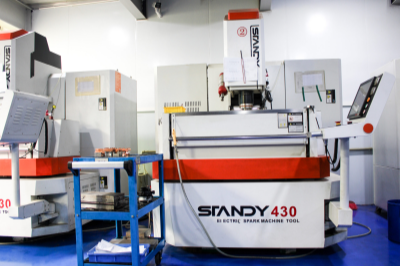
CNC Milling Machine Operating
Our 5-axis CNC milling center producing complex aerospace brackets

Where CNC Custom Milling Makes a Difference

The spectrum of industries leveraging CNC custom milling is broad — yet each demands specific operational insights:

  • Aerospace & Defense: Machining titanium housings, aircraft engine brackets, and precision hydraulic components under strict AS9100 quality regimes.
  • Medical Devices: Producing surgical tool parts, orthopedic implant prototypes requiring biocompatible alloys and ultra-clean machining environments.
  • Automotive & New Energy Vehicles: Crafting engine mounts, battery pack components, and cooling system fittings where thermal resistance and weight reduction are critical.
  • Electronics & Consumer Goods: Machined aluminum heat sinks, plastic enclosures, and custom connectors for high-volume electronics manufacturers.
  • Industrial Equipment: Manufacturing wear-resistant components and high-tolerance fittings for pumps, valves, and tooling applications.

Our cross-departmental teams translate client designs into manufacturable parts, often advising on design-for-manufacturing (DFM) optimizations to reduce complexity or tooling costs while preserving function. The OEM, ODM, and contract manufacturing options allow varying levels of service integration.

Procurement Insights & Supplier Evaluation Tips

Selecting a milling service partner isn’t just about cost. Here’s a practical checklist for global buyers assessing potential suppliers:

  • Certification Verification: Check for ISO 9001:2015 at minimum, and specific industry approvals such as AS9100, ISO 13485, or automotive IATF 16949 if applicable.
  • Material Traceability: Confirm supplier can document raw material sources and certifications, especially for aerospace or medical-grade alloys.
  • Machine Inventory & Capability: Request detailed machine lists including model numbers, tolerances, and workload capacity.
  • Quality Management System: Review sampling protocols, inspection technologies, and SPC (statistical process control) integration.
  • Lead Time Transparency: Evaluate current lead times for prototypes and mass runs; suppliers should provide realistic production schedules.
  • Communication Process: Ensure key contacts are fluent in English (or your preferred language), with responsive project management and technical support.
  • OEM/ODM Flexibility: Gauge ability to handle design iterations, tooling development, secondary operations, assembly, or customized packaging.
  • Logistics & Shipping Experience: Confirm export readiness, incidence of shipment damage, container loading optimization, and customs compliance records.

Note: “Some buyers focus heavily on per-piece price without inspecting tooling quality or vendor process robustness. This often results in delays or returns – a costly mistake when dealing with high-precision CNC parts.”

Frequently Asked Questions

Q: What materials can be machined with your CNC milling services?
We machine a broad range — aluminum alloys (6061, 7075), stainless steels (304, 316), carbon steel, titanium, brass, copper, and engineered plastics like PEEK and PTFE. Material choice depends on application and desired properties.
Q: What is the typical lead time for a custom milled part?
Prototype runs usually take 10-15 business days depending on complexity. Volume production lead times can range from 3 to 6 weeks, depending on order size, tooling requirements, and material availability.
Q: How do you ensure dimensional accuracy?
We incorporate coordinate measuring machines (CMM), laser scanning, and inline inspection steps throughout production. Statistical process controls track trends to maintain tolerances within agreed specifications, typically ±0.01 mm.
Q: Can you assist with design-for-manufacturing (DFM) revisions?
Yes, our engineering team consults on designs to optimize tool paths, reduce machining cycles, and improve yield without compromising functional requirements.
Q: What certifications and compliance standards do you hold?
Our manufacturing site maintains ISO 9001:2015 certification. For specific orders, AS9100 and IATF 16949 compliance can be implemented. Material certifications and test reports are standard upon request.

Customer Reviews & Real-World Feedback

Client avatar - Robert, Procurement Manager

Robert A., Procurement Manager – Michigan, USA
“We turned to Yingtai for our high-precision aerospace fittings last year. The tolerance control and delivery adherence met our stringent requirements. Their proactive communication helped us manage tooling iterations effectively, saving us weeks of potential delay.”

Get in Touch