Understanding CNC Custom Parts Milling Services: Operational Excellence at Scale
Precision matters. In industrial manufacturing, OEM supply chains, and highly specialized equipment, precise custom parts shape the quality, durability, and efficiency of the end product. CNC custom parts milling services stand at the crossroads of innovation and operational execution, providing manufacturers with the ability to produce components tailored precisely to their unique specifications.
Over the last 20 years, the milling process has evolved from rudimentary machine setups to fully integrated numerical control centers. Today’s CNC milling applies computer-driven tools to craft complex geometries in metals, plastics, composites, and advanced materials with unmatched repeatability and tolerance controls. This technological evolution empowers industries ranging from aerospace, automotive, medical devices, to consumer electronics with robust parts designed for rigorous performance.
Yet, beyond technology, sourcing dependable custom milling services requires thorough understanding of production workflows, material behavior, and supply chain intricacies. For instance, selecting a supplier must consider not just the milling machine capabilities — such as 3-axis vs 5-axis machining centers — but also tooling expertise, quality management certifications like ISO 9001, and tight process controls that mitigate risks including thermal distortion and surface finish inconsistencies.
Our facility in Dongguan, Guangdong Province integrates over 30 precision machining centers, ranging from high-RPM vertical mills to horizontal centers equipped for deep cavity parts. With an established production park of 35,000 square meters housing automated tool-change systems and real-time QC inspection instruments, Guangdong Yingtai High Precision Technology Co., Ltd. ensures every custom part delivered meets exacting design criteria, with industry-typical tolerances as tight as ±0.01 mm where required.
Material versatility is central in milling services. We frequently work with aerospace-grade aluminum alloys, stainless steels (304, 316), engineering plastics (PEEK, PTFE), and specialty metals like titanium. Each material demands specific machining parameters — feed rates, spindle speeds, coolant application — monitored by skilled machinists and CNC programmers versed in CAD/CAM software workflows such as Autodesk Fusion 360 and Mastercam.
To underscore the benefits, consider aerospace component manufacture: a single complex bracket may undergo multi-stage milling, precise drilling, and surface treatments, all requiring programmatically controlled toolpaths to maintain tolerance accumulation within stringent FAA and AS9100 standards. Meanwhile, in consumer electronics, aluminum heat sinks need not only dimensional precision but also surface finishes optimized for thermal conductivity and aesthetics.
In short, CNC custom parts milling is both an art and a science — one where capabilities, materials, and quality systems intersect to deliver operational performance that directly impacts downstream assembly, product lifecycle, and total cost of ownership.
Insight: "Many procurement managers underestimate installation alignments related to surface flatness and repeatability — engaging partners with integrated measurement systems reduces unexpected returns by as much as 15% during first assembly."
— From Yingtai Production Manager
Technical Deep Dive: How CNC Milling Delivers Precision & Flexibility
CNC (Computer Numerical Control) milling harnesses digital instructions to guide rotating multi-tool spindles across stationary or vice-versa positioned workpieces. The process can be broadly categorized by:
- 3-Axis Milling: Controls cutting tools in three directions (X, Y, Z), suitable for simpler prismatic components.
- 4 & 5-Axis Milling: Adds rotational axes enabling machining of complex geometries in a single setup, key for aerospace or automotive prototype parts.
- Multi-Tool and Multi-Spindle Systems: Facilitate high volume batch production with tool changes and simultaneous operations.
Our machines integrate high-speed spindles (up to 24,000 RPM), linear scales for feedback accuracy, and automatic pallet changers — balancing throughput with precision. Material selection dictates feed rates; for instance:
| Material |
Recommended Spindle Speed (RPM) |
Feed Rate (mm/min) |
Coolant Usage |
| 6061 Aluminum |
8,000 - 12,000 |
1,200 - 2,000 |
Flood coolant / mist |
| 304 Stainless Steel |
500 - 1,500 |
400 - 800 |
High-pressure coolant |
| Engineering Plastics (PEEK) |
12,000 - 16,000 |
800 - 1,200 |
Air cooled or dry |
custom cnc machined parts cnc custom parts manufacturer cnc milling manufacturing
Digitally generated tool paths must compensate for tool deflection and thermal expansion, common challenges that skilled operators and CAM engineers manage carefully. Our QC team integrates laser scanning and CMM (Coordinate Measuring Machines) for real-time dimensional analysis, reducing downstream assembly errors.
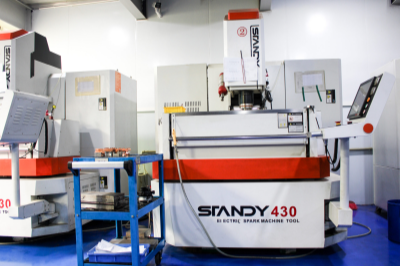 Our 5-axis CNC milling center producing complex aerospace brackets