

CNC Inspection: Enhancing Precision & Quality in Modern Manufacturing
Guangdong Yingtai High Precision Technology Co., Ltd. | Export Director: Miss Zhang
Introduction: Importance of CNC Inspection in Manufacturing
In today's fast-evolving manufacturing landscape, precision and quality control form the backbone of competitive production — nowhere more so than in CNC (Computer Numerical Control) machining. As industries ranging from automotive to aerospace and electronics increasingly demand tighter tolerances and superior surface finishes, a robust CNC inspection process has become indispensable.
CNC inspection acts as a crucial checkpoint, ensuring that every machined component precisely matches the design intent before it moves further down the production line or enters assembly. Given the complexity and variability of CNC-manufactured parts — often involving multi-axis tools and diverse materials — manual inspection falls short not only in consistency but also in speed and repeatability. That’s where advanced inspection techniques, such as coordinate measuring machines (CMM), laser scanners, and machine vision, come into play.
Our industry's experience shows that defects missed early during CNC machining can lead to costly reworks, shipment delays, and brand damage — factors that compound in international B2B trade. The challenge is to balance rigorous inspection protocols with efficient workflows, avoiding bottlenecks without compromising quality.
From procurement perspectives, the growing complexity of CNC parts demands inspection methods that verify both critical dimensions and surface integrity while adapting quickly to new product variants and low-volume, high-mix production environments. It also involves understanding geometric dimensioning and tolerancing (GD&T) principles, material hardness and deformation behaviors, and thermal expansion effects — all factors impacting the accuracy of CNC inspections.
In practice, many manufacturing operations overlook integral inspection design during the early stages, rushing into production with insufficient measurement strategies. As a result, many encounter quality drifts, misalignment issues, or compliance failures with emerging certification requirements such as ISO 9001 or AS9100 aerospace standards. Recognizing these pitfalls, top-tier factories embed inspection planning into their CNC process development — involving tool-path calibration, probe selection, environmental control, and operator training. This holistic approach has proven effective for improving first-pass yields, reducing scrap, and optimizing lead times.
This page details a comprehensive look at CNC inspection, its evolving technologies, operational insights, and practical tips for sourcing reliable inspection services — tailored for purchasing managers, engineers, and technical buyers seeking trusted expertise validated by Guangdong Yingtai High Precision Technology's two decades of manufacturing depth and export experience.
Industry Pain Points and Quality Control Challenges
- Hidden Defects and Dimensional Drift: Many CNC machined parts suffer from subtle dimensional variations caused by thermal expansion during long cycles or tool wear, which can go unnoticed without proper in-process inspection.
- Manual vs. Automated Inspection Gaps: Relying on manual measurement tools such as calipers or micrometers introduces human error and inconsistency, especially with complex geometries or high-volume production runs.
- Inspection Cycle Time Impact: Lengthy inspection procedures slow down production throughput. Balancing thoroughness and speed is a constant operational tension, often creating bottlenecks.
- GD&T Interpretation Inconsistencies: Misunderstandings in geometric tolerancing can lead to incorrect acceptance/rejection decisions, affecting supplier relationships and warranty claims.
- Integration with Supply Chain: Lack of transparent inspection data shared with procurement and quality teams reduces confidence, increasing disputes over component compliance or triggering double inspections.
- Limited Onsite Expertise: Smaller shops or OEMs sometimes lack dedicated metrology specialists, relying on external QC services whose turnaround times and remit can be limited.
- Cost Pressures: Comprehensive inspection solutions incur upfront investments in equipment and trained personnel, which can discourage small- or medium-sized manufacturers from adopting robust inspection protocols.
Operational note: We’ve observed that many procurement managers underestimate the downstream cost impact of inadequate CNC inspection, including late-stage defects, warranty returns, and customer dissatisfaction. Early collaboration with your inspection partner to align tolerance priorities and critical features pays dividends.
Technical Overview of CNC Inspection Methods
CNC inspection spans a variety of technologies — each suited for different precision demands, geometries, and production contexts. Here are the main methods we deploy and recommend for accurate, repeatable measurement:
- Coordinate Measuring Machines (CMM): Leveraging tactile probes, CMMs measure part dimensions with micrometer accuracy. Programmable CMMs automate measuring complex features, capturing 3D point clouds and comparing results directly with CAD models.
- Laser Scanning & Optical Profilometry: Non-contact scanning captures surface topology and dimensions rapidly, ideal for delicate or reflective materials. Laser triangulation and blue light scanning enable high density, high-resolution data collection.
- Machine Vision Systems: Integrated cameras coupled with machine learning algorithms detect defects and measure features on the production line in real time, supporting zero-defect manufacturing initiatives.
- In-Process Probe Integration: Many advanced CNC machining centers now support probing cycles during machining, allowing immediate correction of tool offsets or setup errors, reducing scrap rates.
- First Article Inspection (FAI) and Statistical Process Control (SPC): Systematic verification of initial production lots ensures compliance and capability. SPC ties measurement data into process controls, identifying trends before they become problems.
Our factory employs CMMs from Renishaw and Hexagon, laser scanners for complex geometry verifications, and machine vision units connected to cloud-based QA dashboards for multi-location remote management — all aligning with ISO 9001:2015 certification criteria.
| Technique | Accuracy | Speed | Best Use Case | Limitations |
|---|---|---|---|---|
| CMM (Tactile) | ±1-2 µm | Moderate | Critical dimension validation | Slower, contact may deform soft parts |
| Laser Scanning | ±5-10 µm | Fast | Surface topology, complex curves | Reflective or transparent surfaces can interfere |
| Machine Vision | ±10-20 µm | Very Fast | Inline defect detection, pattern recognition | Limited depth measurement, requires good lighting |
cnc quality inspection cnc fixture cnc quality control services
Our CNC Inspection Services & Advantages
Backed by over 20 years of hands-on experience and a dedicated team of 80+ quality engineers, Guangdong Yingtai High Precision Technology delivers CNC inspection services engineered for demanding international standards. What sets us apart?
- End-to-End Inspection Workflow: From tooling setup verification through final product validation, our quality assurance system integrates in-process checks and final CMM reports aligned with your technical drawings and GD&T standards.
- Customizable Inspection Plans: We tailor inspection scopes based on critical feature analysis, risk assessment, and downstream assembly requirements — avoiding unnecessary overhead while safeguarding quality.
- Advanced Metrology Equipment: Featuring Renishaw and Hexagon CMMs, 3D laser scanners, and proprietary vision algorithms, our tools guarantee precise readings even for multi-axis machined components and small intricate details.
- Real-Time Data Reporting: Digital platforms allow clients to check inspection results remotely, access trend dashboards, and receive non-conformance alerts quickly — supporting agile decision-making and supply chain transparency.
- ISO 9001 & IATF 16949 Compliance: Our quality processes adhere to internationally recognized certifications, a must-have for medical, automotive, and aerospace supply chains.
- Experienced Technical Support: Our export director and engineering advisors remain available for troubleshooting, dimensional analysis consultation, and continuous improvement projects, making sure you get actionable insights beyond raw data.
- OEM/ODM Flexibility: Whether you need inspection embedded in your OEM manufacturing contracts or ODM project material characterization support, we provide scalable solutions.
- Practical Production Insights: We advise on fixture design, tooling wear monitoring, and environmental controls to enhance inspection consistency and minimize measurement uncertainty in real factory environments.
Focus on quality detection at the source — consistent CNC inspection can reduce rework rates and delayed shipments, ultimately improving your bottom line without inflating costs.
Applications Across Industries
CNC inspection is not “one size fits all.” Different industries impose unique requirements on inspection rigor and techniques:
- Automotive & New Energy Vehicles: High-volume production demands rapid in-line inspection with stringent adherence to dimensional standards, surface roughness, and form tolerances for engine components, seals, and electronic enclosures.
- Consumer Electronics & Smart Wearables: Miniaturized, precise components require non-contact inspection methods to verify complex micro-features and critical key dimensions without damage.
- Aerospace & Defense: Safety-critical parts necessitate exhaustive first article inspection (FAI), traceability, and validation against strict AS9100 specifications with documented evidence.
- Industrial Equipment: Robust parts such as hydraulic components or pump housings benefit from CMM surface mapping paired with hardness testing and material certification integration.
- Medical Device Manufacturing: Cleanroom-compatible inspection setups and sterilization-tolerant fixtures support quality verification while maintaining regulatory compliance.
Procurement Guide: Selecting Your CNC Inspection Supplier
For purchasing managers and procurement specialists, evaluating CNC inspection providers involves more than price comparison. Consider the following critical factors:
- Certification & Compliance: Verify that the provider complies with ISO 9001 and, for automotive/aerospace sectors, IATF 16949 or AS9100. Request audit reports to confirm.
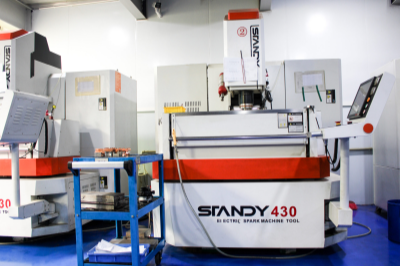
- Metrology Equipment Portfolio: Confirm the variety and precision of measurement instruments used—ensure suitability for your part’s material and geometry.
- Technical Expertise: Ask about training of quality engineers in GD&T principles, interpretation skills, and use of CAD comparison software.
- Turnaround Time & Flexibility: Lead times for inspection services should align with your production schedules. Check capacity for rush orders or scaled volumes.
- Data Transparency: Insist on electronic delivery of inspection reports with detailed feature analysis, CAD overlays, and non-conformance evidence.
- Supplier Communication: Transparent, proactive communication risk-reduces surprises and facilitates rapid resolution of quality issues.
- Multi-Service Capabilities: Preference for providers able to integrate inspection with other quality control measures such as hardness testing or material certification expedites supply chain handling.
A well-selected CNC inspection partner is an extension of your quality department — forging this relationship early can prevent costly production surprises downstream.
Logistics, Shipping, and Factory Capabilities
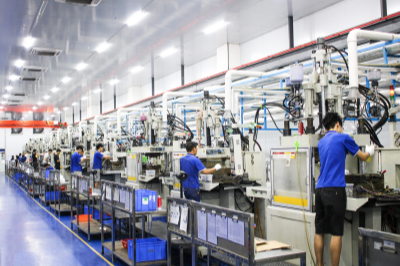
Located in Dongguan's Changan Town, Guangdong Yingtai High Precision Technology Co., Ltd. operates a sprawling 35,000m² industrial park equipped with:
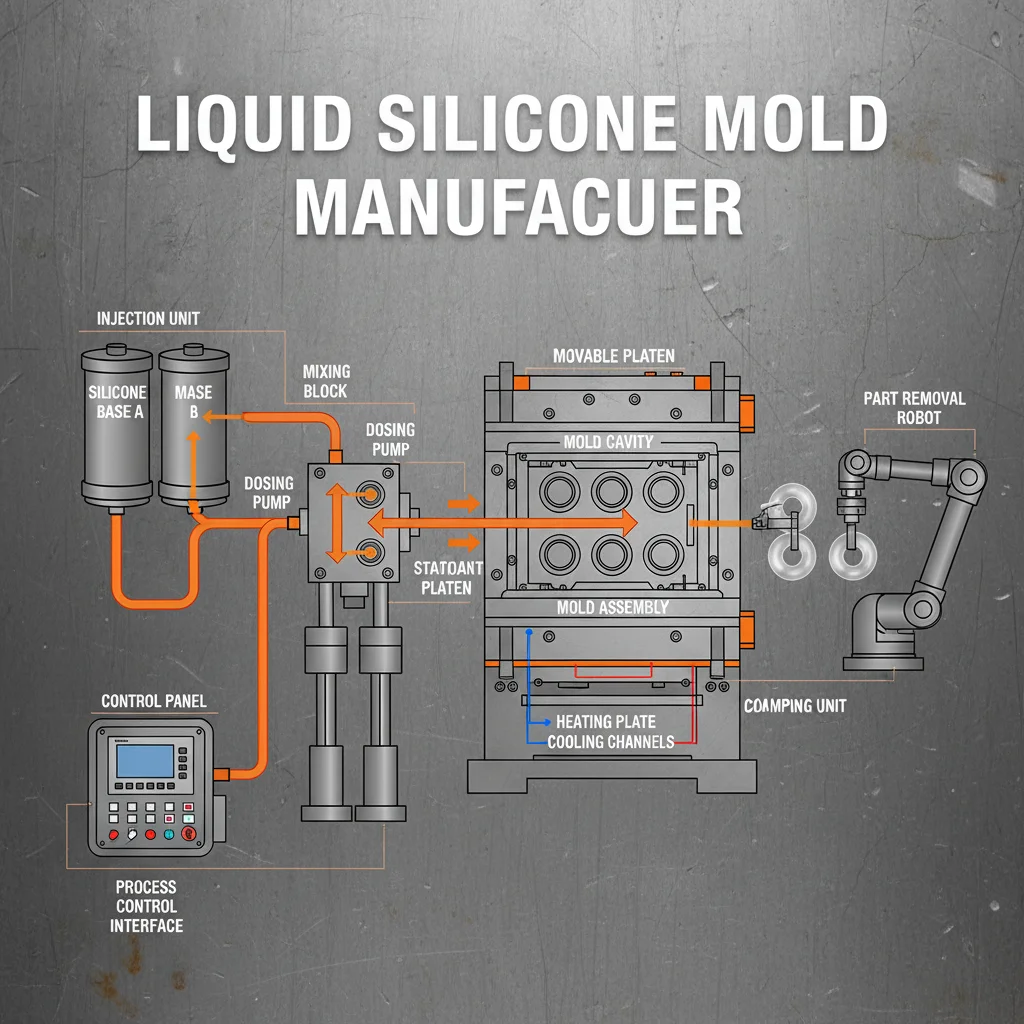
- 55 liquid silicone molding machines
- 80 automatic plastic injection molding machines
- 20 solid silicone hydraulic presses
- Over 30 precision mold processing units
- Advanced testing instruments exceeding industry benchmarks
Handling OEM and ODM projects, the company supports complete vertical integration—from mold development to finished product inspection. This structural advantage minimizes supplier fragmentation risk and optimizes lead times (typically 30-45 days depending on complexity).
Shipping logistics optimize container loading and material traceability. With direct export experience to the USA and other English-speaking markets, Yingtai understands customs exigencies, documentation requirements, and container consolidation strategies.
Frequently Asked Questions (FAQs)
- Q1: What industries benefit most from CNC inspection services?
- Automotive, aerospace, medical device manufacturing, consumer electronics, and industrial equipment sectors especially depend on CNC inspection to maintain product integrity and compliance.
- Q2: How does your factory ensure measurement accuracy?
- We calibrate our metrology equipment regularly against international standards, maintain controlled environmental conditions, and employ trained metrologists for complex set-ups ensuring repeatable accuracy within ±1-2 microns.
- Q3: Can inspection data be integrated into my ERP or quality management system?
- Yes, we provide digital inspection reports in multiple formats compatible with popular ERP and QMS platforms. Custom data integration services are available upon request.
- Q4: What is the typical turnaround time for CNC inspection?
- Turnaround depends on part complexity and quantity, but we generally provide results within 48-72 hours for standard batches; expedited services are negotiable.
- Q5: Are you equipped for low-volume or prototype inspection?
- Absolutely. Our flexible inspection processes accommodate prototypes and short production runs, supporting rapid development cycles.
Customer Testimonials

John Fraser, Procurement Manager, Michigan Automotive Co.
"Yingtai's inspection accuracy and proactive communication saved us several weeks by catching subtle dimensional deviations early. Their CMM reports are detailed and trustworthy, an essential part of our supplier quality management."

Emily Rodriguez, Quality Engineer, San Francisco Tech Electronics
"Their laser scanning capabilities allow us to check complex micro parts non-destructively, easing our QC process and speeding up the release cycles. Helped us achieve stricter tolerance requirements."

Mark Stevens, Operations Manager, Texas Aerospace Parts
"Their team’s understanding of GD&T is excellent. We had significant issues with inconsistent interpretation at multiple vendors, but Yingtai's inspection reports gave us peace of mind and consistent adjudication of tolerances."
Ready to Elevate Your CNC Inspection?
Talk with our export director to discuss your requirements — customized solutions with full EEAT-backed expertise.
Request Product SpecsOr call +86 17722437688 (Miss Zhang) for direct support.