For manufacturers and procurement specialists navigating the intricate world of CNC machining, understanding machine accuracy is pivotal. Accuracy drives quality, impacts costs, and shapes delivery schedules in high-stakes industrial production. Across high-volume manufacturing, importers
For manufacturers and procurement specialists navigating the intricate world of CNC machining, understanding machine accuracy is pivotal. Accuracy drives quality, impacts costs, and shapes delivery schedules in high-stakes industrial production.
Industry Pain Points Surrounding CNC Machine Accuracy
Across high-volume manufacturing, importers and operations managers alike grapple with dimensional variability and tolerance drift from CNC machines. In mass production, minor deviations ripple into costly reworks or scrapped parts. Precision electronic enclosures, aerospace components, and medical device casings demand stringent adherence to design geometry that only tight CNC machine accuracy can ensure.
Practical Challenge: Temperature fluctuations in machine environments lead to thermal expansion affecting bed alignment and spindle stability. Such subtle shifts reduce repeatability and compromise overall dimensional integrity over long production runs.
Procurement teams risk acquiring equipment without a detailed understanding of effective accuracy—the true, operational performance under working load and wear conditions. Overly broad specs can mislead decision-makers, resulting in expensive upgrades or unanticipated downtime.
Varying linear and angular position errors causing compounded defect rates
Insufficient calibration intervals leading to misalignment over time
Machine spindle runout and tool holder vibrations degrading surface finishes
Integration difficulties with OEM tooling and multi-axis controls
These factors combine to affect bottom-line efficiency and customer satisfaction, especially in markets requiring ISO 9001 and CE-certified components. Understanding these pain points early supports more strategic procurement and quality control frameworks.
Technical Deep Dive: What Determines CNC Machine Accuracy?
CNC machine accuracy is defined as the degree to which a machine's motion and tooling position align with programmed commands. Commonly measured in microns (µm), accuracy examines positional deviation, repeatability, and contouring precision. Several mechanical and digital factors play critical roles:
Mechanical Factors
Machine frame stability: Heavy-duty cast iron or steel frames reduce vibration
Lead screw pitch and backlash: High-precision ball screws limit positioning errors
Guideways and linear rails: Quality materials like hardened steel offer smooth, consistent motion
Materials machined influence achievable tolerance. Metals like aluminum, stainless steel, and titanium react differently under cut forces and heat. Soft plastics and composites demand distinct servo tuning and spindle speeds to maintain dimensional fidelity. For example, polyethylene yarn components require careful spindle speed control to minimize frictional heating.
Despite advances, no CNC machine can guarantee zero deviation. Manufacturers must understand acceptable tolerances for their operations, typically ranging between ±2µm for ultra-precision work up to ±30µm for standard industrial machining.
CNC accuracy is mission-critical across sectors requiring precision manufacturing:
Aerospace components: Tight dimensional control ensures aerodynamic efficiency and safety compliance per AS9100 standards.
Medical device machining: High biocompatibility materials like LSR and medical-grade polymers pose unique molding and machining challenges, demanding sub-10µm repeatability.
Consumer electronics: Enclosure parts made of plastics or composites rely on consistent CNC tolerance to fit and function properly in assembly lines.
Automotive precision seals: Complex profiles produced with tight gauge control for OEM and aftermarket parts.
Tool & die manufacturing: Requires exact mold cavities where deviations create costly product rejects.
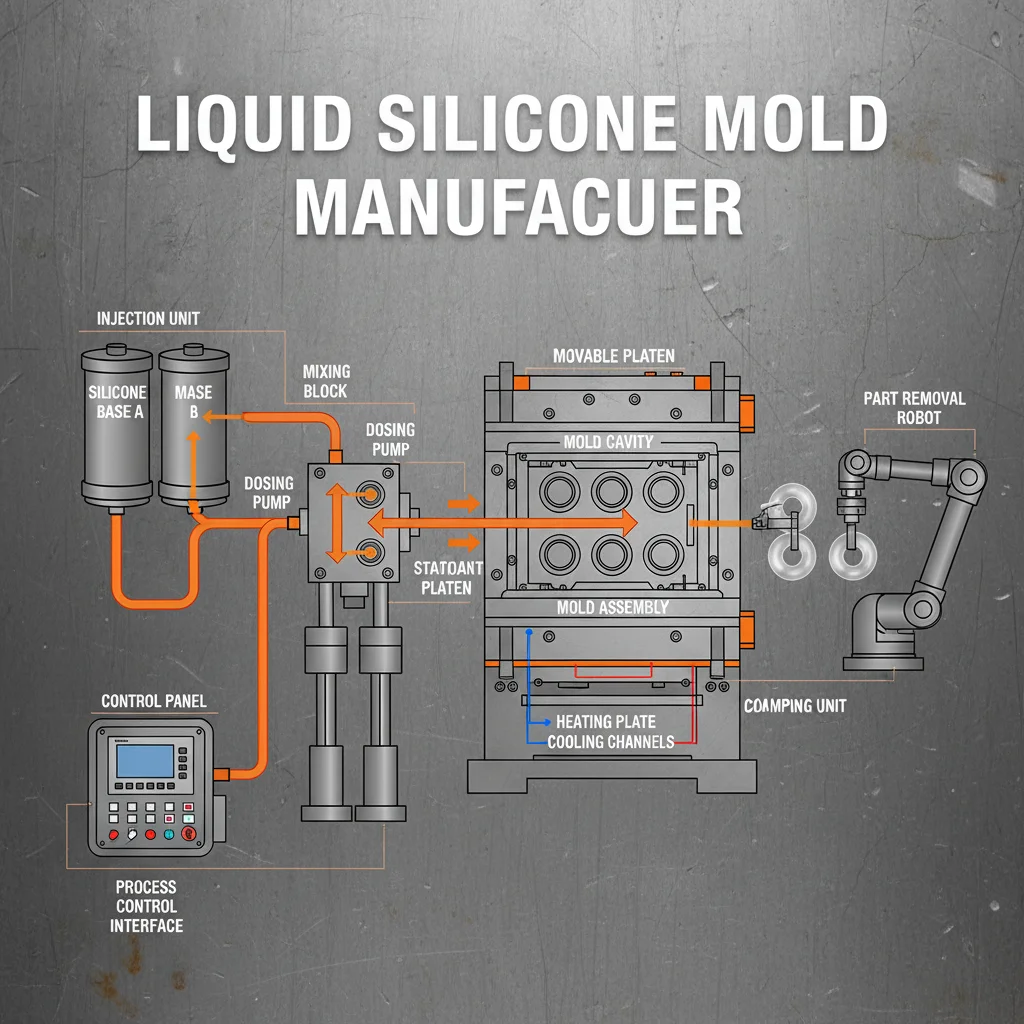
When machining liquid silicone rubber (LSR) molds, such as those Yingtai specializes in, precision machining directly impacts final product quality. As detailed by industry reports
【Grand View Research - LSR Market 2030】, precise injection mold tooling supports biocompatible components with thermal and chemical resistance critical for medical and automotive applications.
Operational Insight: For procurement directors, it’s vital to confirm that factory CNC machines can maintain the tolerances required for overmolding silicone with materials like ABS or metal substrates in multi-shot processes. Subtle misalignments cause defects affecting seal integrity and long-term durability.
Procurement & Supplier Evaluation Tips for CNC Machine Accuracy
Selecting the right CNC machining supplier goes beyond reviewing cut sheets or marketing claims. Procurement managers must engage in technical validation and factory due diligence to mitigate risk.
Evaluate machine types: Are high-precision 5-axis or multi-axis CNCs used? This drastically affects complex part quality.
Confirm material handling expertise for composites, metals, and hybrid injection molded assemblies.
Assess continuous improvement: Are suppliers investing in newer controls, error compensation software, or AI-enabled inspection?
Visit production facilities or request virtual audits centered on precision capabilities.
Understand lead times realistically tied to mold complexity, machine throughput, and quality assurance.
Warning: Beware of inaccurate claims like “micron-level accuracy” without audit backing or reference to industry standards such as ISO 230-2 or ASME B5.54.
Trustworthy partners like Guangdong Yingtai High Precision Technology Co., Ltd leverage 55 liquid silicone molding machines alongside CNC machining centers to deliver full turnkey precision manufacturing — a strength that simplifies procurement complexity.
For detailed specs or to discuss your specific project, talk with our engineer to explore OEM manufacturing solutions with factory-direct pricing.
Key CNC Machine Precision Specifications
Specification
Typical Values
Industry Benchmark
Positioning Accuracy (µm)
±5 - ±15
±2 - ±10 for precision machining
Repeatability (µm)
±2 - ±8
±1 - ±5
Spindle Runout (µm)
≤ 3
≤ 1.5 for high precision
Thermal Drift Compensation
Software-based periodic correction
Real-time adaptive feedback
Calibration Interval
Monthly to quarterly
Depends on usage intensity
Frequently Asked Questions
Q1: What is the difference between CNC machine accuracy and precision?
Accuracy refers to how close a machine’s output is to the true dimension or programmed target. Precision (or repeatability) is the ability to consistently produce the same output under identical conditions. CNC machines can be precise but not accurate if they consistently reproduce the wrong dimensions.
Q2: How often should I recalibrate CNC machines to maintain accuracy?
Recommended intervals vary by machine usage and environment. Standard practice ranges from monthly to quarterly calibration. High-volume or critical tolerance operations may require more frequent verification using precise instruments such as laser interferometers.
Q3: Are liquid silicone rubber (LSR) molds handled differently in CNC machining?
Yes, machining LSR molds demands exceptional surface smoothness and dimensional accuracy due to rubber’s flow and curing behaviors during injection molding. Specialized tooling and tighter positional control reduce defects in final silicone components.
Q4: What industry certifications should I expect from a CNC machining supplier?
Key certifications include ISO 9001 Quality Management, CE marking for European standards compliance, and AS9100 for aerospace. For medical component manufacturing, adherence to FDA or MDR standards is essential.
Customer Reviews
Michael Jacobs, Procurement Manager, Precision Auto Parts Inc.
"Switching to Yingtai’s CNC machining services improved our stampings’ dimensional consistency noticeably. The detailed accuracy reports and calibration transparency gave us confidence. Our line efficiency increased thanks to fewer rejected batches and less assembly rework."
Get in Touch
If you have any camping barbeque equipment inquiry, please feel free to contact us.



 Michael Jacobs, Procurement Manager, Precision Auto Parts Inc.