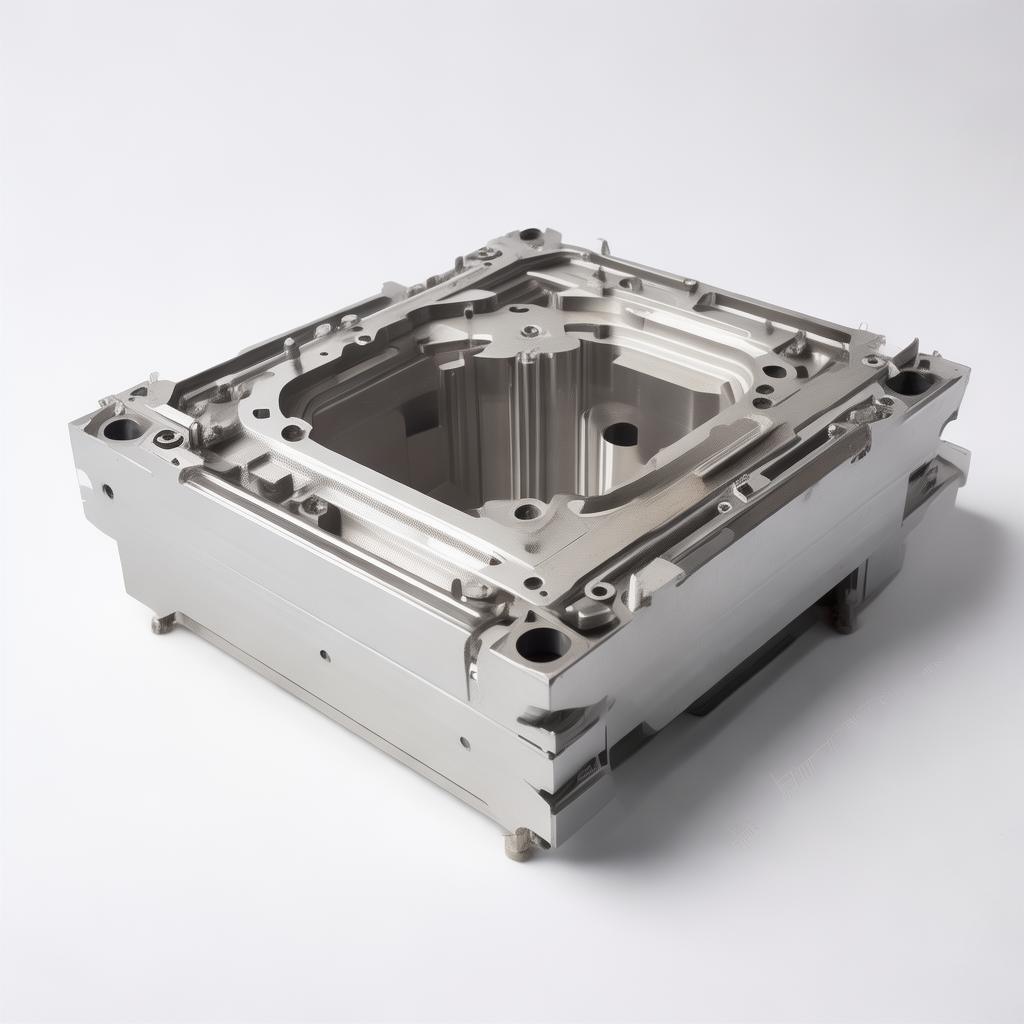
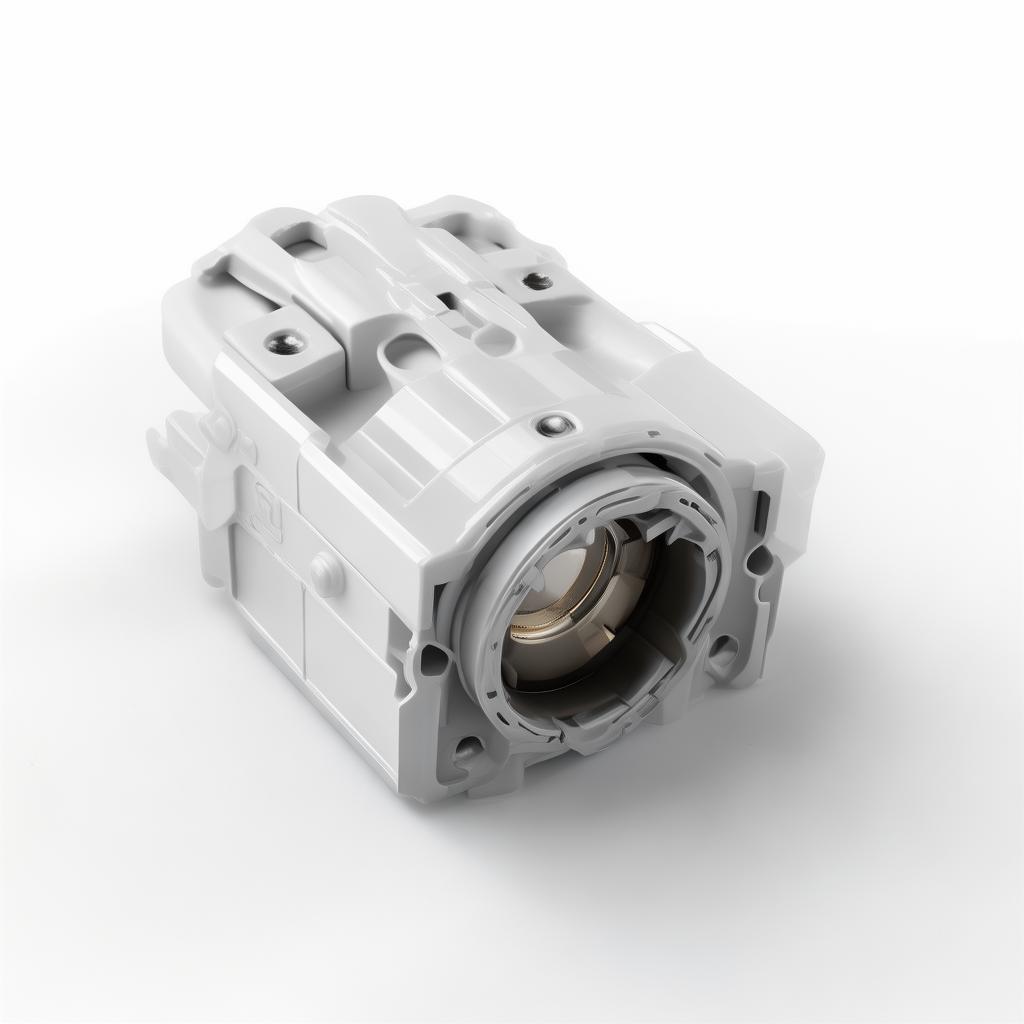
Guangdong Yingtai High Precision Technology Co., Ltd. | Export Director: Miss Zhang In today’s global manufacturing landscape, CNC machining on demand has emerged as a vital solution for operations juggling precision, lead time, and
Product Details
CNC Machining on Demand: Precision Engineering Tailored for Your Supply Chain
Guangdong Yingtai High Precision Technology Co., Ltd. | Export Director: Miss Zhang
Understanding CNC Machining On Demand
In today’s global manufacturing landscape, CNC machining on demand has emerged as a vital solution for operations juggling precision, lead time, and cost efficiency. The essence of on-demand CNC machining lies in its ability to deliver custom, highly accurate components precisely when needed — without the burden of large inventory or long production cycles.
Drawing from decades of industrial engineering experience, companies like Guangdong Yingtai High Precision Technology specialize in flexible precision machining tailored to varied sectors. Our extensive expertise goes beyond simple metal cutting. It integrates tight tolerance control, rapid prototyping, and streamlined order-to-delivery workflows aligned with international B2B procurement demands.
Unlike traditional batch manufacturing, which traps capital in inventory and often misses tight launch windows, on-demand machining allows you to manage supply chain risk pragmatically. Whether dealing with aerospace-grade aluminum alloys, medical-grade stainless steel, or specialty plastics, our CNC lines adapt — ensuring minimal scrap and maximum material utilization.
We appreciate that for procurement and operations teams, clarity on certifications, process capability, and material traceability is crucial. Our capabilities comply fully with ISO 9001 and AS9100 standards and include rigorous inspection regimes to measure surface finishes, concentricity, and hardness profiles. Our production park in Dongguan spans over 35,000 square meters and is equipped to deliver batch sizes from single prototypes to mass production with equal proficiency.
This turnkey model suits industries where sourcing agility, quality assurance, and transparency converge — automotive components, electronic housing, industrial tooling, and aerospace parts are typical domains capitalizing on CNC machining on demand.
Broadly, the shift towards on-demand machining reflects a deeper market move to shorten procurement cycles while enhancing supplier-customer collaboration across borders. The ongoing integration with SaaS platforms for order management and digital twin technology to simulate machining cuts illustrates how CNC on demand is becoming a keystone for modern manufacturing ecosystems.
Operational insight: Long lead times and unpredictable tooling costs remain the Achilles heel for many buyers. It pays to partner with suppliers that invest in flexible tooling systems and maintain a robust machine park, allowing for quick setup changes and stable pricing.
Industry Pain Points and Supply Chain Bottlenecks
In procurement, the ever-present challenge is balancing cost, quality, and delivery. However, in CNC machining, several hurdles consistently impact project success:
Unpredictable lead times: Overseas suppliers can impose delays due to tooling changeovers or machine availability.
Material inconsistencies: Using unverified alloys or plastics may lead to premature part failure or non-conformance with specifications.
Lack of supplier transparency: Poor communication around process capability or inspection steps leads to repeat quality issues.
Cost creep due to secondary operations: Without integrated finishing or assembly, costs can spiral unexpectedly.
Inventory risk: Large safety stocks to buffer uncertainty increase storage costs and can lead to obsolescence.
For cross-border buyers, regulatory compliance comes into sharper focus. Components requiring tight certification adherence demand a partner with international export experience and full traceability — including material certificates like ROHS, CE, or aerospace-approved documentation.
Operationally, errors in dimensional interpretation during CAD-to-CAM translation create rework and scrap. Such avoidable delays are often the result of insufficient engineering collaboration during the quoting and prototyping phases.
Note: Be wary of suppliers offering only broad lead times without granular schedule visibility. Modern CNC shops use digital production scheduling; seek those vendors willing to share realtime updates and early quality data to preempt issues.
Operational Advantages of On-Demand CNC
Switching to on-demand CNC machining opens multiple operational and financial benefits:
Reduced inventory costs: Order parts as needed, freeing capital for other initiatives.
Shorter development cycles: Rapid prototyping backed by state-of-the-art CNC centers and advanced CAM programming.
Flexibility in volume: From single-piece pilot runs to scale production runs without compromising quality.
Multi-material expertise: Ability to machine a broad array of metals (aluminum 6061, stainless steel 304/316, titanium alloys) and engineering plastics (PEEK, Nylon, PTFE).
Traceability & compliance: Full chain-of-custody documentation and inspection records ready for audit.
Apart from technical strengths, suppliers like Yingtai offer OEM/ODM manufacturing services incorporating mold development, customized batching, and assembly solutions. Our vertically integrated model means fewer handoffs, straight-through processing, and robust quality controls.
Also, our factory’s strategic location in Dongguan allows optimized container loading and logistics, reducing shipping complications and enhancing delivery predictability — a crucial element in cross-border procurement.
However, advantages don’t come without acknowledging constraints. Machining exotic alloys or ultra-precise tolerances (±0.001 mm) require upfront process validation and possibly increased cycle time to ensure defect-free outputs. Successful partnerships rely on transparent technical dialogues upfront.
Technical Specifications & Material Insights
Understanding technical details eases procurement decisions. Here's a snapshot of our CNC machining capabilities aligned with the typical specs buyers expect:
Material Insight: Aluminum 6061-T6 remains a CNC favorite for excellent machinability and strength-to-weight balance, widely used in automotive and aerospace. For harsh environments, stainless steel grades 316 provide superior corrosion resistance. For applications demanding lightweight durability, specialty plastics such as PEEK offer chemical resistance combined with machinability, facilitating high-performance electronic housings and medical devices.
Our factory achieves consistent quality through in-process inspection methods including coordinate measuring machines (CMM), optical comparators, and surface profilometers. This minimizes scrap rates and protects against out-of-tolerance issues downstream.
Key Industry Applications
The versatility of CNC machining on demand finds use across sectors requiring precision components at varying volumes:
For these sectors, on-demand machining serves a dual purpose: rapidly addressing evolving design requirements during development phases, and steadily supporting aftermarket supply with consistent, certifiable parts.
Because production runs can vary dramatically from prototypes to seasonal demand spikes, firms benefit from a supplier with a modular approach supporting both low and mid-volume batches while maintaining batch-to-batch consistency.
Buyer's Guide & Supplier Evaluation
Choosing a CNC machining partner for on-demand work requires a clear-eyed approach to risk reduction and ROI.
Supplier Capability Assessment: Verify machinery modernity, ISO/AS certifications, and quality control processes.
Material Sourcing & Traceability: Confirm certificate validity for raw materials and opportunities for raw-material pre-approval for critical components.
Communication Responsiveness: Ask how production status and non-conformances are reported in real time.
Cost Structure Transparency: Engage in detailed RFQs to understand tooling charges, unit price scaling, and finishing costs separately.
Turnaround Time Accountability: Seek contractual clarity on lead times, penalties, and expedited order options.
Post-Order Support: Warranty policies, rework agreements, and technical engineering support availability often make a difference.
OEM/ODM Integration: For product development phases, gauge the partner’s capability in prototype tooling and iterative design assistance.
Procurement Insight: Avoid overlooking logistical complexities, such as container loading efficiencies and customs clearance experience. A 35,000m² facility like ours not only fabricates but also optimizes regional export logistics, including LCL options, freight consolidation, and customs documentation, critical to prevent unexpected delays.
Frequently Asked Questions (FAQs)
What is the typical lead time for CNC machining on demand?
Lead times vary based on complexity and volume. For simple parts, prototyping can be done within 7-10 working days, while production runs generally take 15-30 days, depending on scheduling and tooling.
Can you handle complex geometries and tight tolerances?
Yes. Our CNC centers support 3, 4, and 5-axis machining with tolerances as tight as ±0.005 mm for select materials. However, tolerances depend on the combination of material and feature.
Which materials are most commonly machined on demand?
We predominantly machine aluminum alloys (e.g., 6061, 7075), stainless steels (304, 316), titanium, and engineering plastics such as PEEK and Nylon. Custom materials can be discussed per project.
How do you ensure quality and consistency?
Our quality management system follows ISO 9001 and AS9100 standards. We perform rigorous in-process inspection using CMMs, optical comparators, and surface roughness testers with full documentation provided.
Do you provide certification and compliance documentation?
Yes, material certificates, inspection reports, and product certifications (CE, RoHS) are issued as part of shipment documentation lines.
How does the pricing model work?
Pricing is typically a combination of tooling cost amortization plus unit machining cost. We work closely with clients to optimize designs for cost and manufacturability.
Customer Reviews & Real-World Feedback
John Simmons, Procurement Manager at AeroTech Solutions (USA)
"Yingtai's on-demand CNC machining saved us months on lead time for a critical aerospace bracket. Their stringent quality checks aligned perfectly with our internal standards and export compliance. Communication throughout was excellent."
Get in Touch
If you have any camping barbeque equipment inquiry, please feel free to contact us.