By Michael Chen , Export Director CNC machining technology stands at the forefront of precision manufacturing across countless industries. At its core, Computer Numerical Control (CNC) machining automates cutting, drilling, milling, and finishing processes
Product Details
CNC Machining Technology: Precision and Efficiency for Modern Manufacturing
By Michael Chen, Export Director
Introduction to CNC Machining Technology
CNC machining technology stands at the forefront of precision manufacturing across countless industries. At its core, Computer Numerical Control (CNC) machining automates cutting, drilling, milling, and finishing processes by driven commands from programmable software. This enables unparalleled accuracy, repeatability, and adaptability, serving complex engineering demands and high-volume production alike.
Over the past decades, CNC machining has evolved from manual control to advanced multi-axis systems featuring dynamic toolpath optimization and real-time process monitoring. The incorporation of CAD/CAM software has driven majority adoption worldwide, as engineers can translate designs directly into code controlling the machine with micron-level precision.
In practical terms, CNC machines can work a variety of materials — from metals like aluminum, stainless steel, titanium alloys, to plastics such as PEEK and ABS. This versatility is significant for sectors ranging from aerospace components requiring tight tolerances, automotive assembly fixtures, to custom medical devices and consumer electronics housings.
There's a strong operational advantage embedded in CNC machining workflows, too. Shorter ramp-up times, reduced human error, and flexibility to prototype and produce complex geometries make CNC well-suited for today’s lean manufacturing models. Notably, the ability to rapidly switch programs enables just-in-time manufacturing with minimal tooling delays or inventory overhead.
Guangdong Yingtai High Precision Technology Co., Ltd., located in Dongguan, leverages CNC machining extensively, backed by a modern 35,000 m2 facility equipped with over 30 precision machining units. This industrial backbone supports clients in new energy vehicles, consumer electronics, and industrial equipment by guaranteeing the manufacturing consistency needed for OEM/ODM supply chains. Our export experience ensures seamless integration with global logistics and compliance requirements.
Today, decisions around CNC machining technology go beyond equipment specs. Buyers weigh material characteristics (such as machinability, thermal expansion, machinable plastics vs metals), surface finish requirements, dimensional tolerances, and downstream process impacts. Integrating CNC machining with other processes like liquid silicone injection molding or overmolding expands product capability, especially in hybrid component manufacturing.
Our mission here is to provide you, the procurement decision-maker or technical engineer, with pragmatic insights—supported by industry data and real-world operational notes—to optimize your CNC machining sourcing strategy.
Common Industry Pain Points in CNC Machining
Inconsistent part tolerances due to machine calibration drift or operator error. Without rigorous maintenance and calibration schedules, sub-micron specifications can quickly deteriorate.
Material selection challenges — some alloys or engineered plastics exhibit hard-to-machine properties requiring specialized tooling and process parameters.
Long lead times for complex jobs especially when high-precision multi-axis machining is combined with secondary finishing or inspection phases.
Balancing cost and quality in prototype-to-production transitions often confuses sourcing teams—low-cost suppliers may cut corners on CNC program verification or tooling investment.
Logistics complexity for international shipments includes packaging protection for delicate, finished parts and extended customs clearance times, risking project delays.
Communication gaps between engineers, buyers, and overseas factories that can lead to incorrect machining parameters or misinterpreted dimensional drawings.
A note from our engineering team: “In nearly 20 years, we've seen many projects stall at the prototype stage because of insufficient early CNC process planning. Engaging CNC expertise at the design phase reduces rework significantly.”
Technical Deep Dive into CNC Machining
CNC machines operate by executing preprogrammed instructions, usually in G-code, to control the movement of cutting tools. Common types include 3-axis, 4-axis, and 5-axis milling machines, plus CNC lathes and turning centers. The axis count defines the degrees of freedom and thus complexity of achievable geometries.
Material compatibility is crucial. Metals like 6061 aluminum offer excellent machinability and surface finish with high feed rates, whereas materials like titanium require slower speeds, specialized coolant systems, and diamond-coated tooling to avoid rapid tool degradation.
Here’s a comparative table summarizing essential machining parameters across typical materials:
Varying spindle speeds, feed rates, and coolant application help control heat generation and chip evacuation, essential for maintaining tool life and repeatability. Multi-axis CNC centers further enhance production by machining multiple faces in a single setup, reducing handling errors and overall cycle time.
Integration of CNC systems with in-line inspection (CMM scanning, laser measurement) is gaining traction for high-precision parts, particularly in aerospace and medical device sectors. This closed-loop feedback prevents out-of-spec manufacturing runs before costly secondary operations or assembly.
Applications & Use Cases
CNC machining’s versatility extends across multiple sectors. Here's a brief rundown:
Aerospace & Defense: precision structural components, turbine blades, and sensor mounts where tight tolerances and complex 3D contours are necessary.
Medical Devices: surgical instruments, implants, and housings requiring biocompatible materials and certified cleanliness standards.
Consumer Electronics: enclosures, heat sinks, and chassis requiring high surface quality combined with functional durability.
Industrial Equipment: gearboxes, pumps, and valves needing robust machining of stainless steel or alloys.
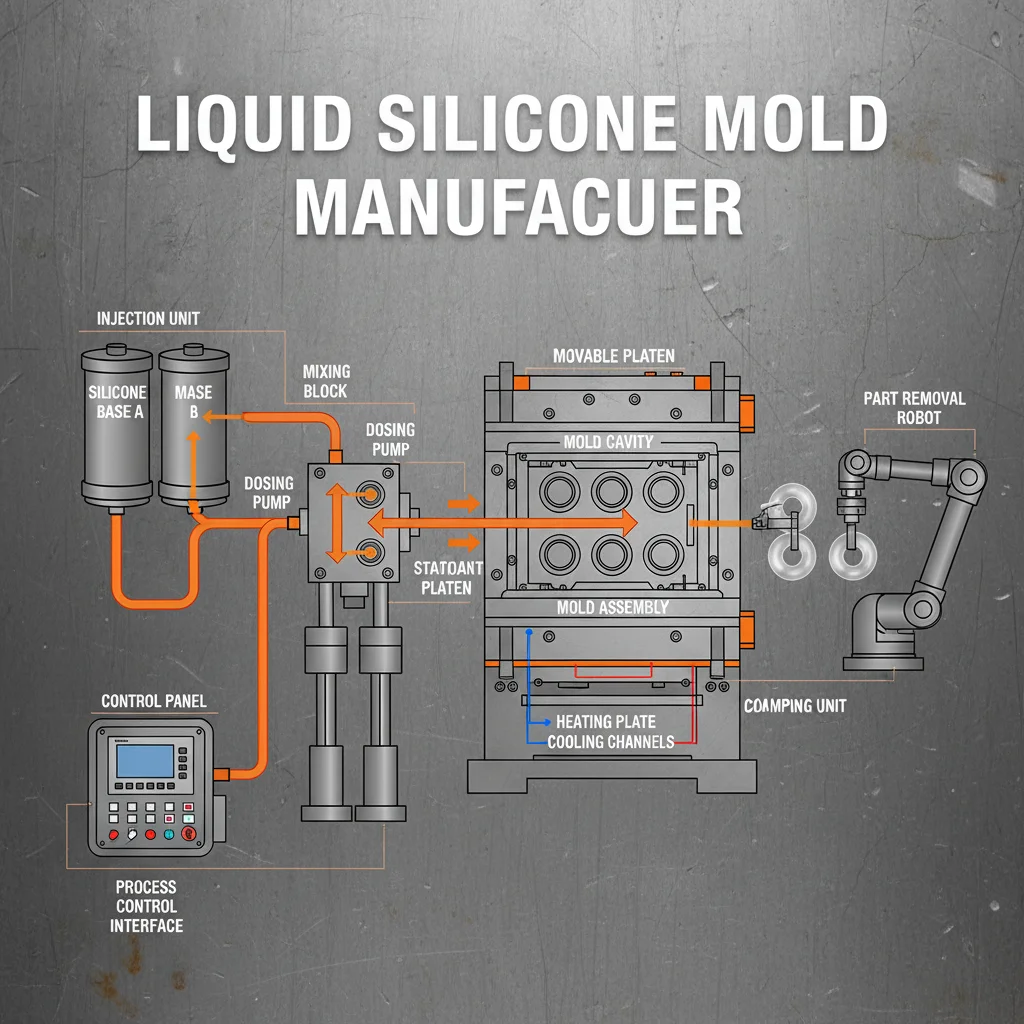
A noteworthy example from Yingtai’s portfolio includes crafting precision liquid silicone mold inserts with CNC milling, specially designed for tight-tolerance overmolding applications. This synergy of CNC machining and liquid silicone technology enables high-volume production of durable electronic seals used in harsh outdoor environments.
Procurement Guidance & Risk Mitigation
Selecting the right CNC machining supplier requires a multi-layered approach. Here are practical tips to reduce risks and ensure capacity matches your project demands:
Supplier Capability Verification: Confirm the supplier’s machine tool types, axis capabilities, and maintenance history. Ask for ISO 9001 or aerospace AS9100 certifications to validate quality management.
Material Traceability: Demand material certificates (e.g., heat treatment reports) for critical alloys or specialty plastics. Traceability aids in regulatory compliance, especially in medical or defense industries.
Prototype to Production Scalability: Evaluate tooling and program flexibility. Avoid suppliers that rely solely on manual adjustments — CNC programs should be documented and version-controlled.
Communication Transparency: Use precise engineering change orders (ECOs), preferably with 3D CAD markups or PMI annotations. Timely supplier communications prevent misinterpretations.
Packaging & Logistics: For international shipments, ensure suppliers have experience with export packaging for sensitive machined parts (anti-corrosion coatings, foam lining) and can handle container loading efficiently.
NOTE: Overlooking clear CNC program exchange protocols can cause costly rework. Insist on digital file formats (e.g., STEP, IGES) and program backups, and if possible, schedule a factory visit or video audit before order confirmation.
Buyer FAQs on CNC Machining Technology
Q1: How are CNC machining tolerances specified?
Tolerances depend on part function and machining equipment. Typical CNC precision ranges from ±0.01 mm for general parts to ±0.002 mm for aerospace components. OEM specs often reference ISO 2768 standards.
Q2: Can CNC machines handle multi-material parts?
Direct multi-material machining is limited; however, hybrid approaches combine CNC-machined metal substrates with overmolded liquid silicone or plastic inserts for complex assemblies.
Q3: What lead times are typical for CNC machined parts?
Prototyping may take 1-3 weeks depending on complexity; volume production lead times vary from 2-8 weeks depending on order size, tooling setup, and quality control processes.
Q4: How to ensure surface finish quality?
Specify required Ra values in drawing notes. Surface treatments (anodizing, bead blasting) can further improve durability or aesthetics. Visual and tactile inspections are standard before shipment.
Q5: Is OEM or ODM service available?
Yes. Guangdong Yingtai offers both OEM and ODM capabilities, supporting design customization, mold development, and manufacturing integration for turnkey solutions.
What Our Clients Say
“Yingtai’s CNC machining team delivered with impressive precision on our aerospace brackets. Their expertise in multi-axis machining reduced our secondary finishing by nearly 30%. Clear communication avoided typical offshore headaches.”
David R., Procurement Manager, AeroTech Solutions (USA)
Get in Touch
If you have any camping barbeque equipment inquiry, please feel free to contact us.



 David R., Procurement Manager, AeroTech Solutions (USA)