


Contents
Reduce Flash Waste by 40% in 30 Days – Risk‑Free Cryogenic Deflashing for Industrial Parts
Targeted for Purchasing Managers, Technical Directors & Operations Leaders who are fed up with costly flash, inconsistent surface quality, and long lead‑times in plastic & silicone part production.
Get Free Quote in 24hWhy Your Current Flash Removal Process Is Holding You Back
Even the most reputable manufacturers still wrestle with the same three pain points when dealing with flash (excess material) on injection‑molded parts:
- High scrap rates – Up to 15 % of production is discarded because flash exceeds tolerance limits.
- Labor‑intensive manual trimming – Skilled operators spend 2–4 hours per shift on deburring, inflating labor costs by 30 %.
- Inconsistent surface finish – Manual methods cause micro‑scratches, leading to customer complaints and warranty claims.
- Slow turnaround – Conventional mechanical deflashing adds 0.5–2 days to the production cycle.
- Environmental & safety concerns – Grinding and abrasive blasting generate dust and require expensive filtration.
According to a global injection molding market report (2024), manufacturers that fail to optimize flash removal lose an average of USD 2.4 million annually in wasted material and re‑work. The data is clear: inefficient flash removal is a hidden profit‑killer.
Cryogenic Deflashing – The High‑Speed, Low‑Cost Solution
Our cryogenic deflashing service uses ultra‑low temperature nitrogen (‑196 °C) to embrittle flash, allowing it to be shattered and removed without mechanical contact. The process delivers:
- Up to 90 % flash removal efficiency in a single pass.
- Zero surface damage – parts retain original dimensional tolerances (±0.02 mm).
- Reduced cycle time – typical processing time 30 seconds per batch.
- Lower energy consumption compared with heating‑based deburring (up to 40 % savings).
- Eco‑friendly – no abrasives, no dust, and nitrogen is reclaimed for reuse.
Core Advantages
- High‑Speed Delivery – Our 55‑set cryogenic chamber network can process 10,000 pcs/hr.
- Quality Assurance – ISO 9001, CE, and RoHS certified lines; in‑line laser metrology verifies flash removal.
- OEM/ODM Design Flexibility – Custom chamber geometry for complex parts (e.g., medical catheters, automotive seals).
- Scalable Pricing – Pay‑per‑part or volume‑based contracts; price starts at USD 0.12/part.
- Global Logistics – Consolidated shipping from Dongguan to USA/EU within 5‑7 days. deflashing
Technical Specifications
| Parameter | Typical Range | Unit | Impact on Quality |
|---|---|---|---|
| Nitrogen Temperature | ‑180 ~ ‑210 | °C | Lower temps increase brittleness → higher flash breakage. |
| Chamber Pressure | 0.8 ~ 1.2 | bar | Optimized pressure avoids part deformation. |
| Cycle Time | 20 ~ 45 | seconds | Short cycles increase throughput, reduce labor. |
| Flash Thickness Tolerated | 0.05 ~ 0.5 | mm | Wide range handles most injection‑molded parts. |
| Material Compatibility | PP, PE, PC, LSR, TPU, PFA | — | Broad portfolio supports automotive, medical, consumer. |
Application Scenarios & Case Studies
Automotive Seals (OEM) – A European car maker reduced flash‑related warranty claims by 68 % after switching to our cryogenic deflashing for door‑seal profiles (average flash thickness 0.22 mm). Lead‑time fell from 3 days to 12 hours.
Medical Catheters (US FDA‑Class II) – Cryogenic processing removed flash without compromising biocompatibility, achieving ISO 10993‑1 compliance. Production yield rose from 84 % to 97 %.
Consumer Electronics (Smart Wearables) – Flash‑free silicone housings passed IP68 water‑ingress tests after cryogenic treatment, eliminating the need for post‑process sealing.
Frequently Asked Questions
What is cryogenic deflashing and how does it differ from mechanical deburring?
Cryogenic deflashing immerses parts in liquid nitrogen (‑196 °C) to make the flash brittle, then a gentle pneumatic pulse shatters it. Unlike abrasive grinding, there is no tool‑to‑part contact, so dimensional tolerances and surface finish remain intact.
Can the process handle large‑volume production (e.g., 10k‑20k pcs per day)?
Yes. Our 55‑set cryogenic chamber network is designed for high‑throughput, with a proven capacity of 12,000 pcs/shift while maintaining ≤0.02 mm dimensional variance.
Is nitrogen consumption a cost concern?
We recycle up to 95 % of the nitrogen in a closed‑loop system, reducing operating cost to less than USD 0.03 per kg of nitrogen.
What certifications ensure product safety for medical applications?
Our facilities hold ISO 9001, ISO 13485, CE, and RoHS. Process validation reports are provided per batch to satisfy FDA 21 CFR 820 and EU MDR requirements.
How long does a typical order take from sample to full production?
Sample verification: 48 hours. Full‑scale production ramp‑up: 5–7 business days after PO receipt, depending on volume.
Do you offer customization for complex geometries?
Yes. Our engineering team can design bespoke cryogenic chambers and pneumatic pulse patterns to target hard‑to‑reach flash on intricate molds, such as micro‑fluidic chips and soft‑robotic actuators.
Ready to Eliminate Flash and Boost Profitability?
Limited‑time offer: Free first‑batch sample (up to 500 pcs) + money‑back guarantee if flash removal rate < 85 %.
Request Free Sample NowOr call +86 177 2243 7688 (Miss Zhang) via WhatsApp
What Our Clients Say
-
 Emily Chen, Senior Buyer – Philips – “The flash‑free silicone lenses arrived on schedule, and the visual defect rate dropped from 4 % to 0.3 %. We’ll keep the partnership for all future LSR projects.”
-
 Markus Schmidt, Operations Manager – Bosch – “Switching to cryogenic deflashing cut our labor cost by 28 % and helped us meet the EU’s stricter waste‑reduction targets.”
-
 Sofia Rossi, Procurement Director – Ferrari – “The precision of the flash removal is unmatched. Our interior trim parts now meet the ISO 9001 audit without extra re‑work.”
About the Author

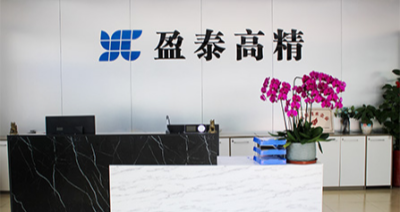
Dr. Li Peng – Senior Process Engineer, 20+ years in silicone and plastic injection molding, published author of “Advanced Cryogenic Processing for Manufacturing”. Former Lead Engineer at a Tier‑1 automotive supplier and current Technical Advisor for Guangdong Yingtai High Precision Technology Co., Ltd.
Contact: lh@yingtai168.com | Phone: +86 177 2243 7688
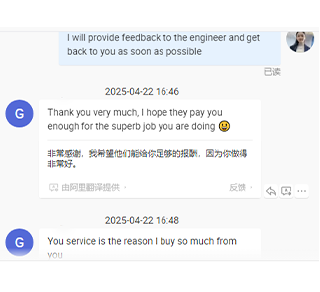
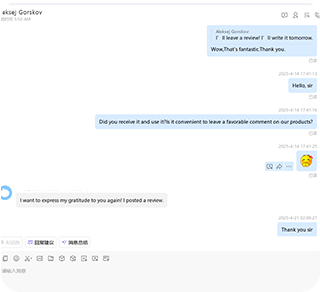
Live Chat Proof

Guangdong Yingtai High Precision Technology Co., Ltd.
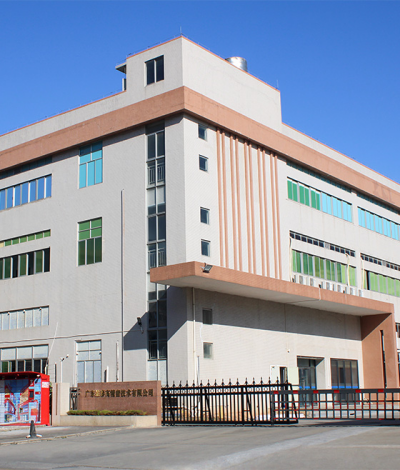
No. 359 Chang'an Bubugao Road, Chang'an Town, Dongguan City, Guangdong Province, China
Phone: +86 177 2243 7688 | Fax: +86 0769‑83666863 | Email: zmm@yingtai168.com
Contact Us | Privacy Policy



Trusted by Global Leaders
Our clients include Fortune‑500 manufacturers and niche innovators who demand flawless parts.
compression-molding-vs-injection-molding corner-molding-plastic cover-in-silicone cost-of-manufacturing-plastic-products
Customer Testimonials