Customized Injection Molded Rubber Parts Manufacturer
Customized Injection Molded Rubber Parts Manufacturer
Expert Solutions in Precision Silicone & Rubber Injection Molding for Industrial and Commercial Applications In modern manufacturing and industrial design, injection molded rubber parts perform vital roles, from sealing complex electronics to providing durable
Product Details
Customized Injection Molded Rubber Parts Manufacturer
Expert Solutions in Precision Silicone & Rubber Injection Molding for Industrial and Commercial Applications
Why Quality Customized Injection Molded Rubber Parts Matter
In modern manufacturing and industrial design, injection molded rubber parts perform vital roles, from sealing complex electronics to providing durable cushioning in automotive systems.
Procuring customized components tailored precisely to product specifications can radically improve system reliability and operational lifespan.
At Guangdong Yingtai High Precision Technology Co., Ltd., we specialize in crafting customized injection molded rubber products using advanced liquid silicone rubber (LSR) and thermoplastic elastomers (TPE). Our 35,000 m² Dongguan industrial park is equipped with over 150 molding machines, including 55 liquid silicone molding units, enabling flexible, low-defect runs for high-complexity components.
Manufacturing precision rubber parts demands mastery over material characteristics, molding parameters, and tooling design. Our clients from automotive, healthcare, consumer electronics, and industrial appliances sectors increasingly turn to LSR injection molding for its unmatched biocompatibility, heat resistance, and design versatility — attributes thoroughly supported in reports like the Grand View Research Liquid Silicone Rubber Market Report, 2030, highlighting the rapidly expanding $4.97 billion global market by 2030 (CAGR ~8.5%).
But production excellence isn’t only about the material. Injection molding simulations informed by extensive rheological data — as discussed in this MDPI study — are crucial in minimizing defects like flash, inconsistent cure, or dimensional deviations. Investing in quality tooling and iterative CAE modeling can shorten your prototype-to-mass-production timelines with better consistency.
On the procurement side, recognizing variations between prototype RT silicone and industrial LSR grades can prevent costly tooling rework or material mismatch issues, something many first-time buyers overlook (technical discussions detailed here). Our engineering team works closely with your design and quality assurance teams to specify the right materials, mold designs, and testing protocols suitable for your end-use environment.
Whether you are sourcing simple O-rings, precision gaskets, complex soft-touch overlays, or overmolded seals, a well-chosen OEM partner with proven mold expertise and robust production lines like ours can make the difference between product success and costly recalls.
In this article, we will walk through real industry pain points, state-of-the-art technical approaches, material comparisons, buyer guidance, and testimonials from clients who have streamlined their supply chain by working with us.
Common Industry Challenges with Injection Molded Rubber Parts
Procurement and manufacturing in the silicone injection molding industry face hurdles that can be overlooked by non-specialists. Some of the most frequent operational pain points include:
Dimensional instability: Thermal shrinkage and uneven curing can cause parts to fall outside tight tolerances, impacting seal integrity.
Material selection mismatch: Choosing the wrong grade of silicone or rubber for environmental exposure (UV, chemicals, heat) leads to premature degradation.
Tooling delays and costs: High mold fabrication expenses coupled with long lead times can stall product launch schedules.
Surface defects & flash: Poor mold venting or injection parameters may cause excess flash or surface inconsistency, requiring manual trimming.
Low lifecycle & durability: Lack of proper reinforcement additives or design reinforcements reduces product lifespan under cyclic stress.
Communication breakdowns: Ambiguity in technical specifications between buyer and supplier often triggers costly reworks.
The economic impact of these issues is far-reaching. A late-stage tooling fix can add weeks and tens of thousands of dollars to production costs. Quality problems risk damaging brand reputation and trigger expensive recalls. That's why partnering with a manufacturer that understands these risks intimately is non-negotiable.
For instance, compliance with ISO 9001 quality management and ISO 13485 certifications is integral for medical-grade silicone parts. Yingtai’s modern workflows incorporate these standards and advanced process controls, mitigating most typical failures seen in manual or legacy operations.
Technical Insights into Materials & Manufacturing Processes
Injection molding of customized rubber parts rests on a foundation of material science and precision equipment. Below we summarize essential technical considerations and operational insights derived from over 20 years’ manufacturer experience and recent academic research:
Material Selection: Liquid Silicone Rubber (LSR) vs. Thermoplastic Elastomers (TPE)
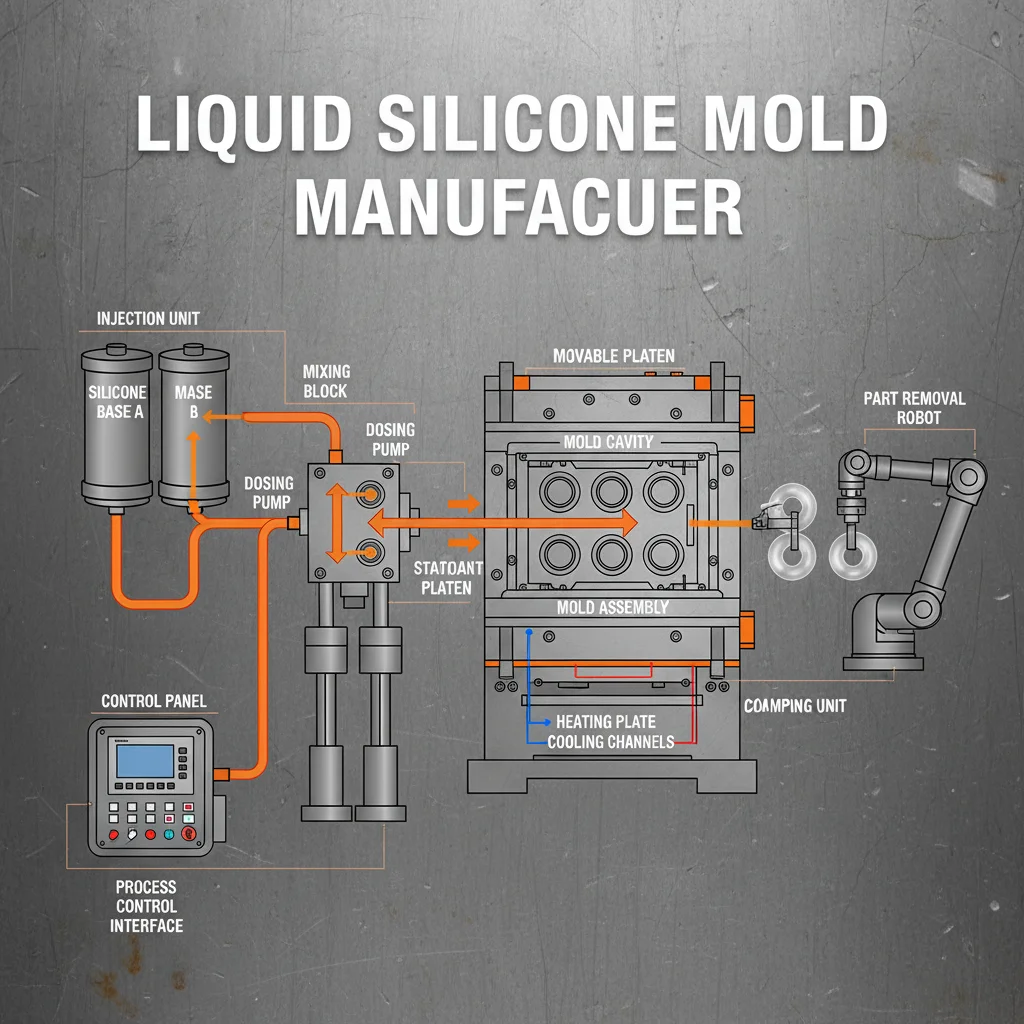
Each project demands a detailed tradeoff analysis, frequently involving a combination of materials through overmolding. Our factory’s equipment suite includes 20 hydraulic presses specialized for solid silicone and 55 LSR-specific molding machines, supported by precise temperature and injection rate controls refined through decades of process improvement.
Injection Molding Process Optimization
Achieving defect-minimized, repeatable production sessions requires deep familiarity with process parameters:
Material preparation: Homogeneous mixing, de-airing, and temperature control of silicone to prevent foam/bubble formation, supported by vacuum molding when needed ([Springer Study](https://link.springer.com/article/10.1186/s40648-025-00296-4)).
Mold temperature management: Balancing rapid cure cycle and shrinkage control with precise thermal profiling.
Injection speed & pressure control: Reducing shear-induced defects and avoiding excessive flash or warpage.
CAE simulation & rheology data: Using digital twin modeling informed by accurate viscosity and curing heat capacity datasets to predict filling and curing behavior ([MDPI Paper](https://www.mdpi.com/2073-4360/17/22/3086)).
Advanced tool design: Precise venting, electric discharge machining inserts, and cavity balancing optimize material flow and waste reduction ([Fraunhofer Research](https://publica.fraunhofer.de/entities/publication/9e614e34-faf6-4617-bf02-aeb16a0f6337)).
Certifications & Testing Capabilities
Ensuring every batch passes stringent quality audits, our testing lab is stocked with over 20 advanced instruments:
Tensile strength & elongation testing
Hardness & compression set analysis
Thermal stability & aging tests per ASTM & ISO standards
Biocompatibility & food safety compliance
Dimensional measurement and optical inspection
Our products meet ISO 9001, CE, RoHS, and FDA standards, demonstrating reliability for safety-critical medical and consumer applications. You can review our certifications below.
Where Customized Injection Molded Rubber Parts Are Widely Used
The versatility of injection molded rubber components spans diverse sectors. Below are common end-use applications where our customized parts bring operational benefits:
Industrial Equipment: Valve seals, anti-slip pads, hydraulic and pneumatic components exposed to harsh chemicals or thermal stress.
Renewable Energy: High-temperature resistant parts used in solar panel assemblies and battery seals.
Smart Wearables: Flexible, biocompatible silicone elastomers suited for intimate body contact under sweat and abrasion.
More than 500 Yingtai factory professionals continuously innovate alongside clients in these industries, improving part design for manufacturability and installation efficiency.
Operational Insight: Many automotive OEMs note that our precision overmolded seals reduce vehicle assembly rejections by better tolerancing and fewer flash trimming steps compared to previous suppliers.
Procurement Guidance & Supplier Evaluation Tips
Selecting the right partner for injection molded rubber components requires understanding not just price, but also capabilities, responsiveness, and compliance. Below are best practices for savvy buyers:
Ask for detailed process documentation: Verify how vendors control material handling, mold maintenance, and injection parameters to reduce defect rates.
Inspect tooling capabilities: Assess if the factory’s mold tooling technology supports your part complexity and tolerances. CNC machining & EDM expertise is a plus.
Request sample parts and trial runs: Early engagement on prototype samples mitigates costly downstream surprises, especially testing physical properties and fit.
Confirm certifications and testing abilities: Compliance with ISO 9001, FDA, CE, and RoHS are minimum requirements in regulated sectors.
Consider supply chain & logistics integration: Ensure the supplier understands container loading efficiencies, shipping timelines, and customs documentation for smooth import.
Check after-sales & technical support: Responsive engineering teams capable of design iteration and troubleshooting reduce production downtime.
Our export department is directly reachable for custom requests and free consultation at any production phase. We provide design reviews, mold flow analysis, and shipping solutions tailored for the US and global markets.
Attention: Beware manufacturers claiming rapid prototyping but lacking industrial-grade LSR materials and tooling. These shortcuts often cause inconsistent batch quality and poor durability.
What Our Clients Say
David R., Purchasing Manager, Automotive Tier 1
“Switching to Yingtai for our silicone gaskets cut assembly defects by nearly half. Their team’s responsiveness and strong quality controls made integration smooth. Also appreciated their detailed material reports and ISO certifications for regulatory compliance.”
Get in Touch
If you have any camping barbeque equipment inquiry, please feel free to contact us.