

OEM PEEK Injection Molding: Precision Engineering for High-Performance Applications
Guangdong Yingtai High Precision Technology Co., Ltd. | Export Director, Kevin Liu
Understanding PEEK Injection Molding: A Vital Process in Advanced Manufacturing
Polyetheretherketone (PEEK) has established itself as a go-to high-performance thermoplastic in industries demanding durability, thermal stability, and chemical resistance. OEM PEEK injection molding is the process of shaping this crystalline polymer into precision components through controlled heating and injection into custom molds. Our facility in Dongguan, leveraging over two decades of experience, specializes in OEM manufacturing tailored to exacting specifications for sectors including aerospace, medical devices, electronics, and automotive.
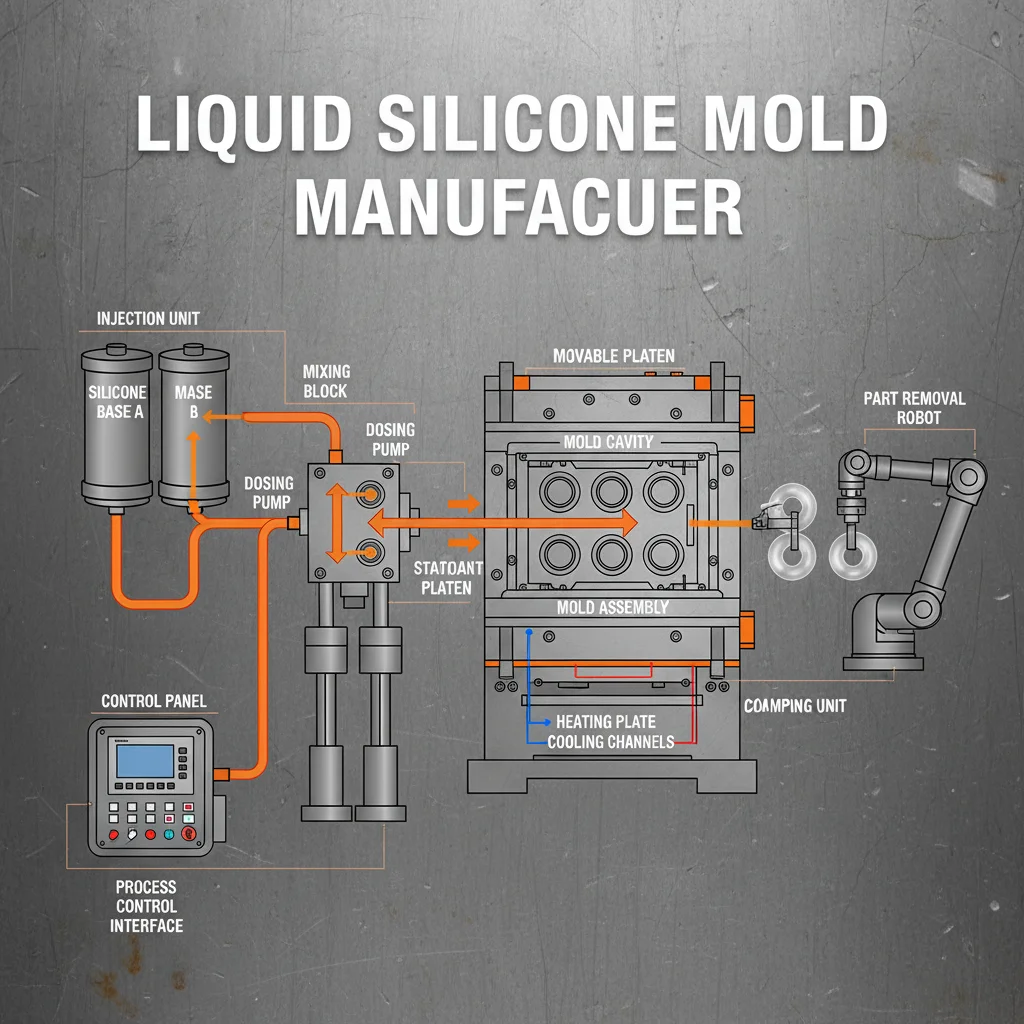
Unlike commodity plastics, PEEK’s physical properties require advanced process parameters—from melt temperature control nearing 400°C to precise mold design that accounts for shrinkage and crystallinity. Within OEM scopes, prototyping through full-scale volume production is supported by our integrated mold development and in-house material testing.
This injection molding method ensures repeatability, tight tolerances, and robust mechanical performance, qualities essential for mission-critical components functioning in harsh environments. As your trusted supplier, we navigate complex challenges to deliver OEM PEEK parts compliant with ISO 13485 (medical) and ISO/TS 16949 (automotive) standards.
OEM customers often rely on our technical team’s industrial insights—from selecting the right grade of PEEK resin to optimizing mold wall thickness for uniform flow and minimal internal stresses. PEEK injection molding is not simply a shaping process—it’s a partnership balancing material science, tooling excellence, and manufacturing know-how to meet stringent quality requirements and minimize product lifecycle risks.
The market is growing steadily with increasing adoption of PEEK in electric vehicle components, medical implants, and semiconductor equipment. According to Grand View Research (2023), advanced polymers like PEEK are integral in producing lightweight, high-strength parts resistant to chemicals and heat. These drivers are reinforcing the need for OEM providers capable of precision injection molding with stringent process controls.
Industry Pain Points in PEEK Fabrication
- High Processing Temperatures: PEEK requires melting at temperatures between 360-400°C, demanding robust injection molding equipment and thermal stability to prevent degradation.
- Mold Design Challenges: Balancing crystallization control with shrinkage compensation is critical to avoid warpage, flash, or incomplete filling—issues that undermine part performance.
- Material Cost and Handling: PEEK resin is costly; improper drying or contamination can lead to frequent batch rejections impacting production costs and lead times.
- Limited Supplier Expertise: Not all injection molders possess the combined know-how in PEEK’s thermal properties and OEM customization needed for high-volume, complex parts.
- Regulatory Compliance Risks: Meeting FDA, ISO 13485, or aerospace standards involves stringent process documentation and material traceability, often lacking in less experienced manufacturers.
- Quality Consistency and Repeatability: Achieving long production runs without variability requires detailed process monitoring and tooling maintenance—a frequent pain point.
Technical Advantages of Our OEM PEEK Injection Molding Services
Precision Mold Engineering
Our facility's 30+ high-precision mold processing machines assure tight dimensional control. Molds are designed with advanced CAE simulations—including thermal distribution and flow analysis—to reduce cycle times and defects.
Material Expertise & Certification
We work with certified PEEK resin providers ensuring virgin-grade materials suitable for demanding medical and aerospace applications. All lots are pre-dried and purity validated to prevent moisture-induced defects.
In-House Quality Control
Using coordinate measuring machines (CMMs), optical inspection, and mechanical testing, our QC team verifies conformity to ISO 9001 and AS9100 standards, supporting iterative tooling adjustments to maintain product excellence.
Integrated OEM Manufacturing Services
From mold development to overmolding and post-processing, we provide turnkey solutions with lead time transparency to help customers streamline supply chains and reduce overhead costs.
Technical Specifications & Compliance Overview
| Parameter | Value/Standard | Notes |
|---|---|---|
| Material Grade | PEEK 450G (Injection Molding Grade) | High crystallinity for mechanical strength |
| Melt Temperature | 360°C - 400°C | Process window critical for dimensional stability |
| Injection Pressure | 900 - 1300 bar | Optimized per part geometry |
| Cooling Time | 60 - 120 seconds | Prevents residual stresses and warpage |
| Surface Finish | Ra 0.4 µm (standard) | Custom finishes available on demand |
| Certifications | ISO 9001, AS9100, FDA, RoHS | Ensures compliance for regulated markets |
OEM peek injection molding factory OEM injection molding OEM injection molding tooling
*Note: Specifications may vary per custom order; please consult with our engineers for precise requirements.
Applications & Market Trends for OEM PEEK Components
PEEK’s remarkable properties have unlocked new potential across various industrial sectors. Here are some notable application areas:
- Automotive & Aerospace: Engine components, bearing cages, seals, and insulation parts benefitting from PEEK’s thermal resistance and mechanical durability.
- Medical Devices: Surgical instruments, implantable parts, and sterilizable components where biocompatibility and FDA compliance are essential.
- Electronics & Semiconductor: Insulating parts, connectors, and components exposed to harsh chemical environments.
- Industrial Equipment: Pump parts, valves, and wear-resistant components in chemical processing plants.
Recent market analyses project growth at around 6%-9% CAGR for high-performance polymers like PEEK injection molded parts, driven by electrification trends and medical device innovation (source: Industry Market Reports).
OEM partners report notable reductions in assembly time and maintenance costs when switching from metal to PEEK components due to corrosion resistance and weight savings. These operational efficiencies translate to long-term cost benefits.
Procurement Insights & Supplier Evaluation for OEM PEEK Injection Molding
- Assess Technical Competency: Ensure the supplier’s equipment supports the elevated temperature and pressure requirements of PEEK molding. Ask for process control data and tooling review reports.
- Verify Certifications and Quality Systems: ISO 9001 and, where applicable, AS9100 or ISO 13485 certifications indicate mature quality management and regulatory adherence.
- Material Traceability Is Crucial: Demand full traceability of resin batches from chemical supplier to finished component. Moisture content logs and drying cycles should be documented.
- Prototype to Production Transition: Transition from prototype to high-volume manufacturing can uncover unseen issues. Choose suppliers offering rapid tooling iteration and digital twin simulation capabilities to reduce risk.
- Consider Logistics & Lead Times: Check supplier location advantages, container loading efficiency, and export experience, especially for sensitive parts requiring controlled shipping environments.
- Request Sample Runs & Quality Data: Validation samples verified by third-party labs help verify mechanical and dimensional properties before scaling orders.
Frequently Asked Questions
- Q: What makes PEEK injection molding more challenging than standard plastics?
- PEEK’s high melting temperature (~380°C) requires specialized machinery and precise thermal management. Additionally, controlling crystallinity for dimensional stability and ensuring moisture-free resin handling are critical.
- Q: Can OEM PEEK injection molding accommodate complex geometries?
- Absolutely. Our mold design process integrates CAE flow simulations to optimize gate locations and wall thickness, enabling production of complex, thin-walled and overmolded parts with consistent quality.
- Q: What quality controls are in place for OEM parts?
- We apply rigorous QC protocols including CMM inspections, tensile and heat resistance testing, as well as process audits to ensure every batch meets customer specifications as per ISO 9001 or AS9100.
- Q: How does Guangdong Yingtai ensure consistent supply and lead times?
- Our integrated facility with in-house mold making, 80+ injection machines, and industrial park location grants us full control over scheduling and reduces dependency on outsourced steps. Detailed project timelines are communicated transparently.
- Q: Is customization available for OEM projects?
- Yes, from material grade modifications and color matching to multi-shot molding and surface finishes, customized solutions are part of our core service offering.
Ready to Discuss Your OEM PEEK Injection Molding Project?
Engage with our export director or technical engineers directly to get tailored advice, quotes, or free samples.
Request Product SpecsPhone: +86 17722437688 (Miss Zhang) | Whatsapp: +86 17722437688