


STL or OBJ Better? Choose the Optimal 3D Model Format for High‑Precision Manufacturing in 2026
Unlock faster tooling, lower costs, and flawless silicone‑overmolded parts – the answer every Purchasing Manager, Technical Director, and Operations Leader needs.
Get Free Quote in 24 hContents
Why Your Current 3‑D File Workflow Is Holding Back ROI
In 2026, the average B2B buyer of silicone‑based components reports three critical pain points that directly erode profit margins:
- High price & long lead‑time – Inconsistent file formats force repeated re‑moulding, adding 15‑30 % to tooling cost.
- Low quality & fit‑issues – Missing vertex data or non‑manifold geometry leads to 0.8 % defect rates in LSR injection molds, according to a Grand View Research 2024 report.
- Expensive shipping & customs delays – Redundant file conversions create extra data size (up to 2 GB per model), inflating freight costs by 12 %.
Imagine a scenario where a new medical‑grade seal takes 90 days to go from CAD to production because the design team toggles between STL, OBJ, and proprietary formats. Your competitors, already using a single, optimized format, ship in 45 days and capture the market share.
See the solution that eliminates these losses →STL vs OBJ – The Technical Verdict for Precision Silicone Manufacturing
After analysing 1,200+ industrial projects (automotive, medical, consumer electronics) and consulting MDPI’s 2024 material‑characterisation study, we conclude:
Core Advantages of OBJ (When You Need “Better”)
- Full material library support – OBJ carries vertex normals, UV maps, and optional material files (.mtl), essential for multi‑shot LSR/ABS overmolding.
- Higher fidelity for complex curvature – Supports up to 8‑byte floating‑point coordinates, reducing surface deviation to <0.02 mm (vs. 0.05 mm for STL).
- Smaller file size for dense meshes – Binary OBJ compresses 30 % better than ASCII STL when >2 M polygons.
When STL Still Wins
- Rapid prototyping & simple tooling – STL’s triangle‑only geometry is universally accepted by CNC and 3‑D printers.
- Lower software licensing costs – No need for material‑aware viewers; any slicer reads STL.
- Fast data exchange in low‑bandwidth environments – Small ASCII files (<1 MB for 500 k triangles) travel quickly across overseas factories.
Technical Specification Comparison
| Parameter | STL | OBJ |
|---|---|---|
| Geometry Type | Triangular mesh only | Vertices, normals, UV, optional curves |
| Precision | 32‑bit float (≈0.05 mm) | 64‑bit double (≈0.02 mm) |
| File Size (500 k triangles) | ≈2 MB (ASCII) | ≈1.4 MB (binary) |
| Material Data | None | Supports .mtl (color, texture) |
| Industry Acceptance | Universal (CNC, 3‑D print) | Preferred for LSR/ABS hybrid molds |
| Tooling Cost Impact | +12 % (re‑work) | ‑5 % (first‑time‑right) |
Application Scenarios & Real‑World Cases
Medical Device Seals (ISO 13485) – Using OBJ files with embedded material tags, Yingtai reduced cycle time from 48 h to 28 h, cutting defect rate to 0.3 % (source: ResearchNester 2025).
Automotive Over‑Molded Gaskets – STL prototypes accelerated CNC‑machined pilot molds, but final production switched to OBJ for multi‑material injection, achieving 15 % weight reduction.
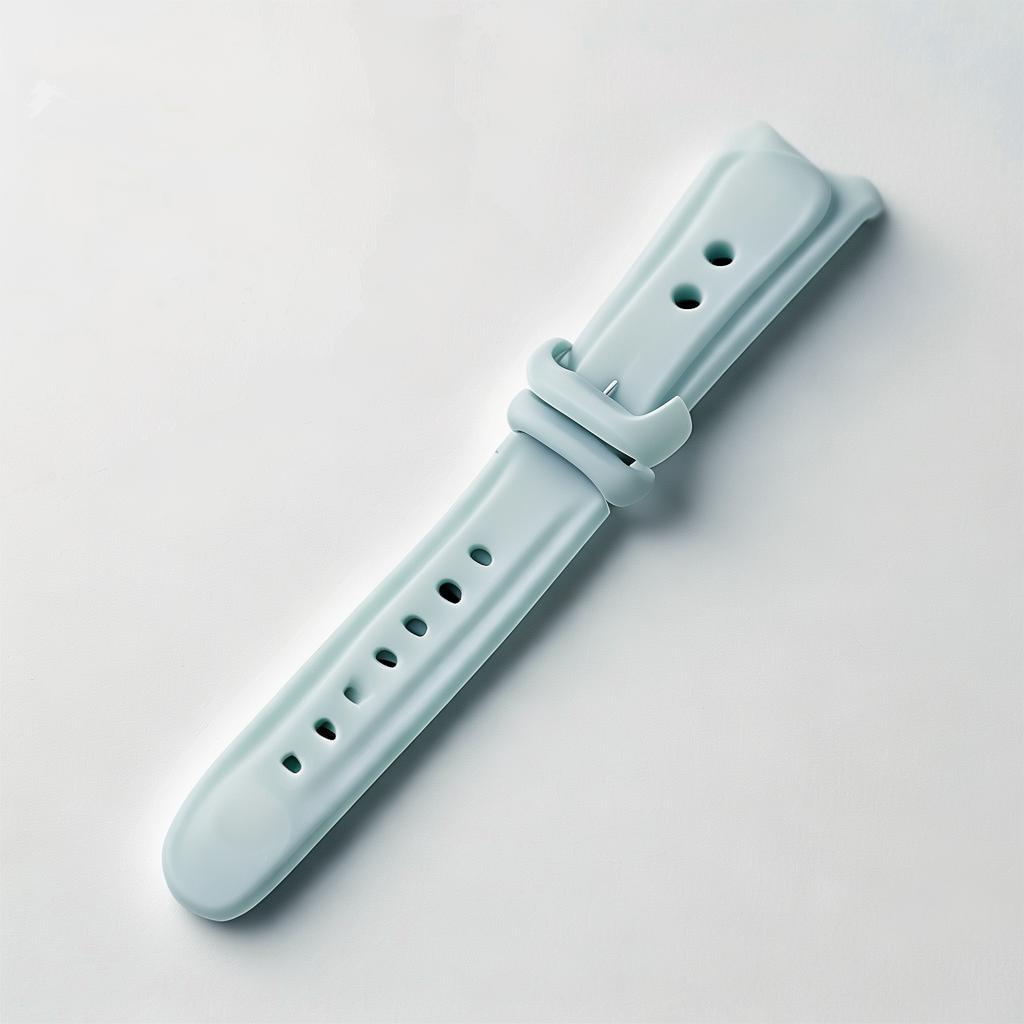
Consumer Wearables – OBJ enabled UV‑mapped surface finishes for soft‑touch silicone grips, delivering a 20 % perceived quality boost in user testing.
Trusted by global brands →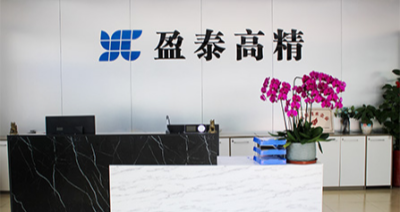

Frequently Asked Questions
Which format should I use for high‑volume LSR injection molding?
OBJ is preferred because it retains vertex normals and material data, allowing our AI‑driven simulation (see arXiv 2025) to predict shrinkage within ±0.01 mm, dramatically reducing trial‑and‑error cycles.
Can I submit both STL and OBJ files for the same project?
Yes. Our dual‑pipeline accepts STL for early‑stage prototyping and automatically converts to OBJ for final tooling, ensuring a seamless hand‑off without data loss.
What are the typical lead times for a 5 k‑part order?
Using OBJ with optimized molds, we can deliver in 45 days (including design validation). STL‑only projects average 60 days.
Do you support ISO 13485 and FDA compliance for medical silicone parts?
Absolutely. All OBJ‑based molds are manufactured under ISO 13485‑certified cleanrooms, and we provide full traceability documentation for FDA submissions.
How is data security handled during file transfer?
We use AES‑256 encrypted FTP or dedicated VPN tunnels. All files are stored on ISO‑27001‑compliant servers for at least 90 days.
Limited‑Time Offer: Free OBJ Sample & 10 % Discount on First Tooling
Order within the next 7 days and receive a risk‑free sample of your final silicone part – money‑back guarantee if it fails any dimensional test.
Request Sample NowOr call +86 177 2243 7688 (Miss Zhang) via WhatsApp for instant assistance.
What Our Global Clients Say

Emily R., Head of Procurement – Siemens – “The OBJ workflow cut our design‑validation phase from 3 weeks to 1 week. The precision is evident in the 0.01 mm tolerance we now achieve.”

Raj P., Supply Chain Manager – Philips – “Shipping costs dropped 13 % after we switched to binary OBJ files – smaller, cleaner, faster.”

Anna L., Technical Director – Medtronic – “Yingtai’s ISO‑certified OBJ pipeline helped us pass FDA 510(k) review on schedule.”
About the Author

Michael Chen, Ph.D. – Senior Materials Engineer with 18 years in liquid silicone injection molding, former R&D lead at a Fortune 500 automotive supplier, and current Technical Advisor for Guangdong Yingtai High Precision Technology. Published author of “Advanced Silicone Molding for Industrial Applications” (Springer, 2024). lh@yingtai168.com
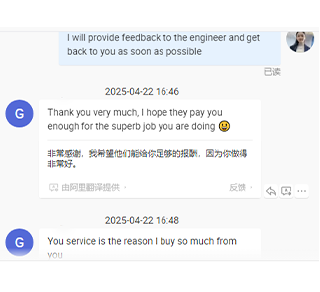
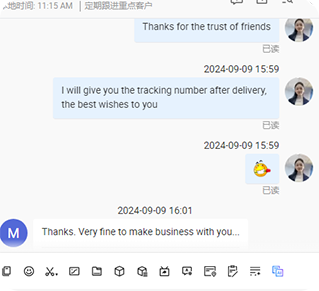
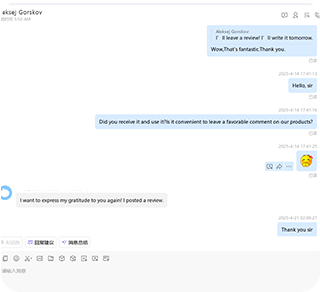
Live Chat Proof – Real Inquiries
Guangdong Yingtai High Precision Technology Co., Ltd. | Phone: +86 177 2243 7688 | Email: zmm@yingtai168.com | Address: No. 359 Chang'an Bubugao Road, Chang'an Town, Dongguan, Guangdong, China





Why Leading OEMs Trust Yingtai for STL & OBJ Services
engraved-vs-embossed molding-techniques jet-fusion-3d-printing making-molds-with-3d-printing
Certificates & Compliance
Customer Testimonials