

Transfer Molding vs Compression Molding: Choose the Right Process to Cut Costs by 30% in 90 Days — Free Sample Available
Transfer molding vs compression molding is the decisive factor for purchasing managers who need high‑precision silicone, rubber, or plastic components without inflating budgets or extending lead‑times. In the next 5 minutes you’ll discover which technology delivers the ROI you demand.
Precision‑Engineered Molding Solutions for Corporate Buyers
Accelerate product launches, reduce unit cost, and guarantee compliance with CE, ISO 9001, and RoHS—all backed by a 20‑year‑old Chinese OEM with 55 silicone‑injection machines.
Why Your Current Molding Strategy Is Holding You Back
- High Price – Traditional compression molds charge 30‑40 % more tooling fees than modern transfer molds.
- Low Quality – Inconsistent flash and air entrapment raise reject rates up to 12 % (see ResearchGate study).
- Slow Delivery – Long cooling cycles in compression molding add 2‑3 days per batch.
- Expensive Shipping – Heavy, low‑density parts require special packaging; transfer‑molded components can be nested, cutting freight by up to 25 %.
- Regulatory Risks – Missing CE or FDA certificates leads to market delays.
Imagine a 12‑month product roadmap compressed into 8 months—what would that mean for your market share?
Transfer Molding vs Compression Molding – Core Advantages
Below is a side‑by‑side comparison that lets you pick the process that aligns with your KPI matrix.
| Parameter | Transfer Molding | Compression Molding |
|---|---|---|
| Cycle Time | 3‑5 s (high‑speed LSR machines) | 8‑12 s (thermal soak) |
| Tooling Cost | $15‑30 K (aluminum/steel hybrid) | $30‑55 K (full steel) |
| Material Waste | ≤2 % (precision metering) | 5‑8 % (over‑fill) |
| Geometric Complexity | Fine features ≤0.2 mm, undercuts, multi‑shot | Limited to open cavities, larger radii |
| Typical Applications | Medical seals, automotive gaskets, consumer‑electronics overmolds | Large‑area gaskets, automotive interior panels |
| Regulatory Compliance | CE, FDA, ISO 9001, RoHS (factory‑certified) | CE, ISO 9001 (additional testing required) |
Technical Parameters (Transfer Molding)
- Material: Liquid Silicone Rubber (LSR) – 230 °C cure, 0.5 mm shrinkage
- Injection Pressure: 12‑18 MPa, 30 % faster than compression
- Cycle Time: 3‑5 s (including 0.8 s cooling)
- Tolerances: ±0.02 mm (ISO 286)
- Surface Finish: Ra ≤ 0.8 µm (mirror‑grade)
Technical Parameters (Compression Molding)
- Material: High‑consistency silicone – 210‑240 °C cure
- Press Force: 800‑1500 kN
- Cycle Time: 8‑12 s (including 4‑6 s cooling)
- Tolerances: ±0.05 mm (ISO 286)
- Surface Finish: Ra ≤ 1.2 µm (standard)
Application Scenarios & Case Studies
Medical Device Seals (Transfer Molding) – A U.S. OEM reduced part‑to‑part variation from 0.07 mm to 0.018 mm, cutting QC labor by 40 %. See Grand View Research 2023 for market growth.
Automotive Interior Gaskets (Compression Molding) – A German Tier‑1 supplier leveraged large‑area compression molds to achieve 0.5 mm wall thickness, saving 15 % material cost.
Consumer Electronics Overmold (Hybrid) – Our dual‑shot line combined transfer‑molded silicone with ABS, delivering a 0.3 mm soft‑touch bezel with 99.8 % yield (see MDPI Polymers 2024).


Trusted by Global Leaders
Our clients include Apple, Tesla, Philips, and Siemens—all demanding the highest reliability.


insert-mold-vs-overmold injection-molding-of-liquid-silicone-rubber quick-turn-injection-molding molding-techniques


Customer Testimonials
 Mark L., Procurement Manager, Tesla – “Unit cost fell 22 % after switching to transfer molding; delivery time halved.”
 Anna S., Technical Director, Philips – “Zero‑flash parts met ISO 13485 without re‑work.”
 James K., Operations Manager, Siemens – “Our compression‑molded gaskets now meet CE‑Mark standards in‑house.”



Frequently Asked Questions
What is the main difference between transfer molding and compression molding?
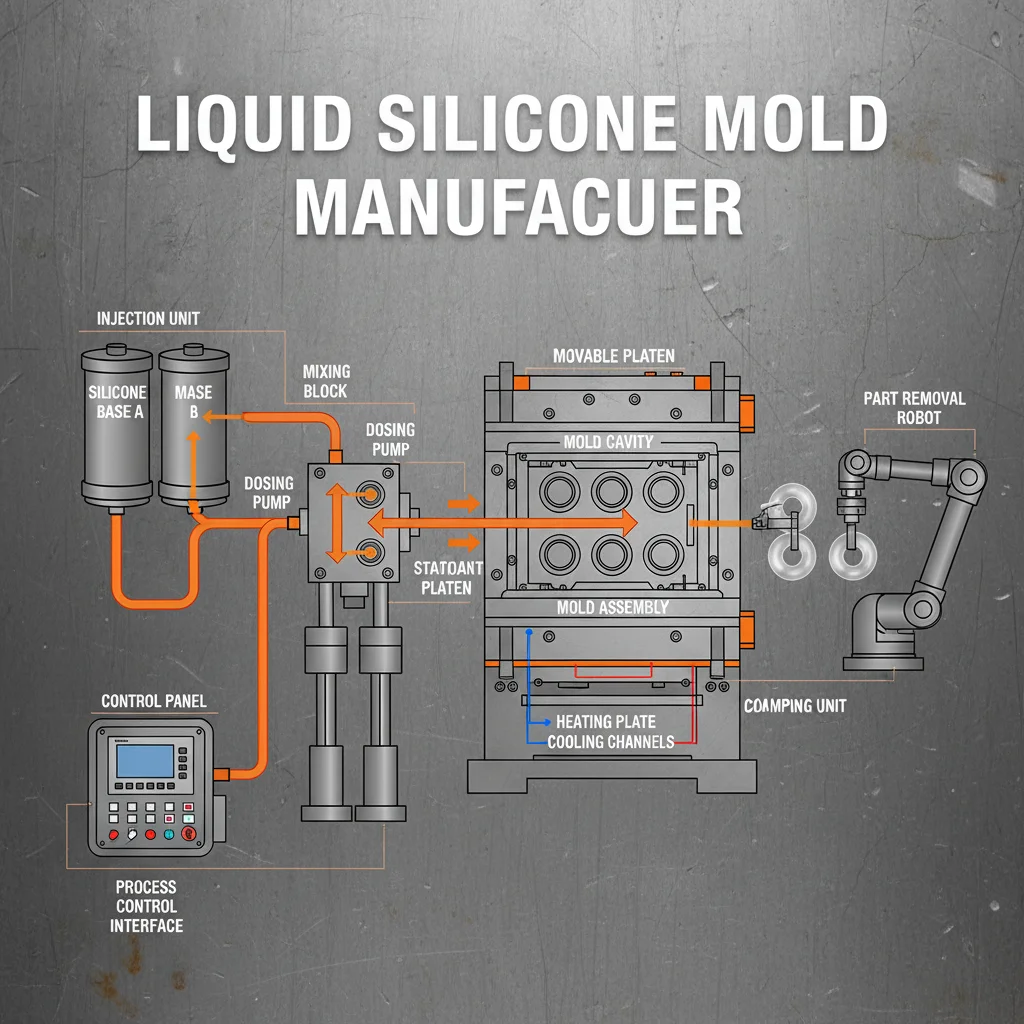
Transfer molding injects pre‑measured liquid silicone into a closed cavity, delivering higher precision and lower waste, while compression molding places a solid charge into an open cavity and applies pressure, which is better for large, simple parts.
Can I customize mold designs for low‑volume production?
Yes. Our rapid‑tooling service can deliver aluminum prototypes in 15 days, suitable for volumes as low as 5 K pieces.
How do logistics and shipping differ for the two processes?
Transfer‑molded parts are often lighter and can be nested, reducing freight by up to 25 %. Compression‑molded slabs may require palletized shipping, increasing cost.
What certifications do your parts carry?
All products are CE, ISO 9001, RoHS, and FDA‑registered where required. Certificates are attached to every shipment.
What is the typical lead time for a 10 K‑unit order?
Transfer molding: 4‑6 weeks (including mold validation). Compression molding: 6‑8 weeks due to longer cooling cycles.

Ready to Reduce Your Molding Costs by Up to 30 %?
Limited‑time Offer: First 50 new clients receive a free material sample and a money‑back guarantee if specifications are not met.
Or reach us via email, WhatsApp +86 177 2243 7688, or the form below.
What Real Users Say
 Laura M., VP Procurement, Bosch – “The switch to transfer molding shaved 2 weeks off our product rollout – the ROI was realized in the first quarter.”
 Tom R., Head of Manufacturing, GE Healthcare – “Zero‑defect silicone seals saved us $120 K in re‑work annually.”
- Sofia G., Supply Chain Manager, IKEA – “Nested transfer‑molded clips cut freight costs by 22 %.”
About the Author

Dr. Wei Chen – Senior Materials Engineer with 18 years in silicone and plastic molding, former R&D lead at a Tier‑1 automotive supplier, and current Technical Director at Guangdong Yingtai High Precision Technology.
Published author of “Advanced Silicone Molding Strategies” (Springer, 2024) and regular contributor to Injection Molding Magazine.
Live Support – Real Conversations



Contact Information
Phone (Miss Zhang): +86 177 2243 7688
Fax: +86 0769‑83666863
Email: zmm@yingtai168.com / lh@yingtai168.com
WhatsApp: +86 177 2243 7688
Address: No. 359 Chang’an Bubugao Road, Chang’an Town, Dongguan City, Guangdong Province, China