

Bead Blast vs Sandblast: A Practical Guide for Industrial Surface Finishing
Understanding the differences, applications, and benefits to make informed procurement decisions
Industry Pain Points in Surface Finishing
Surface finishing remains a critical stage in manufacturing, especially for metal products, automotive components, aerospace parts, and precision instruments. Procurement and operations managers alike grapple with selecting the right finishing method to balance quality, cost, and turnaround time.
- Surface Consistency: Achieving uniform texture without embedded contaminants or uneven areas.
- Material Compatibility: Preventing substrate damage, especially with softer or thin materials prone to warping.
- Environmental Concerns: Managing waste and emissions responsibly, particularly with abrasive media disposal.
- Operational Cost & Speed: Optimizing cycle times and abrasive media consumption.
- Logistics & Equipment Footprint: Space limitations and maintenance downtime for finishing machinery.
Understanding these pain points helps suppliers and end-users avoid costly reworks, material losses, and compliance challenges. This is where the right choice between bead blasting and sandblasting becomes crucial.
Technical Deep Dive: What Sets Bead Blast Apart from Sandblast?
Though often used interchangeably in casual discussions, bead blasting and sandblasting are distinct surface treatment processes, each with its own nuances in technique, abrasive media, and outcomes.
Bead Blasting
Bead blasting employs spherical glass or ceramic beads propelled at moderate pressure onto a surface, yielding a smooth, matte finish. The rounded shape of beads minimizes surface distortion, making it a preferred choice for delicate or precision parts.
Operational insight: Bead blasting is especially favored for achieving uniform texture on stainless steel components, removing light burrs, and providing keying surfaces for coatings without aggressive material removal.
Sandblasting
Sandblasting typically uses angular, abrasive particles such as silica sand, aluminum oxide, or garnet under higher pressures. The sharper edges impart a more aggressive cleaning or roughening effect, suitable for heavy rust removal, paint stripping, or surface profile preparation.
Operational insight: While effective, sandblasting must be carefully controlled to avoid substrate erosion or micro-cracking, which can compromise part integrity in high-stress applications.
Key Process Parameters
| Parameter | Bead Blast | Sandblast |
|---|---|---|
| Abrasive Media | Spherical glass/ceramic beads | Angular silica sand / aluminum oxide / garnet |
| Operating Pressure | Moderate (20-60 psi typical) | Higher (60-120 psi common) |
| Surface Finish | Smooth matte with minimal surface deformation | Rougher, more textured and profile-enhancing |
| Material Removal Rate | Low to moderate | Moderate to high |
| Ideal Application Scenario | Delicate parts, finishing for coatings, decorative surfaces | Heavy rust/paint removal, roughening for bonding |
Material & Process Comparisons: Operational Realities
Beyond immediate surface impact, choosing between bead blasting and sandblasting affects longer-term maintenance, environmental compliance, and workflow integration.
- Media Recycling & Waste : Glass beads typically withstand multiple cycles of use, reducing media consumption — an important cost saver in volume production. Conversely, sand media tends to degrade faster and generate more dust, requiring more frequent replacement and filtration system upkeep.
- Substrate Sensitivity : Aluminum or thin sheet metals can warp or pit under sandblasting’s high-impact, risking rejection or scrap. Bead blasting’s gentler action helps retain dimensional tolerances, a value especially recognized in aerospace and medical manufacturing.
- Environmental & Safety Compliance : Sandblasting with silica sand is increasingly regulated due to silica dust risks causing silicosis. Many facilities have switched to alternative media or bead blasting to comply with OSHA standards and minimize protective equipment expenses.
- Equipment Footprint & Maintenance : Bead blasting machines require precise media recovery systems to handle reusable beads, adding complexity. Sandblasting units often incorporate simpler setups but demand more frequent abrasive media restocking and dust extraction maintenance.
A practical understanding of these trade-offs is vital. For instance, automotive suppliers might opt for sandblasting before painting heavy castings for optimal adhesion, whereas consumer electronics OEMs favor bead blasting for visible surfaces demanding a uniform, low-gloss texture.
Typical Applications & Use Cases
Our factory regularly serves sectors where surface finish dictates performance and aesthetics. Here's what we've learned over two decades operating in Dongguan's manufacturing heartland:
- Aerospace Parts: Precision bead blasting removes surface contamination on titanium and aluminum, preparing components for bonding and painting without compromising dimensional stability.
- Automotive Aftermarket: Sandblasting removes corrosion on steel parts prior to plating or powder coating, enabling robust adhesion and extended part life.
- Medical Device Housings: Bead blasting enables gentle matte finishes on stainless steel and plastic parts to reduce glare while maintaining smoothness critical for sterilization.
- Consumer Electronics: Often finished with bead blasting to achieve uniform textures on metal chassis, enhancing tactile feel and scratch resistance.
- Construction Hardware: Sandblast cleaning for cast iron and steel fixtures is standard to provide anti-slip and adhesive-friendly rough surfaces.
Procurement Guidance: What Buyers Should Know
Choosing the right surface finishing supplier isn’t just about price. We often advise buyers to look at:
- Technical Capabilities: Request detailed specs on abrasive media quality (size, shape, hardness) and process controls (pressure ranges, cycle times).
- Quality Certifications: Suppliers with ISO 9001 compliance demonstrate process consistency vital for high-volume industrial runs.
- Environmental Compliance: Make sure abrasive waste handling meets or exceeds current OSHA and EPA standards, reducing your risk of regulatory issues.
- Lead Times & Logistics: Clarify turnaround expectations, tooling changeover flexibility, and container loading efficiencies, particularly for exports to North America or Europe.
- OEM/ODM Experience: Consider suppliers capable of integrating bead or sand blasting as part of your broader product finishing or assembly processes, including secondary machining or quality inspection.
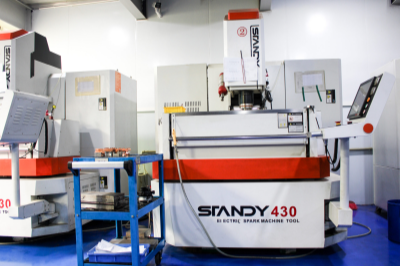
At Guangdong Yingtai High Precision Technology Co., Ltd., our strong technical team and comprehensive in-house production park ensure we provide turnkey finishing solutions customized for client requirements across diverse sectors. Our export team can assist with tailored packaging and shipping plans optimized for your supply chain.
Need assistance selecting the right finishing process for your products? Talk with our engineers today.
Customer Insights & Reviews
Frequently Asked Questions (FAQs)
- Q: Can bead blasting replace sandblasting in all applications?
- A: Not exactly. Bead blasting provides a finer, smoother finish suitable for delicate substrates, while sandblasting is better suited for aggressive surface cleaning and roughening where higher material removal is required.
- Q: Are there environmental concerns with sandblasting media?
- A: Yes. Silica sand poses inhalation risks and requires strict OSHA compliance measures. Many companies transition to alternative abrasives or bead blasting to reduce these hazards and related disposal costs.
- Q: What lead time can I expect for finishing orders?
- A: Typical lead times range from 5-15 business days for standard batches, depending on part complexity and volume. Expedited services may be available upon request with prior scheduling.
- Q: How do I specify the surface finish requirements when ordering?
- A: Provide Ra value targets, visual texture references, or coating compatibility guidelines. Our engineers can assist with specifying appropriate bead or abrasive media grades aligned to your performance needs.
- Q: Does your factory offer OEM or ODM finishing solutions?
- A: Absolutely. We support full OEM/ODM production lines integrating our finishing services with molding, assembly, and packaging — streamlining supply chain efficiency for large contracts.
Ready to optimize your surface finishing process with a trusted partner?
Request Factory Pricing & Technical Consultation
James Liu
Export Director & Industrial Engineer with 18 years in precision manufacturing and surface finishing solutions. Based in Dongguan, China.