By Michael Chen , Export Director at Guangdong Yingtai High Precision Technology Co., Ltd. In today's manufacturing landscape, achieving a smooth, flawless surface aesthetic is a non-negotiable requirement across sectors — from automotive components
Product Details
Blasting Machines for Smooth Surface Aesthetics: Precision & Practical Insights
By Michael Chen, Export Director at Guangdong Yingtai High Precision Technology Co., Ltd.
Industry Pain Points Affecting Surface Aesthetic Quality
In today's manufacturing landscape, achieving a smooth, flawless surface aesthetic is a non-negotiable requirement across sectors — from automotive components to aerospace assemblies and high-end consumer appliances. While blasting machines play a pivotal role in surface finishing, common challenges tend to stall production efficiency and final product quality.
Uneven Surface Texture: Inconsistent blasting pressures or incorrect abrasive media often lead to rough patches or over-etched areas that demand rework.
Material Compatibility Issues: Some blasting processes are unsuitable for certain alloys or coatings, risking damage or surface contamination.
Operational Downtime: Frequent machine maintenance and abrasive replacement add unexpected pauses, impacting lead times.
Energy Consumption: Inefficient blasting setups can cause elevated operational costs, reducing profit margins.
Environmental & Safety Concerns: Dust emissions and abrasive residue require proper containment and extraction to meet OSHA and environmental regulations.
For procurement managers and operations engineers, these pain points translate into direct cost overruns, production bottlenecks, and inconsistent product quality. Selecting the right blasting machinery that balances process control, abrasive media adaptability, and ease of maintenance is critical to overcome these hurdles.
Technical Deep Dive: How Blasting Machines Achieve Smooth Surface Aesthetics
Understanding the technical underpinnings of blasting machines is key for buyers targeting optimal surface finishes. The two main types used for smooth surface treatment are abrasive blast machines and shot blasting systems. Both employ energy transfer but differ in media and application precision.
Abrasive Blasting – Versatility Meets Control
Abrasive blasting typically utilizes materials like aluminum oxide, glass beads, or silicon carbide as media. The pressurized stream of abrasive particles impacts the surface, removing contaminants, smoothing irregularities, and preparing for coatings.
Key operational parameters:
Media Type & Granularity: Fine beads (~100 microns) create smoother surfaces, coarse grains produce rougher profiles suited for paint adhesion.
Pressure & Flow Rate: Balancing these affects penetration depth. Excessive pressure risks substrate damage; low pressure may leave residues.
Blast Angle: Typically between 45° to 75° for even coverage and reduced surface pitting.
Shot Blasting – High Throughput & Consistency
Shot blasting machines use small steel balls or shots projected at high velocity, ideal for heavier-duty surface cleaning and texturing. They excel in removing scale, rust, and mill scale on metal parts with uniform finish control.
Process controls and equipment precision dramatically influence performance. Modern OEM machines increasingly incorporate digital pressure regulation, automated media feed systems, and dust extraction compliant with ISO 14644-1 cleanroom standards to maintain environmental safety without sacrificing throughput.
Material and Media Considerations
Choosing the right abrasive media requires matching material hardness, particle shape, and chemical inertness to application needs. For instance:
Glass Beads: Spherical, produce uniform finish without embedding media into soft substrates.
Ceramic Abrasives: Harder, suitable for aggressive cleaning without excessive surface damage.
Plastic Abrasives: Ideal for delicate electronic housings to avoid static and reduce substrate erosion.
Manufacturers must also consider media flow wear, disposal regulations, and replacement frequency. Abrasive recycling can reduce costs but requires filtration and purity maintenance.
Application Scenarios Where Smooth Surface Aesthetics Matter Most
Procurement decision-makers often need to match blasting equipment to specific end-market demands. Here are common use-cases where smooth surface finishes directly impact product value:
Automotive Components: Exteriors and engine parts require precision blasting for paint adhesion and corrosion resistance. OEMs demand repeatability and ISO/TS 16949 standard compliance.
Consumer Electronics: Device housings, buttons, and connectors benefit from subtle matte or satin finishes achieved through fine abrasive media and low-pressure blasting.
Aerospace Industry: Aircraft structural components need strict surface roughness specifications to reduce fatigue stress and meet AS9100 standards.
Medical Device Manufacturing: Implantable components require contamination-free, smooth finishes processed under cleanroom conditions with non-toxic media.
Architectural Metalwork: Stainless steel handrails and panels use blasting machines to deliver uniform satin finishes enhancing aesthetics and anti-slip properties.
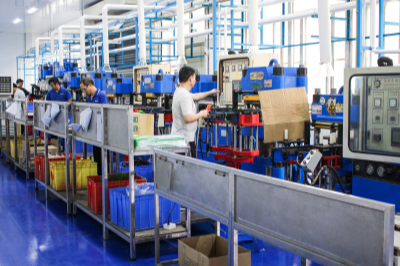
Shot blasting equipment delivering consistent matte finishes on automotive parts.
When sourcing blasting machines for smooth surface aesthetics, buyers need to consider multiple factors beyond price. Operational, technical, and after-sales considerations all play critical roles:
1. Confirm Abrasive Compatibility
Evaluate if the machine supports multiple media types to future-proof your investment. Machines with adjustable nozzles and pressure controls offer flexibility.
2. Evaluate Control Systems
Robust digital pressure regulation and media feed automation reduce variability and operator dependency. Data logging for process parameters supports quality assurance.
3. Review Dust Collection and Environmental Controls
Check for HEPA filtration, sealed cabinets, and negative pressure designs to minimize airborne particle exposure and comply with emissions regulations.
4. Inspect Build Quality and OEM Certifications
Look for machines built with corrosion-resistant alloys and tested according to CE or ISO 9001 standards to mitigate early wear and unexpected failure.
5. Assess Warranty & After-Sales Support
Choose suppliers offering on-site technical assistance, spare parts availability, and training to reduce downtime risks.
6. Calculate Total Cost of Ownership
Factor in media consumption rates, electricity use, labor for maintenance, and potential rework costs. Sometimes a higher upfront cost results in significant operational savings.
Tip: Request a factory walkthrough or live demonstration videos to witness machine performance in real production environments before finalizing your purchase.
What Our Clients Say
Emily Dawson, Procurement Manager, AutoParts Inc.
"Yingtai’s blasting machines brought a noticeable improvement in surface smoothness with repeatable results. Their support team helped tailor settings for our delicate aluminum components. Downtime has dropped by nearly 30% compared to previous vendors."
Get in Touch
If you have any camping barbeque equipment inquiry, please feel free to contact us.



 Emily Dawson, Procurement Manager, AutoParts Inc.