Essential for retaining components in place without compromising disassembly, C washers hold critical roles across multiple industries. Our detailed guide unpacks their materials, applications, and procurement nuances for manufacturing and international buyers. The humble
Product Details
C Washers: The Unsung Heroes of Precision Assembly & Seal Integrity
Essential for retaining components in place without compromising disassembly, C washers hold critical roles across multiple industries. Our detailed guide unpacks their materials, applications, and procurement nuances for manufacturing and international buyers.
Introduction & Overview
The humble C washer rarely makes headlines but plays a critical mechanical role in a wide array of industrial applications. These open-ended retaining rings, shaped like the letter "C", enable easy installation and removal around shafts, bolts, and axles while providing reliable component positioning and axial load resistance. Unlike solid washers, C washers offer the advantage of being clipped into place without full component disassembly — a practical benefit indispensable for maintenance-heavy sectors.
From OEM assembly lines to maintenance workshops, the demand for high-precision C washers continues to grow. This is especially true as industries push toward more compact, lightweight machinery requiring tight tolerances and materials that handle stress without deformation or corrosion.
In particular, procurement officers and technical engineers often face challenges selecting the right C washers from global suppliers due to overlapping specifications, inconsistent material labeling, and varied standards compliance. This guide aims to clarify those complexities, equipping you with operational insights, material science breakthroughs, supplier evaluation tips, and logistical best practices.
Across sectors such as automotive, aerospace, heavy machinery, consumer electronics, and renewable energy equipment, C washers ensure efficiency and longevity. As manufacturing processes evolve with advanced materials like stainless steel alloys, carbon steels with heat treatment, and even high-strength polymer composites, understanding each option is imperative.
Success in global sourcing lies not just in finding low-cost C washers but in securing quality that meets ISO 9001 standards and relevant ASTM or DIN performance folds. Pay attention to subtle features like surface finish, hardness, and slot gap tolerance — these can impact function significantly under repetitive load cycles.
Throughout this article, you will discover nuances that experienced buyers and engineers leverage to reduce procurement risks, minimize operational downtime, and ensure seamless integration. Whether you represent a purchasing department from an American heavy equipment manufacturer or a precision engineering consultancy, these insights are tailored to make your sourcing strategy more informed and your projects more cost-effective.
Industry Challenges & Procurement Risks
Despite their simple geometry, C washers present surprisingly complex procurement challenges. Purchasing managers frequently encounter issues that range from inconsistent washer dimensions to subpar alloy grades. Such discrepancies often result in fast wear, improper fit, or, worse, unexpected component failure.
Dimensional Variability: C washers need to meet stringent tolerances, especially in outer and inner diameters, clip thickness, and gap size. Minor deviations can lead to assembly difficulties or premature loosening.
Material Quality Concerns: The difference between carbon steel, stainless steel (such as AISI 301, 304, or 316), or spring steel significantly impacts corrosion resistance, hardness, and fatigue life. Lack of certificate traceability is a red flag.
Standards & Certification Gaps: Absence of relevant certifications such as ISO 9001, RoHS compliance, or ASTM / DIN recognized manufacturing may hide quality issues.
Supplier Transparency Issues: Vague production locations and undocumented inspection protocols often foreshadow supply disruption or inconsistent output.
Lead Time Uncertainties: Global supply chain disruption drives unpredictable order fulfillment times, impacting tight production schedules.
Operational caution: Failure to verify batch testing or to conduct joint destructive sampling leads to costly rework. Ensure that your supplier can provide detailed inspection reports and first article inspections to reduce hidden risks.
Technical Specifications & Material Insights
Selection hinges on understanding the material properties and manufacturing processes behind C washers. Stamping from cold-rolled steel and precision laser cutting remain standard methods, but increasingly, heat-treatment and passivation steps are integrated to boost performance.
Moderate; suitable for dry and oily conditions with coating
Heavy machinery, automotive transmissions, power tools
Carbon Steel (C45)
30-35
Low; often zinc / phosphate coated for rust protection
General construction, electronics assembly, packaging machinery
Industry observations: Heat treatment processes like tempering enhance spring steel's fatigue tolerance by up to 15%, a crucial metric when washers are exposed to cyclic stresses. ISO 9001-certified manufacturers typically provide this data upon request, which should be part of your quality validation checklist.
Surface finishing is another parameter affecting function: black oxide, zinc plating, or passivation treatments improve corrosion resistance but may influence dimensional tolerances slightly. Specify your operating environment clearly to a supplier as mismatches are common errors leading to premature failure.
Key Applications of C Washers
The versatility of C washers makes them a component staple in industries demanding quick assembly and dependable load retention:
Automotive: Holding shafts in transmissions and suspension systems where fast maintenance turnaround can avoid costly downtime.
Aerospace: Lightweight securing where periodic inspection demands easy removal without compromising safety-critical joints.
Medical Devices: Precision retaining of moving parts in equipment requiring biocompatible stainless steel grades resistant to sterilization.
Consumer Electronics: Assembly of rotating components in wearables and handheld devices, using electrically conductive or coated steels.
Renewable Energy: Securing parts in wind turbines or solar panel assemblies exposed to outdoor corrosive environments.
Heavy Industry & Machinery: Industrial gearboxes, pumps, and hydraulic motors where washers resist strong axial movement caused by heavy loads.
Consider the operational environment carefully when selecting washers — temperature extremes, exposure to chemicals or UV radiation, and vibration patterns all dictate material and dimensional choices.
Installation Tips & Maintenance Advice
Though designed for ease, improper installation or neglect can significantly reduce a C washer’s service life. It’s worth briefing your maintenance team on key points:
Ensure the correct size and slot gap match shaft diameter precisely; using a too-large washer may cause slippage.
Install using specialized retaining ring pliers to avoid deformation from manual force.
Inspect periodically for signs of corrosion, cracking, or fatigue, especially in high-vibration environments.
Lubricate shafts according to application requirements to reduce friction and wear on contacting edges.
Replace washers whenever a component undergoes disassembly; reusing may compromise tension and retention.
Pro tip: During maintenance shutdowns, label and store used washers for traceability, enabling analysis of wear patterns and potential supplier quality issues.
Logistics & Shipping Considerations
Given their small size but high quantity requirements, C washers pose unique shipping logistics challenges for global procurement:
Packaging: Bulk packing in sealed, moisture-resistant PE bags or labeled compartment boxes reduce corrosion and mix-ups.
Container Palletization: Maximizing container loading efficiency requires coordination with supplier packaging engineers for optimized carton sizes and stacking strength.
Lead Times: Typically ranging 3–6 weeks for bulk orders; rush production may be possible through OEM-focused suppliers but expect margin adjustments.
Customs Documentation: Harmonized System (HS) codes 7318.19 often apply; timely and accurate paperwork prevents delays.
Quality Checks Before Shipping: Shipping from certified factories with full batch inspection certificates lowers import hold-ups or sample rejections.
Careful coordination between procurement, quality, and logistics teams is vital to align expectations and avoid inventory shortages or excess.
Supplier Evaluation & OEM/ODM Capabilities
When sourcing C washers, it’s prudent to partner with a manufacturer that demonstrates technical expertise, quality control maturity, and customized solutions ability — especially for OEM or ODM operations.
Guangdong Yingtai High Precision Technology Co., Ltd., headquartered in Dongguan, China, exemplifies such a supplier. With over 20 years invested in precision manufacturing, their 35,000 m2 facility incorporates:
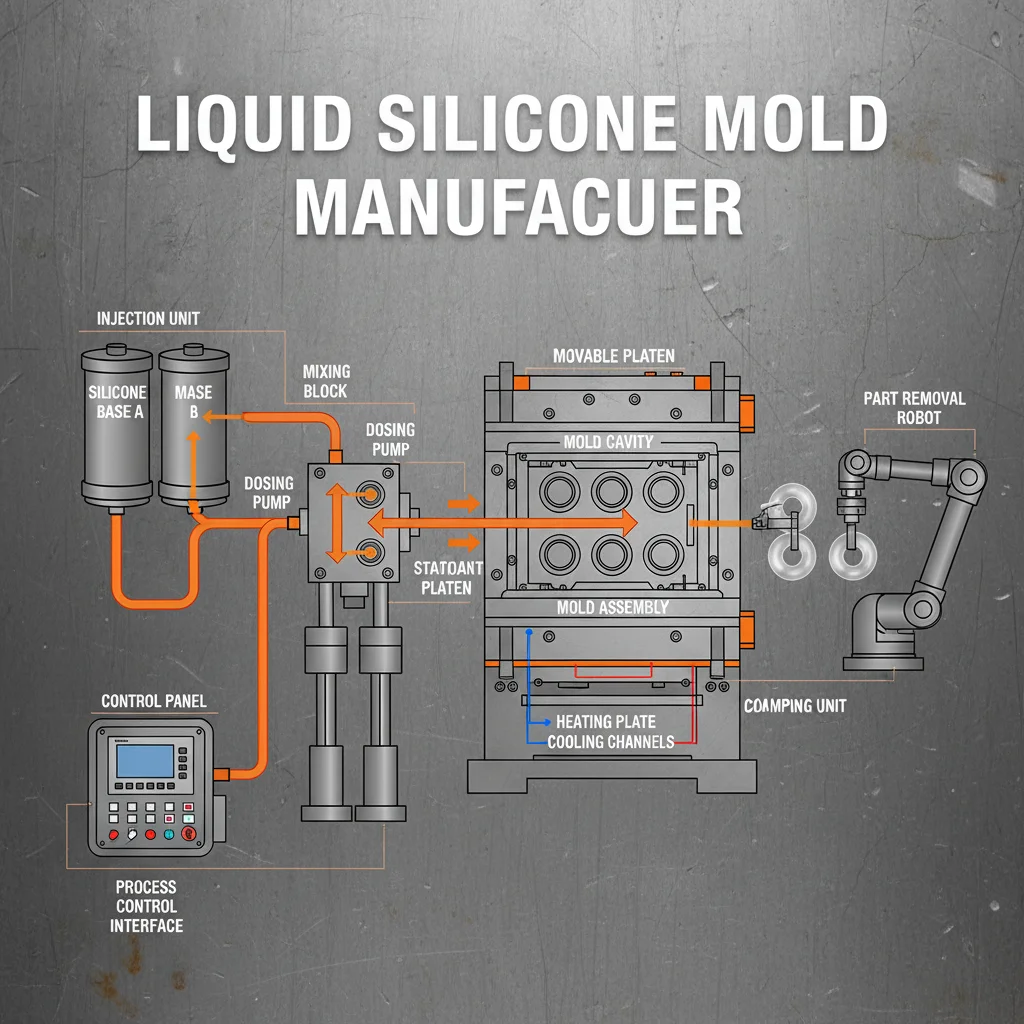
55 advanced liquid silicone molding machines and 80 automatic plastic injection systems, supporting complex overmolded seals and washers.
More than 30 sets of precision mold processing equipment enabling tight tolerance production consistent with ISO 9001 standards.
An in-house quality control team equipped with over 20 advanced testing instruments for dimensional, hardness, and corrosion resistance verification.
Robust OEM/ODM service portfolio — including custom material blends, surface finishing, heat treatments, and packaging tailored to client needs.
Their strong export experience assures a streamlined procurement process for B2B buyers in the USA and other English-speaking markets, offering multi-channel communication (email, WhatsApp, phone), transparent lead times, and scalable production capacity.
From a buyer's standpoint: Selecting a partner like Yingtai reduces procurement friction points such as inconsistent product quality and customs clearance headaches, while granting access to technical consultations for custom-engineered solutions.
Q1: What differentiates a C washer from a standard flat washer?
Unlike flat washers, C washers are open rings designed to snap into place on shafts or bolts without disassembly, facilitating easier installation and removal in tight assemblies.
Q2: Which materials offer the best corrosion resistance for outdoor use?
AISI 316 stainless steel is preferred in aggressive environments due to molybdenum content, providing superior resistance against chlorides and salt spray.
Q3: Can suppliers provide certified batch testing?
Reputable manufacturers like Guangdong Yingtai provide batch inspection reports covering chemical composition, hardness, dimensions, and surface finish compliance per ISO or ASTM standards.
Q4: What common installation mistakes should be avoided?
Improperly sized washers or using inadequate installation tools can deform the washer or compromise retention force, leading to early failure. Always use correct pliers and verify sizing.
Q5: Are OEM/ODM customization options available?
Yes, suppliers with extensive manufacturing capabilities offer custom dimensioning, material grades, coatings, and packaging solutions to meet unique operational requirements.
Customer Reviews & Real-World Insights
James Miller, Procurement Manager, Midwest Industrial Inc.
“We switched to Guangdong Yingtai’s C washers last year for our automotive gearbox assembly lines. The jump in dimensional consistency was noticeable immediately. Reduced stoppages due to less misfitting parts. Their QA reports are thorough, making incoming inspections painless.”
Get in Touch
If you have any camping barbeque equipment inquiry, please feel free to contact us.