

Blending of Polymers: Unlocking Material Synergies for Industrial Excellence
A deep dive into polymer blending techniques, benefits, technical nuances, and procurement insights for today's B2B industrial decision-makers.
Introduction to Polymer Blending
In today's fast-evolving manufacturing landscape, blending of polymers stands as a cornerstone technique to tailor-make materials that meet increasingly sophisticated industrial demands. Rather than relying on a single base polymer, blending combines two or more polymers, harnessing their distinct physical, chemical, and mechanical properties into a composite with enhanced performance and cost-effectiveness.
This nuanced process extends beyond mere mixing — it requires critical understanding of polymer compatibility, phase behavior, and processing parameters. For procurement professionals and technical engineers alike, appreciating these subtleties ensures selection of the right polymer blends that secure reliability while optimizing costs in sectors including automotive, electronics, packaging, and consumer goods.
Polymer blending empowers manufacturers to achieve targeted properties such as improved UV resistance, enhanced impact strength, superior chemical stability, or cost-efficient weight reduction by selectively combining materials like polyethylene (PE), polypropylene (PP), acrylonitrile butadiene styrene (ABS), polyurethane (PU), and thermoplastic elastomers (TPE).
With global polymer consumption predicted to climb steadily, the role of polymer blends in OEM/ODM manufacturing and cross-border trade has become pivotal. Smart blending techniques aligned with ISO 9001 and material standards ensure consistent quality for rigors of export and international supply chain integration.
From the technical viewpoint, modern polymer blending involves advanced compounding equipment, such as twin-screw extruders and intensive internal mixers, that enable controlled shear and temperature profiles to achieve homogeneous blends. Process parameters are critical — too much shear may degrade components while inadequate dispersion results in poor mechanical performance.
In the ever-tightening procurement environment, understanding the dynamics of polymer blending mitigates risks linked to material incompatibility or supply fluctuations. It enables streamlining logistics by consolidating product portfolios or ensuring compliance with regional regulations like the REACH directive or FDA food-contact standards.
Ultimately, this foundational knowledge helps purchasing managers and supply chain directors navigate the complex balance of innovation, cost control, and reliable supply that polymer blending uniquely facilitates.
Industry Challenges in Polymer Processing
Efficient polymer blending faces several obstacles routinely encountered in industrial settings:
- Material Incompatibility: Polymers with different molecular structures may phase-separate, degrading mechanical integrity and homogeneity.
- Processing Variability: Achieving repeatable dispersion requires tight control over extrusion temperatures and screw speeds, often lacking in mid-tier facilities.
- Cost Fluctuations: Volatility in raw polymer prices complicates budgeting and margin forecasts for procurement.
- Supply Chain Risk: Single-source dependence for specialty polymers can cause bottlenecks and delayed deliveries.
- Compliance Complexity: Different regions impose varied environmental and safety restrictions affecting blend formulations.
- Technological Adaptation: Integrating advanced blending technologies demands capital investment and trained personnel, slowing adoption.
Recognizing these pain points early helps production managers and sourcing teams preempt costly disruptions. For instance, reviewing supplier capacity and dual-sourcing polymers can reduce supply uncertainty. Similarly, investing in precise rheological monitoring equipment can improve process consistency.
Core Advantages of Polymer Blending
When executed with domain expertise, polymer blending delivers tangible benefits:
- Tailored Performance: Material properties like stiffness, elasticity, and chemical resistance can be fine-tuned to match specific application demands.
- Cost Optimization: Incorporating recycled polymers or lower-cost grades with high-performance resins provides budget efficiency without significant quality loss.
- Design Flexibility: Blends enable designers to overcome individual polymer limitations, promoting innovative product solutions.
- Improved Processing: Some blends facilitate easier molding or extrusion, reducing cycle times and energy consumption.
- Enhanced Durability: Composite blends often extend lifecycle by resisting environmental stress cracking, UV exposure, or chemical attack.
- Supply Resilience: Using blends provides flexibility to adjust formulations depending on supply availability and pricing.
For procurement specialists, these advantages translate into sourcing strategies that factor multiple polymer grades under a unified umbrella contract, enabling agility and cost control.
Technical Overview: Methods and Material Interactions
Polymer blending techniques primarily fall into two categories: physical blending and reactive blending. Physical blending mixes polymers without chemical reaction, often via melt compounding using high-shear twin-screw extruders. This method controls parameters like torque, temperature profiling, and residence time to optimize dispersion.
Reactive blending involves chemical bonding between polymers during processing, creating copolymers or grafted architectures that improve compatibility. This technique is more complex, requiring precise catalyst and initiator management.
The choice of blending method hinges on targeted material properties and production volume. Common polymer pairs include:
| Blend Components | Key Properties | Typical Applications |
|---|---|---|
| Polyethylene (PE) + Polypropylene (PP) | Improved impact resistance, chemical durability | Packaging films, automotive trims |
| ABS + Polycarbonate (PC) | Enhanced heat resistance, toughness | Electronic housings, appliance covers |
| Thermoplastic Elastomers (TPE) + Polyamide (PA) | Flexibility with high mechanical strength | Seals, flexible connectors |
asa polymer polymer injection molding additives in plastics
Material characterization plays a pivotal role. Rheological measurements, thermal properties (e.g., DSC, TGA), and mechanical testing define blend performance. Advanced CAE simulations benefit significantly from accurate datasets, as highlighted in the MDPI study on LSR injection molding simulation accuracy (see external references).
On the processing front, maintaining consistent temperatures in the range of 200-250°C (depending on specific polymers) prevents degradation. Screw design affects shear quality - mild shear preserves polymer chains; high shear promotes better mixing but risks thermal breakdown.
Applications Across Industry Sectors
The versatility of polymer blends is reflected in their extensive industrial use:
- Automotive: Blends enable lightweight components with enhanced impact absorption for interior trims, bumpers, and under-the-hood parts.
- Consumer Electronics: Housing blends improve fire retardancy and dimensional stability critical for smartphones, tablets, and wearable devices.
- Packaging: Multilayer films combining polymers like PE/PP offer balanced barrier properties and mechanical flexibility for food and pharmaceuticals.
- Medical Devices: Blended polymers provide biocompatibility, sterilization resistance, and flexibility for tubing and seals.
- Construction: Polymer blends form durable, UV-resistant profiles and piping systems meeting ISO standards for plumbing and insulation.
Operations managers should note that application-specific testing—including UV exposure, tensile strength, and thermal cycling—is essential before qualifying a blend for high-volume production.
Procurement Best Practices and Supplier Evaluation
In sourcing polymer blends, procurement directors face complex choices balancing quality, lead time, and cost:
- Supplier Audits: Confirm manufacturer certifications like ISO 9001, CE, and compliance with local REACH and FDA regulations.
- Sample Testing: Request pre-production samples for in-house evaluation to avoid surprises during full-scale production.
- Production Capacity: Assess supplier's equipment, such as extruder types, compounding lines, and quality control instrumentation.
- Lead Times & Logistics: Evaluate shipping plans, container loading optimizations, and customs expertise for cross-border trade.
- OEM/ODM Capabilities: Engage suppliers offering design support and custom formulation for tailored polymer blending solutions.
- Flexibility: Prefer suppliers with modular production enabling quick shifts in blend ratios or polymer grades to adapt market changes.
Practical advice: avoid single-source dependency when procuring critical blends; establish backup supply lines and maintain buffer inventories.
Request factory pricing and shipping plans early in negotiations to accurately model total landed cost.
Frequently Asked Questions
- What polymers blend best together?
- Compatibility depends on molecular polarity and chain structure. For instance, ABS and PC blend well offering toughness and heat resistance, whereas PE and PP are miscible at certain ratios to combine flexibility with strength.
- How does polymer blending affect processing parameters?
- Blending can alter melt viscosity and flow behavior. It's critical to recalibrate extrusion temperature and screw speed, as improper settings may cause phase separation or degradation.
- Are blended polymers recyclable?
- Recyclability depends on blend composition. Some immiscible blends may require separation technologies, while compatible blends can be recycled as mixed streams without significant property loss.
- How long does it take to develop a custom polymer blend?
- Typical lead times span from 6 to 12 weeks to finalize formulations, conduct pilot-scale trials, and validate mechanical and chemical performance.
- What certifications should we look for in polymer blend suppliers?
- ISO 9001 quality management is a baseline; additional certifications depend on industry — e.g., FDA compliance for medical/food contact or REACH compliance within Europe.
Customer Testimonials
Michael Turner, Procurement Manager, AutoParts Co., Detroit, USA
"Switching to blended polymers from Guangdong Yingtai allowed us to reduce molding defects by approximately 15% while cutting raw material costs. Their technical support during qualification was invaluable — we now feel confident in delivery timelines."
Sophia Ramirez, Operations Director, MedTech Solutions, San Diego, USA
"Yingtai’s expertise with LSR and polymer blends enabled us to develop a soft-touch medical seal with impressive chemical resistance. Lead times and communication were transparent, making international logistics seamless."
James O’Connor, Technical Engineer, Green Packaging Ltd., Boston
"Their custom blend of PE/PP for our compostable films aligned precisely with our sustainability targets. The material performed reliably on high-speed extrusion lines, and consistent batch quality helped us win new client contracts."
Contact & Next Steps
Ready to optimize your polymer solutions with expert blending? Guangdong Yingtai High Precision Technology Co., Ltd. blends 20+ years of manufacturing prowess with extensive technical know-how.
Phone: (Miss Zhang) +86 17722437688
Email: zmm@yingtai168.com / lh@yingtai168.com
Whatsapp: +86 17722437688
Address: No. 359 Chang'an Bubugao Road, Chang'an Town, Dongguan City, Guangdong Province
Visit our Contact Page
Request Factory Pricing or Talk With Our Engineer to discuss custom polymer blending options tailored for your industry.
Logistics & Shipping Considerations
For international B2B shipments, polymer blends demand specialized handling:
- Polymer pellets or compounded blends are generally shipped in 25kg bags or bulk containers suitable for 20ft or 40ft container loading optimization.
- Moisture control during transit is critical to avoid degradation; desiccant bags and sealed liners are recommended.
- Lead times can vary between 4-8 weeks depending on order complexity and regional customs clearance.
- Partnering with suppliers experienced in global freight forwarding reduces delays and ensures regulatory compliance.
Early planning and clear communication on shipping schedules help avoid costly production downtime.
Factory Capabilities & Certifications
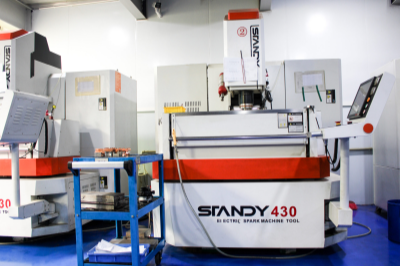
Guangdong Yingtai operates a state-of-the-art facility in Dongguan, covering 35,000 m² outfitted with over 150 high-precision molding and compounding machines suited for polymer blends and liquid silicone rubber processes. Our integrated manufacturing system spans:
- Polymer compounding with twin-screw extruders
- Custom mold development & processing with 30+ precision machining equipments
- Full-scale quality testing including rheological, dimensional, and environmental resistance assessments
- In-house design and R&D engineering teams for OEM/ODM projects
- Compliant with ISO 9001, CE, and FDA standards where applicable
Supplemental Resources & Industry Insights
For more technical depth, consider the following authoritative reports and papers:
- How Method Matters: Material Characterisation in LSR Injection Molding — critical for process simulation accuracy and defect reduction.
- In-vacuum Silicone Rubber Forming Process for Soft Robots — illustrating advanced molding methods and quality improvements.
- Reducing Waste in LSR Injection Moulding — sustainable process innovations in high-volume manufacturing.
- Reddit Industry Discussion: Liquid Silicone Rubber Injection Molding Guidance — real-world operational challenges and solutions from industry pros.
Chat with Our Experts