Unlock reliable fastening and assembly with expertly designed blind tapped holes . Learn how precise hole engineering optimizes your production line, enables robust component integration, and mitigates common mechanical challenges. A blind tapped hole
Product Details
Precision Blind Tapped Hole Solutions for Industrial Manufacturing
Unlock reliable fastening and assembly with expertly designed blind tapped holes. Learn how precise hole engineering optimizes your production line, enables robust component integration, and mitigates common mechanical challenges.
Understanding Blind Tapped Holes: Design, Function, and Industrial Importance
A blind tapped hole—commonly referred to in manufacturing and mechanical engineering fields—is a hole drilled into a component to a precise depth that stops short of penetrating through the material. Unlike a through tapped hole, where the fastener thread passes completely through the mating part, a blind tapped hole retains material at its base, requiring specialized tapping methods to create precise, durable internal threads within a confined depth.
This design is critically important in industries where structural integrity, space-saving assembly, and aesthetic finishes are paramount—think aerospace brackets, automotive components, or electronics chassis. Manufacturing these holes demands stringent control over depth, thread quality, and surface finish to ensure fastener reliability without risking material breakthrough or structural weaknesses.
From an operational standpoint, blind tapped holes allow for secure fastening where the backside of the component is inaccessible or where through holes could lead to leakage, contamination, or aesthetic issues. For procurement managers and technical engineers alike, understanding the nuances—such as the choice between spiral point or spiral flute taps, appropriate materials like stainless steel, aluminum, or high-strength alloys, and compliance with ISO or ANSI threading standards—is essential for sourcing parts that perform reliably in demanding applications.
Achieving precision in blind tapped holes involves balancing tooling wear, chip evacuation, and depth control. For instance, inadequate chip removal during tapping can cause thread damage or tool breakage, introducing downtime and increased costs. Innovative tooling and advanced CNC programming with torque and feed monitoring have therefore become industry staples, helping reduce defect rates while delivering the consistent thread quality the market demands.
Furthermore, blind tapped hole production directly impacts assembly line efficiency. Fasteners installed into well-executed blind tapped holes typically require less rework and maintain structural integrity under vibration or cyclic loads, which is vital for maintaining warranty and safety standards in industrial applications.
In the context of global sourcing and supplier evaluation, blind tapped hole components bring unique challenges, particularly regarding lead times, tooling quality, and material traceability. International suppliers with robust quality management systems—often ISO 9001 or IATF 16949 certified—can ensure parts meet stringent mechanical and dimensional requirements. Guangdong Yingtai High Precision Technology Co., Ltd., with their extensive manufacturing park in Dongguan and over 20 years of precision tooling expertise, exemplifies such capability with advanced CNC and tapping operations tailored for high-volume OEM/ODM projects.
In sum, the blind tapped hole is a deceptively simple feature with outsized impact on product assembly and lifecycle performance. For procurement directors focusing on minimizing supply chain risks while optimizing product uptime, delving into supplier technical offerings, quality control procedures, and production flexibility around blind tapped hole specifications is non-negotiable.
Common Industry Challenges with Blind Tapped Holes
Accurate Depth Control: Ensuring consistent hole depth prevents thread breakdown and structural failure risks.
Chip Evacuation: Incomplete chip clearance during tapping can cause tool damage and poor thread integrity.
Material Variability: Different metals present unique challenges; for example, aluminum’s softness vs. steel’s hardness affects tapping parameters.
Surface Finish Consistency: Poorly finished threads reduce fastener life and clamping force reliability.
Inspection & Standards Compliance: Verifying adherence to ISO/ANSI thread specs is critical to avoid costly assembly rejects.
Supplier Transparency: Long supply chains sometimes obscure tooling quality or material certifications.
These challenges often result in procurement headaches when selecting international suppliers or scaling production. Suppliers lacking advanced process control or real-time monitoring typically generate higher scrap rates and inconsistent product quality. It’s why partnering with manufacturers investing in high-precision tapping centers and comprehensive process validation pays dividends.
Technical Deep Dive: Precise Engineering of Blind Tapped Holes
The core of creating a reliable blind tapped hole is precise alignment of drilling and tapping operations, combined with proper tooling selection. Operators often debate between using spiral point taps (often referred to as “gun taps”) for efficient chip evacuation or spiral flute taps for cleaner chip pull-out in blind holes.
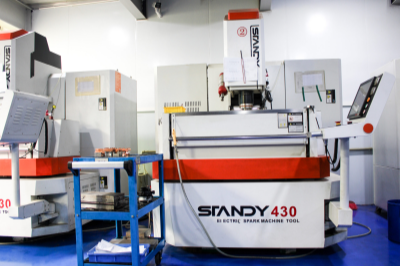
High-precision tapping machines employed in blind hole production at Guangdong Yingtai High Precision Technology Co., Ltd.
Drilling precedes tapping, and maintaining consistent pilot hole dimensions is essential. The hole diameter and depth must conform to precise standards to avoid incomplete thread formation or excessive stress concentration. Commonly referenced benchmarks include
ISO 261 and ANSI B1.13M for thread tolerances.
Material Considerations
Metals like stainless steel require slower spindle speeds and stronger tool materials, for example, carbide taps coated with TiAlN or similar. Aluminum alloys allow faster cutting but care must be taken to avoid hole deformation. Our team often suggests preliminary vetting of materials through tensile testing to fine-tune the feed rates.
Process Control & Tooling Wear
Real-time torque monitoring during tapping can signal tool wear or chip evacuation troubles before costly failures occur. Guangdong Yingtai equips its production lines with advanced CNC centers with adaptive feedback, reducing downtime and ensuring each batch meets dimensional standards.
Key Technical Specifications for Blind Tapped Hole Production
Parameter
Typical Range
Notes
Hole Depth
1x to 4x Diameter
Depth tolerance typically ±0.05 mm
Thread Class
ISO 6H / ANSI 2B
Common industrial tolerances for tapping
Tool Material
Carbide / HSS-Co
Coatings: TiAlN, TiCN for durability
Feed Rate
Variable by material (2-15 mm/min)
Optimized per metal hardness
Spindle Speed
100–1200 RPM
Adjusted for chip removal efficiency
Application Scenarios of Blind Tapped Holes in Manufacturing
Blind tapped holes have a broad range of applications across diverse sectors requiring secure, space-efficient fastener solutions:
Aerospace components: Where structural integrity and weight optimization demand precise, non-through threads for mounting avionics or airframe panels.
Automotive assemblies: Engine blocks, transmission housings, and chassis fittings utilize blind holes for high-strength fastening with sealing requirements.
Electronics enclosures: Where threads must not penetrate sensitive interiors to prevent short circuits or contamination.
Medical device casings: Ensuring biocompatibility paired with secure assembly in tight form factors.
Industrial machinery: For mounting sensors, covers, or modular components where backside access isn’t feasible.
Each application demands rigorous process control and close collaboration between design engineers and manufacturing teams. For example, in automotive parts where vibration resistance is critical, thread engagement length and surface finish quality undergo strict validation.
Procurement Guidance & Supplier Evaluation for Blind Tapped Hole Components
For purchasing managers and procurement directors sourcing blind tapped hole parts, due diligence prevents common pitfalls:
Certification Verification: Confirm supplier holds relevant ISO 9001, IATF 16949, or industry-specific quality certifications.
Sample Inspections: Request samples with specified thread gauges and perform root-to-tip thread measurements to verify dimensional accuracy and surface finish.
Material Traceability: Inspect raw material certifications to ensure consistency and reduce liability risk.
Lead Time Transparency: Evaluate factory production schedules to avoid delays from tooling changeover or process bottlenecks.
Onsite Audit Capability: When possible, conduct factory visits or remote audits to assess equipment capabilities and operator training standards.
OEM/ODM Services: Engage suppliers offering design-for-manufacture support to optimize blind tapped hole specifications tailored to your component needs.
At Guangdong Yingtai High Precision Technology Co., Ltd., procurement professionals find value in a vertically integrated manufacturing system—spanning mold development to intelligent finished product factory operation—that ensures responsive tooling development and stringently controlled tapping processes. Such comprehensive capabilities shorten lead times and enhance product consistency.
Frequently Asked Questions (FAQ)
Q1: How do blind tapped holes differ from through tapped holes?
Blind tapped holes stop short of passing completely through the part, preserving structural integrity, whereas through holes allow fasteners to pass entirely through, enabling access from either side.
Q2: What industries benefit most from blind tapped hole designs?
Aerospace, automotive, medical devices, electronics, and industrial machinery heavily rely on blind tapped holes for secure, space-saving fastening in sensitive or inaccessible areas.
Q3: What should I inspect when receiving blind tapped hole components?
Inspect depth tolerance, thread profile, surface finish, and material certification. Employ thread gauges and optical inspection to avoid assembly issues downstream.
Q4: Are custom OEM/ODM blind tapped holes available?
Yes. Experienced suppliers like Guangdong Yingtai provide tailored blind tapped hole solutions integrated with mold development and full industrial chain support.
Q5: What are common tapping tool materials for blind holes?
Carbide tools with coatings such as TiAlN or TiCN are preferred due to durability and heat resistance, especially in stainless steel or hardened alloy components.
Customer Reviews: Proven Results in Blind Tapped Hole Manufacturing
Mark Stevens
Procurement Director, Midwest Electronics
"Yingtai’s blind tapped hole parts consistently meet our tight tolerances. Since switching suppliers, our assembly errors dropped sharply. The technical support team’s advice on thread depths and tooling helped us reduce waste quite noticeably."
Get in Touch
If you have any camping barbeque equipment inquiry, please feel free to contact us.



 Mark Stevens
Procurement Director, Midwest Electronics
Mark Stevens
Procurement Director, Midwest Electronics