Explore how cantilever snap joints deliver reliable fastening solutions for complex industrial assemblies — from automotive components to consumer electronics housings. Insight from production, engineering, and procurement experts on design, materials, performance, and sourcing.
Product Details
Cantilever Snap Joints: Precision, Durability & Ease of Assembly in Industrial Applications
Explore how cantilever snap joints deliver reliable fastening solutions for complex industrial assemblies — from automotive components to consumer electronics housings. Insight from production, engineering, and procurement experts on design, materials, performance, and sourcing.
Industry Pain Points & Procurement Challenges
Cantilever snap joints represent a deceptively simple fastening method widely applied in assemblies requiring efficient, non-permanent connections. Yet, purchasing managers and procurement directors face notable challenges sourcing the right snap joints that balance strength, flexibility, and material compatibility under demanding industrial conditions.
A recurring issue is identifying materials and designs that maintain snap integrity without inducing premature fatigue or breakage, especially in automotive or industrial electronics housings where vibration, thermal cycling, and mechanical stresses are frequent. Many buyers report frustration over inconsistent quality from suppliers, unclear certifications, and imperfect fits that lead to rework or production delays.
Moreover, complex supply chain dynamics surface when snap joints require strict compliance with ISO standards such as ISO 9001 for quality management, and material-specific certifications like RoHS or UL94 flame retardance. Timing mismatches, container load planning, and import-export logistics further complicate operational flows.
Selecting an OEM/ODM factory that offers not just manufacturing capability but deep customization expertise in cantilever snap joints help control these risks. Buyers should beware of suppliers without precision mold-making equipment or those limiting injection molding process control, which directly impacts dimensional accuracy and joint performance.
Note: “Many purchasers underestimate the effects of production tolerance on snap fit reliability until post-assembly failures arise.” – Industrial engineer at a tier-1 automotive supplier.
Technical Deep Dive: Cantilever Snap Joint Mechanics
At its core, the cantilever snap joint comprises a projecting beam fixed at one end, which flexes elastically to allow interlocking with a mating feature. This elastic deflection is enabled through meticulous design of the beam's geometry, material properties, and hinge thickness. The key is balancing enough elasticity to snap in without permanent deformation or stress concentration that causes cracking.
Material selection heavily influences joint behavior. Commonly engineered from high-performance plastics such as polypropylene (PP), polycarbonate (PC), or acetal (POM), material choice factors include modulus of elasticity, creep resistance, and fatigue strength.
Advanced applications increasingly utilize liquid silicone rubber (LSR) overmolding for cantilever snap joints that demand softness and environmental sealing alongside mechanical retention. Guangdong Yingtai High Precision Technology Co., Ltd. applies such techniques in industrial-grade snap joints featuring biocompatible LSR coatings optimized via liquid injection molding — addressing thermal stability and UV resistance per stringent industry standards.
Technical specifications comparison
Property
Polypropylene (PP)
Polycarbonate (PC)
Liquid Silicone Rubber (LSR)
Tensile Strength (MPa)
30–40
60–70
5–10 (soft elastomer)
Modulus of Elasticity (MPa)
1500–1800
2300–2500
0.005–0.01 (highly flexible)
Operating Temp. Range (°C)
-20 to 100
-40 to 135
-55 to 230
UV Resistance
Moderate
Good
Excellent
Such specifications influence snap joint design parameters and must be considered alongside production methods such as automatic plastic injection molding or liquid silicone molding, with cycle times and production tolerances directly impacting overall quality and cost.
Key Product Advantages & Material Insights
High Flexibility with Retention Strength: Reflecting engineering design priorities, cantilever snap joints provide resilient locking retaining forces even after repeated cycles.
Material Versatility: Choice of thermoplastics and LSR options tailored to environmental exposure, UV resistance requirements, and compliance regimes including REACH and RoHS.
Customization Options: OEM and ODM solutions support design modifications to meet specific load ratings, snap-in angles, and snap live hinges suited for complex assemblies.
Fast Cycle Times: Efficient injection processes reduce production lead times while maintaining high precision, supporting just-in-time manufacturing and lean inventory models.
Operationally, cantilever snap joints simplify assembly labor, enabling non-expert operators to achieve reliable fastening without tools. However, to avoid functional failures, precise mold design and process controls must mitigate flash, warpage, and residual stress common in injection molding lines.
Logistics teams benefit from compact packaging of small snap joint components, optimizing container loading metrics and reducing freight costs. Our factory’s strategic location in Dongguan supports rapid export shipping for USA-bound orders with typical lead times ranging 30-45 days, subject to volume and customization scope.
Typical Application Scenarios
Industrial-grade cantilever snap joints find extensive use across multiple sectors:
Consumer electronics: snap-fit battery enclosures, device housings, and access panels balancing tight tolerance fits with ease of repair.
Household appliances: lightweight detachable filters, covers, and control panel mounts.
Industrial equipment: protective casings needing chemical resistance and shock absorption via LSR overlays integrated through overmold.
Medical devices: soft-touch snap joints molded in LSR supporting biocompatibility and sterilization endurance.
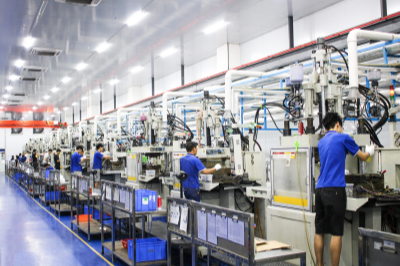
Modern injection molding setup at Yingtai factory delivering high-precision molded snap joints
Each scenario imposes distinct requirements on joint stiffness, snap force, and environmental endurance, which must be validated through rigorous prototyping and testing. Ideally, procurement teams engage with manufacturers capable of rapid tooling and small-batch trials to fine-tune product specifications early in development.
Buyer Guide & Supplier Evaluation Tips
Choosing the right manufacturer for cantilever snap joints goes beyond price considerations. Several critical factors influence long-term supply stability and product performance:
1. Manufacturing Capabilities: Seek factories with state-of-the-art mold development, precision injection molding, and LSR overmolding lines. Guangdong Yingtai High Precision Technology boasts over 30 precision mold processing units, critical to dimensional stability.
2. Certifications & Compliance: Confirm supplier adherence to ISO 9001, chemical safety standards (RoHS, REACH), and any sector-specific requirements relevant to your application.
3. Material Expertise: Evaluate suppliers’ experience with engineering resins and LSR chemistry, as improper material choice or processing parameters can cause joint brittleness or creep.
4. Sample Provision & Lead Times: Ensure the supplier provides timely prototypes and production samples for approval. Lead time transparency reduces risks of production delays.
5. OEM/ODM Support: Vendors capable of design collaboration and customization shorten development cycles and reduce tool iteration costs.
6. Export & Logistics: Assess export experience and packaging efficiency. Proper container loading with anti-static and moisture controls ensures parts arrive defect-free across borders.
Procurement teams can reduce supplier-related risks by demanding transparency on tooling capabilities, material certifications, and quality control procedures before establishing contracts.
Frequently Asked Questions
What distinguishes cantilever snap joints from other snap fit types?
Cantilever snap joints have a single anchored beam that flexes to snap into place. Compared to annular or torsional snap fits, cantilever joints provide simpler tooling requirements and easier assembly but may have lower load capacity depending on design.
Which materials offer the best combination of flexibility and durability for these joints?
Engineering thermoplastics like polycarbonate (PC) and acetal (POM) offer strong mechanical properties and fatigue resistance. For applications requiring soft-touch feel or environmental sealing, liquid silicone rubber (LSR) molded layers are beneficial.
How important is mold precision in achieving a reliable snap fit?
Extremely important. Variations in mold cavity dimensions, surface finish, or gate placement can introduce stress points or affect beam flexibility. Guangdong Yingtai’s advanced mold processing ensures tight tolerances within ±0.02mm, minimizing assembly failures.
Are custom OEM solutions available for specific snap force requirements?
Yes. Many factories offer OEM & ODM services adapting geometry, thickness, and material formulations to tailor retention forces and snap angles per client specs. It’s recommended to involve manufacturers early in design to optimize tooling and machining costs.
What should buyers watch for in terms of logistics and shipping?
Handling small components requires moisture-protective packaging and anti-static measures. Packing density affects container utilization rates—engage suppliers experienced in export logistics to maximize cost-efficiency and minimize transit damage.
“We switched to Guangdong Yingtai for cantilever snap joints after multiple quality issues with former suppliers. The difference in mold precision is clear – snap fits are consistently tight, and we’ve seen fewer assembly rejections on the line. Lead times remain competitive even with custom design changes. Highly recommend for automotive component fasteners.”
Get in Touch
If you have any camping barbeque equipment inquiry, please feel free to contact us.